
Wall Street is looking for ways to avoid Biden's stock repurchase tax
Efforts threaten one of the main revenue streams for the president's climate and health bill
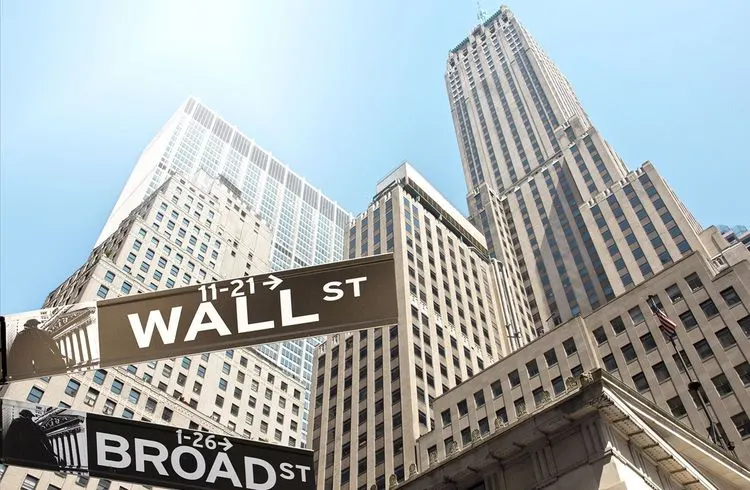
Wall Street bankers and lawyers are looking for ways to help companies buy back stock over the next year without paying millions of dollars in additional taxes. This risks wiping out one of the key revenue streams of President Joe Biden's climate and health package.
Central to their efforts is the use of accelerated stock repurchase (ASR) programs, a commonly used mechanism that allows companies to conduct billions of dollars worth of buybacks. Although the programs are considered to be completed in a single day, it often takes banks several months to close the deals.
The plans depend on whether future Treasury Department guidance will count the day the company transfers the money and receives its shares as the buyback date, or whether it will have to wait until investment banks actually put the shares on the open market buy market.
Wall Street bankers have turned to law firms like Davis Polk for advice on how the Treasury Department might handle the accelerated buyback programs, according to several people familiar with the talks.
Joe Kronsnoble, a partner at Latham & Watkins, said investment banks are "very interested" in the Treasury Department's forthcoming guidance, although he warned that the Department or the Internal Revenue Service may not provide a full response before the 1 percent tax comes into effect in just over four months.
According to official estimates, the new tax will generate $74 billion in revenue over the next decade, but bankers warn that the figure could skyrocket if the 1 percent rate is just a drop in the bucket is and will be set higher in the following years.
"The assumption, and it's still early days, is that a 1 percent tax in and of itself isn't enough to significantly change behavior," said a New York-based banker who works on corporate share buybacks. "One percent isn't a big deal now, but what if the 1 percent becomes 3, 5, or 10 percent for revenue or political scoring?"
Banks and legal experts have agreed on the view that companies won't have to pay taxes on shares received through accelerated buybacks launched this year, according to a person involved in the discussions.
If the Treasury Department takes a similar view, the programs would be particularly attractive to companies looking to frontload buybacks in future years if Congress decides to raise the tax rate.
"Anytime a new tax looms on the horizon and you know it will come into effect next year but not this year, it's not surprising that companies are looking for ways to get things done sooner rather than later." , according to a person involved in the talks. "ASRs are just one example.
Stock buybacks have been targeted by politicians on both sides of the Atlantic, and by Republicans like former President Donald Trump and Florida Senator Marco Rubio, as well as Democrats like Senate Majority Leader Chuck Schumer, and Massachusetts Senator Elizabeth Warren, who
accused company boards of using share buybacks to artificially inflate stock prices and favor executives, who are often paid based on stock price performance rather than the money for long-term investments, job creation or wage increases for their employees
According to S&P Global, S&P 500 companies spent $281 billion on share buybacks in the first three months of 2022, a new record for the third straight quarterlevels
US share buybacks hit record Expected et that data will show a slight slowdown in activity in the second quarter after companies including lenders JPMorgan Chase and Citigroup paused their buyback programs in response to tighter capital requirements and concerns about slower economic growth.
Traders at Goldman Sachs' trading arm, which handles buybacks, estimated the companies have approved $856 billion worth of buybacks so far this year, but said the increase in buybacks has lagged higher spending on capital expenditures and dividends.
Alice Bonaimé, associate professor of finance at the University of Arizona, said there are some signs that companies that narrowly missed analysts' forecasts are "willing to sacrifice investment and employment to buy back stock and [earnings]. per share] by about a penny".
However, she added that the flexibility of share buybacks offers many advantages over dividends that management teams are reluctant to cut when they discover new investment opportunities or face unexpected challenges.
Bonaimé said that the tax, at its current level, "might nudge companies a little to shift some of their distributions from buybacks to dividends, but I don't think a 1 percent tax will be enough to stop companies behaving to change drastically".
There is not yet much interest in conducting buybacks at the stock trading desk. But bankers said they expect activity to pick up in the final months of the year as companies planning buybacks in early 2023 postpone some purchases into 2022.
However, accelerated share buybacks are unlikely to be a panacea for companies hoping to avoid the tax since they have to be completed in a relatively short period of time. While banks can structure longer-term programs -- including exotic derivatives contracts to protect against price fluctuations -- one trader said these programs could quickly become expensive, making them less attractive.
In a simplified accelerated share buyback program, an investment bank agrees to purchase the outstanding shares of a publicly traded company in the future in a forward transaction. The bank is paid in advance by the company to purchase the shares. She then borrows the shares from securities lenders in the public market and delivers them to the company. The company can then treat those shares as retired, increasing its earnings per share. The bank, which is actually a short sale of the shares, will spend several months buying back the shares in the public market, eventually returning them to the securities lenders.