Mario Draghi struggles through the swamp of Italy's turbulent politics
Hopes for reform are fading, but some believe an offer to resign will strengthen the prime minister's hand should he decide to keep fighting
 Gabriel ThomasSeptember 30, 2026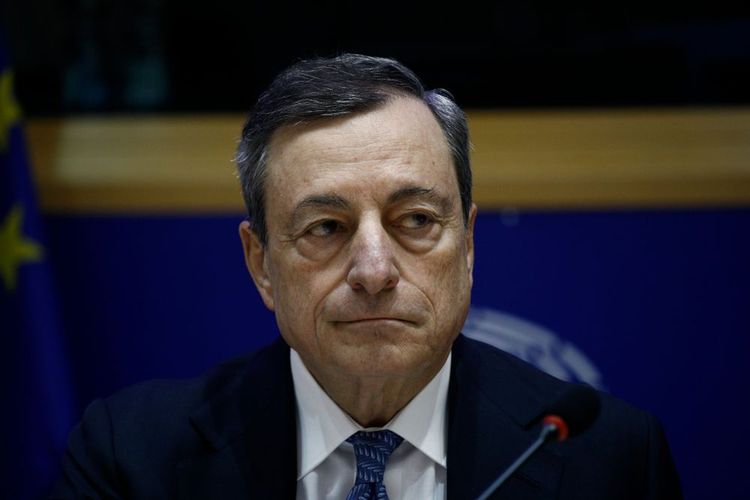
Italians and international investors alike were euphoric when Mario Draghi, the former European Central Bank President who did much to help save the euro, was appointed to lead the country during the nadir of the Covid-19 pandemic.
But this week saw renewed political turmoil in Italy when a disaffected party in Draghi's unity government boycotted a key parliamentary vote. The prime minister, to whom the parties pledged their loyalty in February last year, has offered to resign. Although he still commands a majority in parliament, Draghi said the conditions were no longer in place to proceed with an ambitious reform program on which hundreds of billions of euros in EU bailout funds depend.
President Sergio Mattarella has rejected Draghi's resignation and asked him to return to parliament next week. But Italians face days of uncertainty as they eagerly await whether Draghi has the will to carry on - and can shore up the crumbling government until the end of her term next spring - or whether Italy now plunges into snap elections.
With numerous challenges looming for the country - many of them stemming from Russia's invasion of Ukraine - companies, investors and Draghi's European allies are keen for him to continue.
"Italian businesses and families are going through an extremely complex time, marked by the effects of the war in Ukraine, the energy crisis, inflation and a dangerous increase in Italian bond yields," said Carlo Bonomi, president of the national industry association Confindustria. "Draghi's international credibility is the only possible answer to the challenges ahead."
As fissures in the ruling coalition have widened in recent weeks, high hopes of what Draghi can do for Italy have faded.
"It would be extremely difficult to implement further reforms before the next elections," said Lorenzo Codogno, former director general of Italy's finance ministry. "When you are in an emergency and the elections are a long way off, the parties are more willing to compromise. The closer the elections get, the more difficult this situation becomes."
Codogno said Draghi now prefers to step down and seek snap elections as he believes such a move is in Italy's best interest. "If you wait, it would be a wasted year because nobody would be able to do anything," he added.
However, Lucrezia Reichlin, an economics professor at London Business School, said there is still a chance the Draghi government will survive - it is not over yet. Traditionally, Italy has always found creative solutions."
In his first year as prime minister, Draghi delivered 6.6 percent growth in gross domestic product, an impressive recovery from a brutal 9 percent contraction in 2020. He helped launch a Fixing a stalled vaccination program and getting the EU to pledge up to €200 billion in Covid bailouts if Italy implements reforms He was also popular with ordinary Italians, many of whom are returning for the first time after decades of gloom optimistic about their country's prospects
, but the Ukraine conflict is ailing Italy's economy and sluggish governing coalition, whose biggest voters are the anti-establishment Five Stars movement, Matteo Salvini's right-wing League and the centre-left Democrats party , under renewed pressure
Rising food and energy prices weighed on households, prompting d Introduce a tax on "chance profits" from energy companies to fund support for needy families and small businesses without increasing public borrowing.
Draghi also took a tough stance on Russia. Both Five Stars and the League - which has historic ties with President Vladimir Putin - floundered, urging Draghi to push harder for a compromise between Kyiv and Moscow.
Tensions within the Five Stars over Ukraine led to a split in the party late last month, with Foreign Minister Luigi Di Maio leaving the party in protest at party leader Giuseppe Conte's constant jibes at Draghi's foreign policy.
Negotiating reforms with coalition members had already proved painful. Plans to update property values in official land registers - to improve property tax collection - were blocked by Salvini for months. The same goes for plans to auction off lucrative beach concessions, which is a point of friction between Rome and Brussels.
But the Five Stars split prompted the injured Conte to be more hawkish about his demands, particularly his call to scrap a controversial incinerator being planned in Rome by another coalition partner, the Democratic Party.
While Five Stars boycotted a vote this week on an economic aid bill that would require the facility to be approved, Salvini backed a disruptive taxi drivers' strike against a new competition law needed for Italy to receive its next tranche of Covid funds.
Many analysts think Draghi's bid to resign has strengthened his position vis-à-vis coalition parties, many of whom fear an early vote given their poor chances of re-election in a downsized parliament.
"Draghi is clever," said Daniele Albertazzi, a professor of politics at Britain's University of Surrey. "It looks like political theatre, but there is something behind it. Draghi has proven his authority. He will go back to Parliament and say: 'Who is on my side?'".
Francesco Galietti, founder of Policy Sonar, a political risk consultancy in Rome, said the prime minister had made it clear that he did not want to waste his time playing petty games. He says: 'I'm Mario Draghi. Want to play your games? Not with me.'"
Even if snap elections are imminent, according to Luigi Scazzieri, Senior Fellow at the Center for European Reform, Draghi Italy has left a significant legacy in the architecture of the EU's Covid stimulus package, which will make progress in disbursing the next tranchessaid.As
"Future governments would have a strong incentive to continue with reforms," he
the spread between Italian and German bonds hit the highest level in a month on Friday, Scazzieri said Italy - and its economy - is benefiting if Draghi stayed in power a little longer.
"Having Draghi in power during this period would bring stability to Italy and guide it through the darkest part of the tunnel," he said.