
US inflation hits 9.1%, increasing pressure on Federal Reserve
Markets are reckoning with a higher probability of a 1% rate hike this month after a sharper-than-expected rise in prices
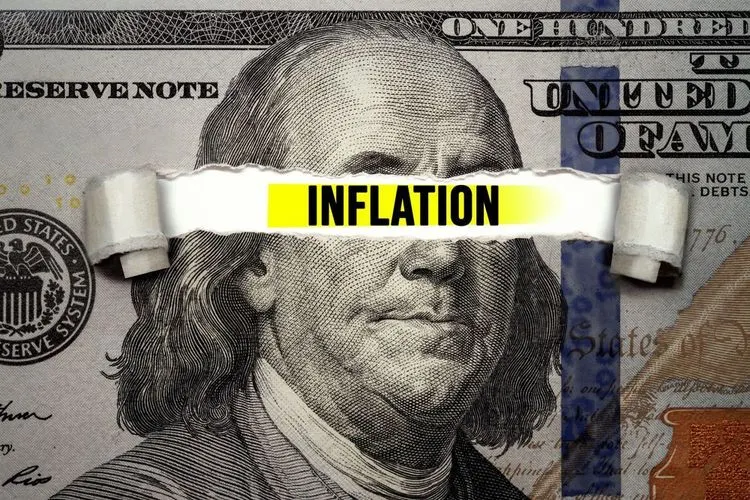
US consumer prices rose more than forecast in June, rising 9.1 percent to a new 40-year high, giving the Federal Reserve the opportunity to hike interest rates by a full percentage point later this month.
The consumer price index, released on Wednesday by the Bureau of Labor Statistics, accelerated further last month, beating economists' estimates of an 8.8 percent rise. This was the largest year-on-year increase since November 1981.
Prices rose a further 1.3 percent month-on-month in June, after rising 1 percent in May.
Excluding volatile items like food and energy, core inflation rose 0.7 percent, compared with a 0.6 percent rise in May. That represents a year-on-year increase of 5.9 percent, roughly in line with the 6 percent pace reported the previous month.
"That's not much of a consolation," said Michael Pond, head of global inflation-linked research at Barclays.
The data will boost the Federal Reserve's efforts to restore price stability, which intensified over the past month after officials backed away from plans to hike interest rates by half a percentage point, opting instead for the first hike of 0.75 percentage points since 1994.
Following the report, futures markets increasingly expected a 1 percentage point hike in Fed interest rates in July, compared to a 0.75 percentage point hike.
Market action accelerated after Atlanta Fed President Raphael Bostic said "everything is in play" when asked about the possibility of a 1 percentage point rate hike.
Government bond yields also jumped, with the yield on the two-year bond, which moves with interest rate expectations, reaching its highest level since late June. It stabilized at 3.2 percent.
Policymakers have announced their intention to raise interest rates to a level - estimated to be around 3.5% - by the end of the year that will start to weigh on economic activity. They are keen to maintain an aggressive approach to tightening monetary policy until there are signs monthly inflation readings are slowing to a pace more in line with the Fed's 2 percent target.
The monthly rise in inflation was 'broad-based', according to the BLS, but a 7.5 percent rise in the energy index contributed almost half of the rise in headline inflation. Gasoline prices rose 11.2 percent in June, while food prices rose 1 percent New and used car prices continued to rise, up 0.7% and 1.6%, respectively
A worrying sign is the rise in non-energy services inflation, which is up 0.7 percent mom and mincreased 5.5 percent from the same period in 2007. Accommodation costs were a major contributor to this increase, rising 0.6 percent month-on-month and 5.6 percent year-on-year, the strongest annual increase since February 1991. Also prices for transportation services and medical supplies
rose.One outlier was airline fares, which fell 1.6 percent after two months of double-digit growth.President's
administration Joe Biden, whose popularity has fallen amid rising inflation, this week attempted to pre-empt June's high and downplayed the acceleration, stressing that the data marks a period before a sharp drop in energy and commodity prices covered other raw materials.
"Today's inflation rate, while unacceptably high, is also outdated," Biden said in a statement released Wednesday, which also emphasized that price pressures are a global phenomenon. "Fighting inflation is my top priority - we need to make faster progress to bring inflation under control."
International benchmark Brent crude, which rose to nearly $140 a barrel in early March following Russia's invasion of Ukraine, has fallen below $100 a barrel this month. Food prices around the world have also recovered from their historic highs.
If the Fed hikes rates by another three-quarters of a percentage point at its July meeting, as expected, the target range for the key interest rate would rise to 2.25-2.50 percent.
"This is a report that the Fed may have dismissed in previous cycles because it has historically focused on its inflation forecast rather than the actual inflationary pressures themselves," Barclays' Pond said. "However, due to increased inflation uncertainty, policy will be driven by actual inflation data."
He added that the June report increased the likelihood of a "very aggressive response".
In addition to tightening monetary policy, which includes reducing $9 billion in total assets, the Fed has sharpened its rhetoric not only on its "absolute" commitment to lowering inflation, but also on risk , which it is willing to accept for economic recovery.
The Fed, meanwhile, has acknowledged that unemployment needs to rise, and most recently forecast that the unemployment rate will rise from a historically low 3.6 percent to just over 4 percent by the end of 2024.
Many economists believe a more accurate estimate is close to 5%, which would mean significantly higher job losses.