
First Federal Reserve rate hike by half a point since 2000
Fed says more hikes of same size should be "on the table" at next two meetings
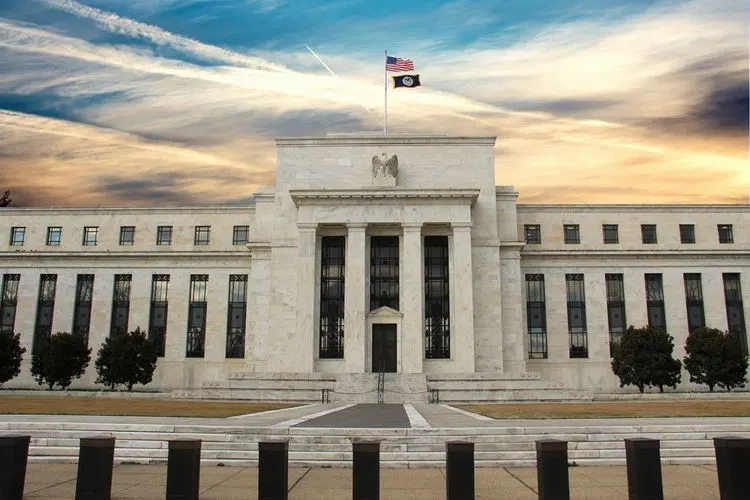
The US Federal Reserve has raised interest rates by half a percentage point for the first time since 2000, giving a clear signal that it intends to raise it by the same amount at the next two meetings.
At the end of its two-day meeting on Wednesday, the Federal Open Market Committee raised the target range for the federal funds rate to a range of 0.75% to 1%.
It was the first time since 2006 that the Fed had hiked interest rates at two consecutive meetings as the Federal Reserve took a more aggressive approach to tackling high inflation.
The Fed raised interest rates by a quarter of a percentage point at its March meeting after being close to zero percent since the outbreak of the coronavirus pandemic.
With one of the tightest labor markets in history and signs that price pressures are becoming entrenched, senior officials have called for a much faster rollback of pandemic-era stimulus measures.
In a press conference following the announcement, Fed Chair Jay Powell said: "There is broad agreement within the committee that further hikes of 50 basis points should be on the table at the next few meetings."
However, he added that a 0.75 percentage point rate hike "is not something the committee is actively considering".
Powell said the Fed has both the necessary tools and determination to restore price stability," but warned of further inflationary pressures from supply chain shortages caused by the war in Ukraine and the Covid-19 shutdown in
China.The rate hike was the Fed's latest move to "quickly" move monetary policy to a so-called neutral position that neither accelerates nor slows economic activity.A
neutral policy rate of between 2 and 3 percent is officially proposed, but many Economists believe it is much higher as inflation far exceeded the Fed's 2 percent target.Core inflation, which is measured by the central bank's preferred personal consumption spending index, hit 5.2 percent in March Compared to last year,
Powell said a neutral rate "isn't something we can pinpoint en," stressing that the Fed "would not hesitate" to go beyond that threshold if the data warranted it.
If the Fed raises interest rates by half a point in June and July, and then by a quarter point at each of the remaining meetings in September, November and December, the federal funds rate would be between 2.5 and 2.75 percent by the end of the year.
Fed officials argued that the US economy was strong enough to withstand tighter monetary policy without slipping into recession. Powell said there was a "good chance" for a "soft or soft landing," citing the strength of household and corporate balance sheets and the strong labor market.
But US Treasury Secretary Janet Yellen, who chaired the Fed before Powell, said on Wednesday the central bank would have to be "skillful and lucky too" to pull off a soft landing.
David Kelly, chief global strategist at JPMorgan, said: "The Federal Reserve has been cooing like a dove for a decade and now it's trying to croak like a hawk, and very loudly. But I believe the Fed is still closing will return to its dovish stance and I believe it will have a chance to return to its dovish stance later in the year
Markets reacted positively to Powell's comments that appeared to rule out a 0.75 percentage point rate hike and the S&P 500 indices and Nasdaq Composite rose to their highest level in a
week.The two-year government bond yield, which moves with interest rate expectations, fell 0.12 percentage points to 2.66 percent.Investors in the futures market are now betting that the critical interest ratepercent, down from 2.88 percent on Tuesday
2.79e expects the labor market to remain "strong" and "appropriate monetary tightening" to bring inflation back into target range.
The Fed also detailed its plans to reduce its $9 billion balance sheet by downsizing its portfolio of Treasuries and mortgage-backed securities, which has been bloated by bond purchases to support the economy since early 2020.
The central bank will start reducing its holdings in June by no longer reinvesting the proceeds from maturing securities (run-off).
The Fed will initially cap the run-off at $30 billion per month for Treasuries and $17.5 billion for Agency MBS, increasing the threshold to up to $60 billion and $35 billion, respectively, over the course of three months .
If the stock of maturing government bonds falls below the $60 billion ceiling, the Fed will make up the difference by reducing its holdings of shorter-dated Treasury bills. Investors anticipate that the Fed will eventually have to resort to outright sales of agency MBS as well, given the expected maturity of some of its securities.
The central bank is moving much faster than it did last time it tried to shrink its balance sheet. This process began about two years after the Fed raised interest rates for the first time in 2015 following the global financial crisis. At the time, it set a monthly cap of $10 billion, which was gradually increased to $50 billion.