
USA wants to raise interest rates significantly
The US Federal Reserve apparently intends to raise interest rates significantly – and reduce the balance sheet
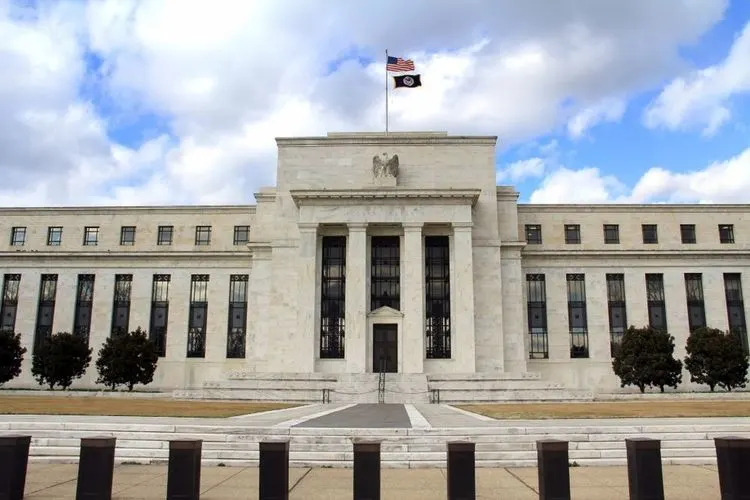
The US Federal Reserve (Fed) is now releasing the minutes of its March 15th and 16th meeting detailing discussions by senior Fed officials. The minutes show that the US Federal Reserve is indeed planning to start reducing its huge balance sheet, which totals about $9 trillion (until the subprime crisis in 2008, the balance was almost zero, after the crisis the balance sheet rose to $4 trillion and after the corona pandemic it more than doubled to its current size.
"Participants confirmed that holdings of Federal Reserve securities should be expected to decrease over time," the minutes read. However, the Fed has not yet officially announced exactly how this process will be carried out, although it could start as early as next month.
According to the released minutes, Fed members are proposing a monthly reduction of $60 billion in US Treasuries and another $35 billion in mortgage-backed securities, implying a $95 billion monthly reduction in total assets if "the caps for three months or in a more moderate manner depending on market conditions." This is actually a faster pace than the previous attempt to raise interest rates between 2017-2019, when the balance sheet by $30 billion a month for the Treasury and $20 billion in mortgage-backed securities. When it comes to mortgage-backed securities, the Fed sounds even more aggressive, saying it may consider a more aggressive cancellation process -- by actively selling its existing holdings, rather than just not buying back bonds. The minutes further state: "The implementation of a sales plan will be announced in good time. "When is the process expected to start? There is no official information on this, but according to the logs, the process could even start as early as May.
In addition, Fed members noted that inflation is well above target and that they would have preferred a 50 basis point (0.5%) hike to a "normal" 0.25% hike. "Many participants indicated that one or more 50 basis point hikes in the target range might be appropriate in future sessions, particularly if inflationary pressures remain elevated or are increasing," the minutes read. On the other hand, the war in Ukraine deterred some of those present from a 0.5% hike back in March.
Yesterday, the Fed's Lyle Brainard said the bank will announce the start of balance sheet reduction as early as May 4 and expects a reduction "at a faster pace" than last time. It is worth remembering that the process of ending the Fed's purchases in the markets ended just last month. After buying $120 billion each month, the Fed began to slow purchases ($90 billion a month, then $60 billion, and finally $30 billion) in order to move toward raising rates.
As you may recall, in March last year the Fed hiked interest rates by 0.25% for the first time in three years, and the market is expecting an overall hike of 2.5% in 2022. The relative urgency that the Fed plans to take is due to the surge in US inflation, which has already reached 7.9%. By raising interest rates, an attempt is made to cool them down and dampen them down.