

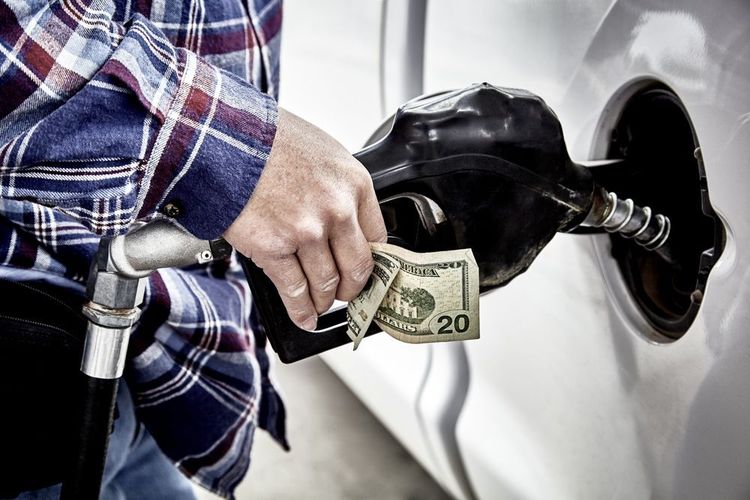
The White House is open to a temporary stay on the gasoline tax after a senior group of Democratic lawmakers proposed eliminating the federal tax on gasoline by at least next year in a bid to curb rising inflation.
"We have all the tools on the table to bring prices down," said Emilie Simons, deputy White House press secretary. "The President has already announced a historic release of 50 million barrels from the Strategic Petroleum Reserve and looking forward, all options are on the table."
Democrats Maggie Hassan (New Hampshire) and Mark Kelly (Arizona) last week introduced the Gas Prices Relief Act, a bill that would temporarily suspend federal gasoline taxes through the end of the year. The current tax imposes a levy of 18.4 cents per gallon on gasoline. The bill would also require the Treasury Department to ensure the savings are passed on to consumers, rather than being clawed back from businesses.
The Washington Post first reported that the White House National Economic Council is considering the idea.
The move would be a major blow to the climate agenda of US President Joe Biden, who had promised to encourage electric vehicle ownership and reduce Americans' dependence on fossil fuels. The decision comes at a time when Biden is facing poor approval ratings and Democrats on Capitol Hill are concerned about their political prospects ahead of November's crucial midterm elections, in which both houses of Congress are at stake.
The most recent opinion polls show that 53.1 percent of Americans disapprove of Biden's work as president, according to an average compiled by FiveThirtyEight. The polls underscore that a growing proportion of Americans are increasingly concerned about the rising cost of living, including the sharp rise in gasoline prices in recent months.
Hassan and Kelly both face tough re-election battles in November. Her bill was backed by several other imperiled Democratic lawmakers, including Georgia's Raphael Warnock and Nevada's Catherine Cortez Masto.
Warnock described the bill as "the latest attempt to help working and middle-class families deal with the economic pressures of the pandemic": "Hard-working Georgians, pressured at the pump, know that every penny counts."
The latest data from the Bureau of Labor Statistics shows that consumer prices in the US rose 7.5 percent last month compared to January last year - the fastest annual increase in 40 years. According to the AAA, the average price of gasoline rose to $3.50 a gallon on Tuesday, the highest in more than seven years.
The rise in gasoline prices comes amid a steady rise in crude oil prices over the past two years as global consumption has grown faster than supply as a result of the pandemic.
The US benchmark West Texas Intermediate crude this week rose above $95 a barrel for the first time since 2014. Meanwhile, the price has dropped back down to around $91.50 on hopes of a de-escalation of the Ukraine crisis.
The Biden administration has already taken various measures to curb high prices at the pump, but with limited success.
In November, the White House announced the release of 50 million barrels of crude oil from the country's strategic oil reserve to relieve tight supply. Prices fell back before finally rising again.
Meanwhile, appeals to the Opec+ group of oil-producing countries to increase supply have gone largely unheeded. Just last week, Biden spoke with Saudi Arabia's King Salman bin Abdulaziz about "securing the stability of global energy supplies," according to the White House.
The White House has also urged US producers to ramp up production, which has yet to return to pre-pandemic levels despite high prices. But the big operators, kept on a short leash by Wall Street, have so far largely refrained from increasing supply as investors insisted on capital discipline.
Analysts expressed skepticism that a natural gas tax suspension would have a lasting effect on prices.
"It is important that politicians continue to deal with the high prices