
ECB plans rate hike in July as inflation problem deepens
A change in policy would help narrow the gap on the Fed as US and eurozone inflation rates converge
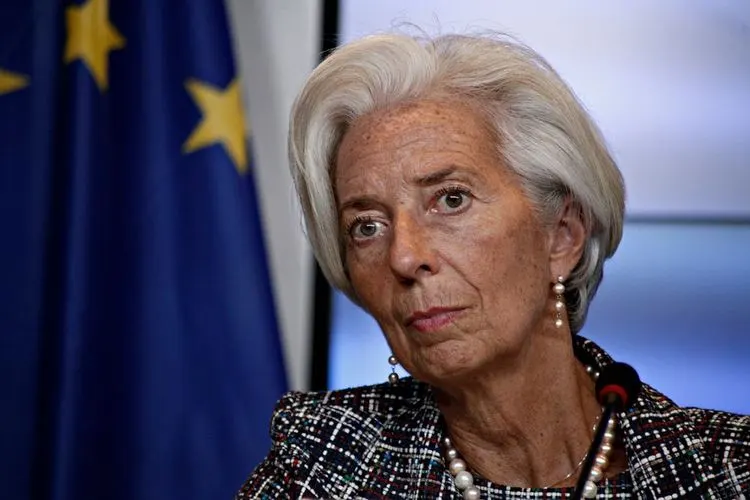
The European Central Bank (ECB) has unveiled its plans for the first rate hike in more than a decade. It joins plans by many other ECB countries to raise borrowing costs to combat persistent inflation, which is spreading well beyond the US.
The ECB's change of course, about a year after euro-zone inflation surged above the 2% target, would help narrow the gap with the Federal Reserve, which has raised interest rates twice since March to a range of 0.75% to 0.75% increased by 1%.
In recent months, the inflation problem in many advanced economies has become increasingly similar to that of the US, even in countries like Europe where economic recovery is slower and government spending more restrained.
Inflation in Europe is spreading beyond volatile energy and food prices to a range of goods and services, fueled by tight labor markets and easy central banks' monetary policies, economists say. The ECB, the US Federal Reserve and other major central banks printed money on an unprecedented scale at the start of the pandemic to fund large-scale bond-buying programs to stabilize economic growth. Households have accumulated a large amount of savings during the pandemic that will likely be spent over time.
Unlike the Fed, however, the ECB's interest rate hike will have to give it some thought as to how higher borrowing costs will put pressure on vulnerable and heavily indebted southern European economies such as Italy and Spain, whose government bonds sold off following the ECB's interest rate decision.
The ECB said in a statement that it intends to raise its key interest rate by a quarter of a percentage point to -0.25% at its next meeting in July and raise it again, possibly by a larger amount, in September. The bank will also end its large-scale bond-buying program on July 1st. After September, the ECB expects a series of further incremental rate hikes.
The ECB is one of many central banks that printed money on an unprecedented scale at the start of the pandemic.
Even after Thursday's decision, the bank is likely to lag behind the Fed and other major central banks.
"It's not about catching up, it's about using all the tools at our disposal to bring inflation to target levels," ECB President Christine Lagarde said at a news conference, noting the differences between ECB and ECB policies that of the Fed. "It's not just a step, it's a journey," she added.
European equities fell after the announcement, with the Stoxx Europe 600 down 1.4%, while the euro faltered, slipping 0.3% against the dollar during the ECB's press conference after earlier gaining. The spread between Italian and German government bond yields, a closely watched indicator of eurozone stress, climbed to its highest level since May 2020.
According to the ECB's plans, interest rates would rise to zero or higher after the September 8 meeting and leaving negative territory for the first time in eight years.
Unlike the Fed, the ECB, as part of its balancing act aimed at partially protecting struggling economies from rising borrowing costs, is likely to keep its entire vast portfolio of government bonds. The ECB's balance sheet has almost doubled to about €8.8 trillion ($9.39 trillion) since the pandemic began, through large-scale bond purchases and cheap lending to households and businesses.
Ms Lagarde said the ECB would act to avoid "fragmenting" its monetary policy - a code word indicating the bank stands ready to buy the debt of weak euro-zone governments like Italy, if necessary, at what it sees as an inappropriate amountunperturbed
by the lack of details about a potential new bond-buying tool, southern European debt dumping highest since 2018, and the corresponding German bund yield rose to 1.461%, its highest since 2014 before both easing back slightly.