
Senate Vote Tonight Could Clear the Permitting Logjam for US-Project Juniors
A bipartisan permitting overhaul faces a 60-vote test tonight, and for juniors with projects on US federal land, the fine print on lawsuits may matter more than the headlines.
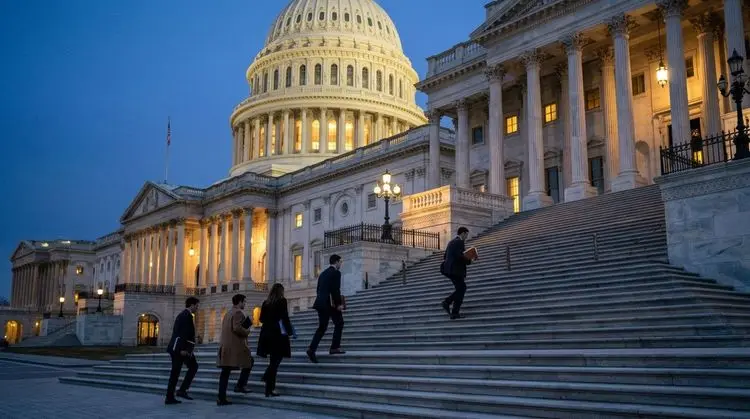
For a junior miner with a project on US federal land, the scariest number in the model is rarely the metal price or the capex. It is the calendar. At about 5:30 p.m. ET tonight, the US Senate takes a cloture vote on the motion to proceed to the Bipartisan American Affordability and Jobs Act, better known as BAAJA, pronounced like "baja" (its backers have toasted it with Mountain Dew Baja Blast, which tells you something about the mood on Capitol Hill). It is the first of two 60-vote tests the bill must clear in the Senate: winning it opens floor debate and amendments, but it does not pass the bill. The vote lands less than a week after midterms that handed Democrats control of both chambers come January, and a day after President Donald Trump urged all senators to back the bill, calling it a big win for US energy independence.
BAAJA, formally S. 5653, was unveiled on September 30 by Senators Shelley Moore Capito (R-WV), Sheldon Whitehouse (D-RI), Mike Lee (R-UT) and Martin Heinrich (D-NM). It reaches well beyond mining, touching the National Environmental Policy Act, the Endangered Species Act, the Clean Water Act, the National Historic Preservation Act, electricity transmission and energy leasing. On Saturday, negotiators released an updated version, known as a manager's amendment, which reworks the transmission provisions and becomes the text the Senate actually votes on. The Institute for Progress calls the package, if enacted, the most ambitious effort to streamline infrastructure permitting in modern American history.
For the junior market, the backdrop is a statistic the industry never tires of quoting. A 2024 S&P Global study found that a new US mine takes nearly 29 years on average to go from discovery to production, the second-longest lead time in the world after Zambia at 34 years. Canada averaged 27 years and Australia 20, but S&P noted that mines in those countries reliably reach production, while US projects face higher litigation risk even after every permit is in hand. Only three US mines have entered production since 2002.
Ashley Zumwalt-Forbes, the former US Department of Energy Deputy Director for Batteries and Critical Materials and now a nonresident fellow at Rice University's Baker Institute, put the financing problem bluntly in a LinkedIn post on Monday. Companies can lock in offtake, sometimes hedge the metal and hire top talent, she wrote, but they cannot make the economics work when a NEPA review runs three years past the model or a permit sits in court for years. "This is where the cost of capital goes to die," she said. She also argued that the timing matters: the bill's terms were set before the midterm results were known, and waiting until the new Congress is seated in January would mean new staff, new text and another year without a path forward.
The details that matter most to miners come from analyses of the bill as introduced, before Saturday's amendment, so some may have shifted. The headline review deadlines are not where most of the change sits. BAAJA would set a one-year limit for environmental assessments and two years for environmental impact statements, but the Fiscal Responsibility Act of 2023 already imposed a two-year limit on impact statements, so that piece adds less than it sounds. The bigger shift is in the courtroom. Challenges under NEPA, the Endangered Species Act, the Clean Water Act and the National Historic Preservation Act would have to be filed within 150 days, only by parties who commented during the review, and they would go straight to the regional federal appeals court. When the only flaw is in the NEPA review, judges would send the analysis back to the agency to fix within 180 days rather than throw out the permit, and work could continue in the meantime. Permits in effect would also gain protection from revocation. There are limits: decisions that violate the Endangered Species Act or Clean Water Act on the merits keep the full range of court remedies. The mining section also addresses the 2023 Ninth Circuit Rosemont ruling, which restricted storing waste rock on unpatented claims, by creating a category for ancillary facilities.
Crux Investor's read is that hardrock projects on federal land that have not yet reached a Record of Decision stand to gain the most, while producers and projects on private land gain little. Two TSXV names fit that description neatly.
Integra Resources Corp. (TSXV: ITR; NYSE American: ITRG) is advancing its DeLamar heap-leach gold-silver project in southwestern Idaho. DeLamar was added to the federal Permitting Council's FAST-41 transparency program in January, which put it on a publicly tracked 15-month NEPA schedule, with the Bureau of Land Management targeting a final environmental impact statement and Record of Decision in the second half of 2027 and construction targeted for the third quarter of 2028. CEO George Salamis has called permitting the single biggest risk for new mines. FAST-41 puts the review on a clock; BAAJA would go after what happens once the decision is signed, by shortening the window for lawsuits and making it harder to vacate a permit over a paperwork flaw.
Century Lithium Corp. (TSXV: LCE; OTCQX: CYDVF) is earlier in the process at its Angel Island lithium project in Esmeralda County, Nevada. Angel Island is also a FAST-41 transparency project with the BLM as lead agency, and the company submitted its Mine Plan of Operations to the BLM's Tonopah Field Office on September 3. CEO Bill Willoughby called the filing a substantial milestone. With the federal review still ahead, Century Lithium would feel both halves of the reform: the review deadlines and the tighter litigation rules.
None of this is law yet, and there is plenty that could still go wrong. Going into the vote, no public whip count confirmed 60 supporters, and Senator Whitehouse has said unresolved assurances for wind and solar projects could stall the bill. Even a win tonight only starts debate; a second 60-vote vote is needed before the Senate can pass it. After that, the House would need to agree on identical text. The House passed its own permitting bill, the SPEED Act, 221-196 last December, and the two take different approaches. The lame-duck session ends January 3, 2027, and if the bill has not passed by then, the text dies and a Democratic-led Congress would start over. The bill also has organized opponents. The National Mining Association backs it, while the Union of Concerned Scientists argues it is tilted toward fossil fuels, and historic-preservation advocates say it would gut Section 106 of the National Historic Preservation Act, the 1966 rule requiring federal review of effects on historic and sacred sites. Crux Investor also flags a trading risk: thinly traded developers bid up ahead of the vote can give back the whole premium in a single session if cloture fails.
For juniors with US projects, BAAJA is a bet on certainty, not speed. A mine that takes 29 years from discovery to production has plenty of problems, but the one investors price hardest is not knowing whether the permit will survive a lawsuit. Tonight's vote is the first sign of whether Washington plans to fix that before the calendar turns.
Sources
- Roll Call, "Permitting bill writers seek industry aid ahead of Senate vote," October 22, 2026: https://rollcall.com/2026/10/22/permitting-bill-writers-seek-industry-aid-ahead-of-senate-vote/
- Akin Gump, "Senate Unveils Bipartisan Comprehensive Permitting Reform Bill," October 6, 2026: https://www.akingump.com/en/insights/alerts/senate-unveils-bipartisan-comprehensive-permitting-reform-bill
- Institute for Progress, "How the permitting deal works": https://ifp.org/how-the-permitting-deal-works/
- Union of Concerned Scientists, "The Senate Permitting Deal Could Lock in Fossil Fuel Dominance for Generations": https://blog.ucs.org/?p=98737
- Crux Investor, "US permitting reform cuts lawsuit risk for mine developers on government land": https://www.cruxinvestor.com/posts/us-permitting-reform-cuts-lawsuit-risk-for-mine-developers-on-government-land
- S&P Global, "United States Ranks Next to Last in Development Time for New Mines," July 18, 2024: https://press.spglobal.com/2024-07-18-United-States-Ranks-Next-to-Last-in-Development-Time-for-New-Mines-that-Produce-Critical-Minerals-for-Energy-Transition,-S-P-Global-Finds
- Federal Permitting Council, "DeLamar Project is the Latest to Gain FAST-41 Transparency Status," January 13, 2026: https://www.permitting.gov/newsroom/press-releases/delamar-project-latest-gain-fast-41-transparency-status
- Crux Investor, "DeLamar enters the execution phase": https://www.cruxinvestor.com/posts/delamar-enters-the-execution-phase-what-the-ausenco-appointment-nepa-scoping-launch-mean-for-the-record-of-decision-timeline
- Century Lithium Corp., "Century Lithium Files Mine Plan of Operations for Angel Island Lithium Project in Nevada," September 9, 2026: https://dashboard.channelchek.com/?p=105478
- The Oregon Group, guest post by Ashley Zumwalt-Forbes (bio): https://theoregongroup.com/guest-post/the-americans-are-coming/5/
- Rice University's Baker Institute, Ashley Zumwalt-Forbes: https://www.bakerinstitute.org/research/limiting-adversarial-capital-critical-minerals-supply-chains
- Ashley Zumwalt-Forbes, LinkedIn post, November 9, 2026
- Heatmap News, "The Senate Prepares for First Vote on Permitting Reform": https://heatmap.news/am/baaja-senate-vote
- Hill Heat, "First Cloture Vote on BAAJA, S. 5653": https://hillheat.com/tag/baaja
- Due Process Institute, "Welcome to the Lame Duck": https://dueprocess.substack.com/p/welcome-to-the-lame-duck-hegseth
Disclaimer
Neither the author of this article nor JuniorStocks holds equity, stock options, or any other financial positions in Integra Resources Corp. (TSXV: ITR; NYSE American: ITRG), Century Lithium Corp. (TSXV: LCE; OTCQX: CYDVF) or any other companies mentioned in this publication. This content is published by JuniorStocks strictly for informational purposes, was prepared independently without company compensation, and utilized AI assistance for text editing, formatting, and generating accompanying media. While US permitting reform could reshape the outlook for junior developers with projects on federal land, the bill has not become law, and this article does not constitute investment or financial advice. Investors are strongly advised to conduct their own thorough, independent due diligence and consult with a qualified financial professional before making any investment decisions.