
BC’s Conservative Landslide: What Lorne Doerkson’s Majority Means for Canadian Mining
Ending nearly a century in the political wilderness, BC’s Conservatives take a decisive 64-seat majority with an aggressive mandate to dismantle permitting bottlenecks, champion cross-border pipelines, and ignite Canada's critical mineral frontier.
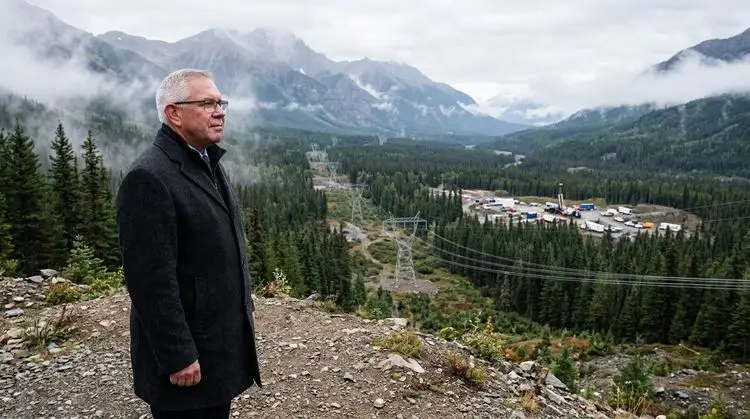
Nearly a century after its last provincial victory in 1928, British Columbia’s Conservative Party has traded historical footnotes for an ironclad majority in Victoria. Former premier David Eby’s decision to call a snap election seeking a decisive mandate backfired spectacularly, ending nine years of New Democratic Party governance and handing Premier-Elect Lorne Doerkson a commanding 64-seat legislative majority out of 93 seats.
The reverberations of this political shift are already shaking the country's resource sector. Campaigning with an unabashedly pro-industry platform, Doerkson did not mince words during his victory speech, declaring that his incoming government will slash red tape, court global capital back to the West Coast, and host an international Vancouver business summit designed to send a loud message: British Columbia is open for extraction.
For global commodity markets and Canadian resource developers, the outcome promises to transform years of regulatory hesitation into industrial velocity.
British Columbia has long possessed world-class deposits of copper, gold, and strategic metals, alongside an equally world-renowned reputation for permitting delays. Doerkson has made clearing this bureaucratic logjam the cornerstone of his economic doctrine, pledging to slash review cycles from exhaustive multi-year marathons into concise administrative sprints.
The stakes could hardly be higher for the provincial mineral belt. With spot gold hovering near record highs around $4,000 per ounce and global appetite for electrification metals running hot, mining houses are eager to break ground.
Federal tailwinds are already in place. Earlier this year, Ottawa directed significant capital toward northern infrastructure, including C$500 million earmarked to support the multi-billion-dollar block cave expansion at the flagship Red Chris mine. The operation is run under a joint venture between Newmont Corporation (NYSE: NEM) and its 30 percent partner Imperial Metals Corporation (TSX: III).
Complementing direct mine funding is a C$3.9 billion federal commitment toward the initial phases of the North Coast Transmission Line, an arterial electrical backbone intended to power clean extraction across the Golden Triangle. With established heavyweights like Teck Resources Limited (TSX: TECK.B) navigating global copper supply crunches, Victoria's new leadership intends to leverage this federal energy grid to fast-track exploration from the field to full-scale mill runs.
Beyond hard-rock mining, the election outcome marks an about-face for provincial hydrocarbon policy. Doerkson’s platform targets an ambitious doubling of natural gas production by 2032 and a tripling by 2035, coupled with eased emissions restrictions to reignite liquefied natural gas development.
Perhaps the most consequential realignment sits along the interprovincial border. Doerkson has extended a collaborative hand to Alberta Premier Danielle Smith by championing the proposed Pacific Link oil pipeline, an infrastructure conduit capable of transporting one million barrels of crude per day to the Pacific coast for onward shipment to Asian energy markets.
The pipeline project has already secured a designation of national interest from Prime Minister Mark Carney’s government under the Building Canada Act, advancing through the federal Major Projects Office. Amid simmering trade friction and tariff threats from US President Donald Trump, Ottawa and Victoria now share a common strategic objective: unlocking Asian trade lanes to eliminate reliance on single-buyer export routes. Doerkson has formally floated a trilateral table uniting British Columbia, Alberta, and the federal government to drive the corridor forward.
Translating high-octane election pledges into operational shovels will encounter steep structural headwinds. Victoria's fiscal cupboard is far from flush. Successive spending deficits have prompted five credit rating downgrades from credit appraisal giant S&P Global Inc. (NYSE: SPGI) since 2021, sharply constraining the provincial balance sheet's ability to underwrite expensive industrial programs.
At the same time, attempts to dilute environmental oversight or bulldoze consultation frameworks carry profound legal exposure. Indigenous partnerships remain the bedrock of project certainty across British Columbia. While the incoming premier addressed First Nations during his victory remarks by promising mutual certainty and shared economic partnerships, any statutory shortcut that bypasses meaningful consent risks sparking immediate courtroom injunctions, potentially pausing the very capital expenditures Victoria seeks to attract.
With a robust 64-seat legislative engine, Lorne Doerkson holds the clearest mandate a British Columbia premier has enjoyed in decades. The province has staked its immediate economic fortune on an aggressive resource revival, turning Canada’s western frontier into a proving ground for whether regulatory deregulation can outpace legal challenges and deliver long-term industrial prosperity.
Sources
- Mining.com.au — "BC election results could reshape Canada’s mining sector" by Jackson Chen
- EnergyNow Media — "Historic Victory in British Columbia: Conservatives Projected to Form First Government in 98 Years"
- Canadian Mining Report — "Lorne Doerkson Becomes BC Premier, Pledges Resource Growth" by Ben McGregor
- Reuters — Legislative seat tallies and election coverage
Disclaimer
Neither the author of this article nor JuniorStocks holds equity, stock options, or any other financial positions in Newmont Corporation (NYSE: NEM), Imperial Metals Corporation (TSX: III), Teck Resources Limited (TSX: TECK.B), S&P Global Inc. (NYSE: SPGI), or any other companies mentioned in this publication. This content is published by JuniorStocks strictly for informational purposes, was prepared independently without company compensation, and utilized AI assistance for text editing, research synthesis, formatting and image generation. While British Columbia’s shifting political landscape and critical minerals sector represent a compelling frontier for resource exploration and energy infrastructure, this article does not constitute investment or financial advice. Investors are strongly advised to conduct their own thorough, independent due diligence and consult with a qualified financial professional before making any investment decisions.