
China wants to increase coal production and increase electricity prices
Country is grappling with the worst energy crisis in years.
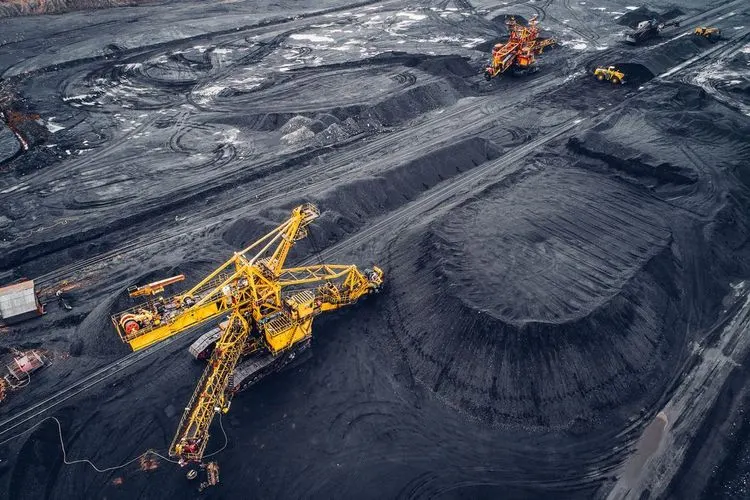
China has instructed its two most important coal regions to increase production, and will allow the coal-fired power plants to calculate customers higher prices as the country has been fighting for years with the worst energy crisis.
Inner Mongolia and Shanxi had the coal mines to increase their annual production capacity by a total of more than 160 million tonnes, while the Chinese Cabinet declared that electricity prices for coal-fired power plants may now deviate by up to 20% of the base rates, which is an increase in represents previous upper limits, and more for sectors with high energy consumption.
The price adjustment should prevent high energy consumption, the state media reported and added that prices for private households and agricultural users as well as for the initiatives to promote the common good are to be kept stable.
Almost record-related high prices for power plant coal and electricity bottlenecks that have led to electricity rations throughout China have impaired industrial production of the country and threaten economic growth.
Shanxi, China's largest coal-producing region, has instructed its 98 coal mines to increase the annual funding capacity for the rest of the year by 55.3 million tonnes, such as a provincial government official confirmed on Friday in a document covered by Reuters.
Shanxi also will allow 51 coal mines, which had reached its maximum annual production, to further produce in the fourth quarter and to increase capacity by 8 million tons, which may lead to an additional range of 20.65 million tonnes.
In China's second largest coal region, the internal Mongolia, the local authorities were invited in an urgency release of 7 October from 7 October from the Energy Department of the region to notify 72 mines that they can now work with the prescribed higher capacity, provided that they ensure safe production .
An official of the Ministry refused to say how long the production increase would take.
The announcement was followed after a meeting in which regional authorities had developed measures for energy supply in winter on the directive of the Chinese Cabinet, the so-called State Council, as the Inner Mongolia Daily reported on Friday.
"Government's coal-task force is intended to push the miners to increase production uncompromisingly, while the energy-task force should bring the power generators to guarantee the coverage of electricity and heat demand in winter," says the newspaper .
"This shows that the government is serious with the increase in local coal production to relieve the scarcity," said a Beijing-based dealer, who appreciated that it could take two to three months until the increase in production occurs.
The 72 mines in the internal Mongolia, which are largely a tape, had so far an approved annual capacity of 178.45 million tonnes.
The announcement is proposed to increase these by 98.35 million tonnes, such as Reuters calculations revealed.
"This will help to alleviate the coal scarcity, but can not eliminate the problem," said Lara Dong, Senior Director at IHS Markit. "The government will still need to make electricity rations to ensure the balance of coal and current markets over the winter."
The appointment contracts for Chinese power plant coal from Zhengzhou were traded in the night session on Friday by 1347 GMT with a plus of 2.2% at around 1,333 yuan ($ 207) per tonne and were thus not far from a record high of 1.408 yuan, the end last month has been reached.
The prices for other power generating raw materials are also climbed in height, including fuel oil, methanol and LPG (LPG). They all have risen by at least 10% compared to the previous month, as the power generators are hinging to fuel.
Increase in imports
According to official data, inner Mongolia produced slightly more than 1 billion tons in 2020, which corresponds more than a quarter of national overall production.
However, production decreased by 8% in 2020 and dropped every month from April to July of this year, which is partly due to a Beijing's anti-corruption examination in the coal sector in the last year, which led to a smaller production, as miners was prohibited to produce beyond the authorized capacity.
The neighboring province of Shanxi had to close 27 coal mines this week for floods. Coal supplies in the Great Chinese ports amounted to 52.4 million tonnes at the end of September before one-week National Day, which began on October 1, and were thus 18% below the previous year's level, such as Data of China Coal Transportation and Distribution Association.
In order to ensure the electricity and heat supply of private households, China has reopened dozens of other mines and approved several new ones.
The government has also called on to raise the carbon imports "adequate" to the level of last year after imports declined by almost 10% in the first eight months.
Despite an almost one-year unofficial import ban, it has even released Australian coal from intermediate storage, and the utilities tapped rare sources such as Kazakhstan and the United States.
Meanwhile, coal consumption in the northeast of China increases in winter at the beginning of the heating season, with the large power plants on average inventories for about 10 days, while there were more than 20 days last year.
Economic pressure
Citi predicted that the bottleneck stopped and China would force to reduce the electricity consumption of the industry in the fourth quarter by 12% - in the case of a cold winter even more.
"This would increase the stagflation risks and growth pressure on the Chinese and global economy in the coming winter," wrote Citi analysts in a note.
Despite the announced increase in production in Shanxi and inner Mongolia, according to analysts and dealers, not much for this winter will be expected.
The analysts of Guosheng Securities assume that China's lack of power plant coal will exceed 2021 116 million tonnes, although from the fourth quarter, 31 million tonnes of newly authorized capacities are put into operation.
"We expect further announcements to increase coal production," said James Stevenson, coal analyst at the consulting firm IHS Markit, and added that China has used all its most important instruments to increase the domestic offer and demand steer.
The benchmark spot prices for power plant coal in the northern harbor of Qinhuangdao reached a record high of 1,079 yuan per ton at the end of September.
With the rising coal prices, more and more power plants slide into the red numbers and even stand in front of the closure.
"Much more people and companies had sat in the dark when China built only coal-fired power plants and did not expand solar and wind power capacities," says Lauri Myllyvirta, senior analyst at the Center for Research on Energy and Clean Air.
(1 $ = 6,4507 Chinese yuan)