No more uncontrolled immigration
Prime Minister says Britain is in the process of adjusting
 Gabriel ThomasOctober 5, 2026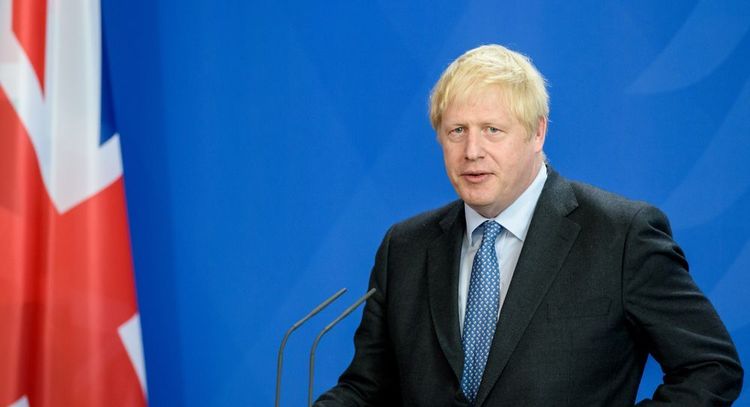
British Prime Minister Boris Johnson said on Sunday that he would not go back to "uncontrolled immigration" to resolve the fuel, gas and Christmas food crises, hinting that such pressures were part of a post-Brexit adjustment period.
At the start of his Conservative Party convention, Johnson was again forced to defend his government against complaints from those who are not getting gas for their cars, the retailers warning of Christmas shortages, and the gas companies who are dealing with spikes in wholesale prices have to fight.
The British Prime Minister wanted to use the conference to turn over a new chapter after more than 18 months of COVID-19 and to focus on his election promises for 2019 to fight regional inequality, crime and welfare.
Instead, the prime minister is on the retreat nine months after Britain's exit from the European Union - an exit he said would give the country the freedom to run its economy better.
"The way forward for our country is not to pull the big lever of uncontrolled immigration and let huge numbers of people work ... So I am not going back to the old, failed model of low wages and low skills, that is supported by uncontrolled immigration, "he said on the BBC's Andrew Marr Show.
"When people voted for change in 2016 and ... again in 2019, they voted for the end of a failed model of the UK economy based on low wages, low skills and chronically low productivity, and we are moving away from that now."
The Prime Minister acknowledged that Britain's exit from the EU has created tension in the supply chain and the workforce, ranging from fuel deliveries to possible bottlenecks in turkeys for Christmas.
"There will be a time to adapt but I think that's what we have to see," he said.
NO MASS IMMIGRATION
As the government plans to issue thousands of temporary visas to foreign truck drivers and poultry workers, Johnson made it clear that he would not open the taps on immigration and that responsibility for raising wages and recruiting new workers would once again be shifted to companies.
Post-Brexit labor shortages and the COVID-19 pandemic created confusion in some sectors of the economy, with fuel and medicine supplies cut and more than 100,000 pigs slaughtered for the lack of slaughterhouse workers.
Conservative Party leader Oliver Dowden said the government was taking action to generally hire more truckers and that the government had begun training military tanker personnel to begin fuel deliveries on Monday.
"We're going to make sure people get their turkey for Christmas and I know this is high on his list for Environment Secretary George Eustice," he told Sky News.
The government's overwhelming message, however, was that companies need to take action to resolve supply chain problems and attract more UK workers with higher wages.
"I don't believe in a command and control economy, so I don't think the prime minister is responsible for what's in the shops. That's why we have a free market economy," Foreign Secretary Liz Truss said at an event at the conference.
"I am sure that the goods will be delivered to our stores".
But instead of the new beginning hoped for by Johnson in the northern English city of Manchester, the conference is likely to be overshadowed by the crisis and criticism of the government's withdrawal of the increase in a state benefit for households with low incomes.
The main opposition party, the Labor Party, will focus on abolishing the top-up in hopes of undermining those conservative lawmakers who have won over their traditional supporters in northern and central England.
Johnson could also come under fire for breaking with the Conservatives' traditional stance as a low-tax party after raising some of them to support health and welfare services.
"Of course we do not want to raise taxes, but we will not be irresponsible with public finances," he said. "If it can be avoided, I don't want to raise taxes again, of course not.