
Why Europe Must Modernize Its Smelters to Survive the Next Supply Shock
Ignoring the quiet collapse of our foundational heavy industries threatens to hand the keys to our defense, tech, and renewable energy sectors over to foreign monopolies.
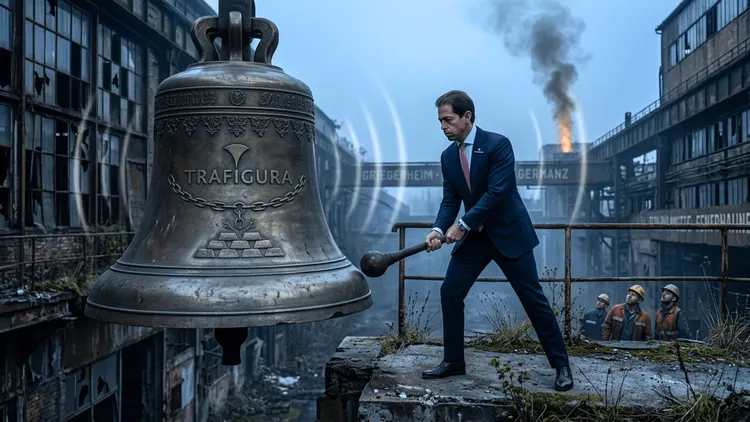
History has a funny way of repeating itself, especially when policymakers hit the snooze button on supply chain security. We all remember the harsh winter reality check brought on by the Russian gas crisis. Fast forward to the present day, and the ongoing conflict in Iran is serving up a fresh platter of geopolitical supply shocks. Yet, while the continent scrambles to map out its energy future, another foundational pillar of European industry is quietly rusting away. The alarm bell is currently being rung by Richard Holtum, CEO of the global commodities giant Trafigura, who warns that critical metals processing is Europe’s next great vulnerability.
The Antimony Paradox
Metals processing is far from a niche talking point reserved for trade conventions. It is the absolute bedrock of modern civilization. Zinc, copper, lead, and aluminum are the invisible scaffolding of the defense, automotive, construction, and electronics sectors. But as Holtum rightfully points out ahead of his keynote at the upcoming EIT RawMaterials Summit 2026 in Brussels, the true crisis lies in the by-products.
If you lose the lead smelters, you lose antimony. If you lose antimony, you quite literally run out of bullets.
Over the past ten years, Europe has watched nearly a third of its base metal smelting capacity evaporate. Sky-high energy bills, steep labor costs, paper-thin refining margins, and an unrelenting flood of state-subsidized competition have rendered much of the sector commercially unviable. By doing nothing, Europe is essentially handing over the full value chain of its critical minerals to China by sheer default.
The €100 Million Catch-22
The private sector is generally excellent at pricing risk, but it fundamentally cannot price in national security or industrial resilience. Projects that keep a nation breathing during a crisis often look like terrible investments on a Tuesday afternoon spreadsheet.
Take Nyrstar, the smelting heavy-hitter operated in partnership with Trafigura. Adding the capability to recover tech-critical germanium would cost around €100 million per site. In the grand scheme of securing a continent's technological future, that is a bargain. However, faced with wild price volatility and a deluge of artificially cheap, subsidized supply from overseas, making a commercial business case is near impossible. Markets alone simply cannot solve a systemic vulnerability.
A Blueprint for Survival
Holtum’s prescription for this industrial malaise requires public policy to step in before it is too late. The first order of business is stopping the bleeding by protecting existing assets. When energy accounts for a staggering sixty percent of production costs, inconsistent grid tariffs across Europe are a death sentence. Reforming these tariffs and extending compensation for indirect ETS costs is bare-minimum triage.
The second priority is creating a genuinely viable business case for critical minerals through targeted public interventions. This requires moving beyond rhetoric and implementing long-term offtake agreements, price floors, and public co-investment to de-risk essential projects.
Finally, Europe needs to treat these smelters as active participants in the modern energy grid. Electrified plants can dial their production up or down to balance the intermittent flow of renewable energy. But for this to work, market frameworks need to actually reward this flexibility rather than penalize it.
The United States is currently writing massive checks to rebuild the industrial capacity it carelessly threw away decades ago. Europe, surprisingly, still possesses the infrastructure, the skills, and the foundational self-sufficiency in midstream processing to lead. But the clock is loudly ticking. Heavy industrial assets like smelters are not light switches; once they power down, equipment degrades, the specialized workforce scatters, and the institutional knowledge is gone forever. Europe must move quickly to secure these strategic assets, or pay an agonizing premium to import them tomorrow.
Source: Based on the op-ed "Europe’s Smelters: The Strategic Assets We Cannot Afford to Lose" by Richard Holtum, CEO of Trafigura (May 7, 2026).