
Vacuum Wars Won by China: But Western Bots Are Just Warming Up Their Legs
From Mars Rovers and Battlefield Heroes to Shenzhen Ownership: iRobot's Fall and the West's Pivot to Humanoid Dominance
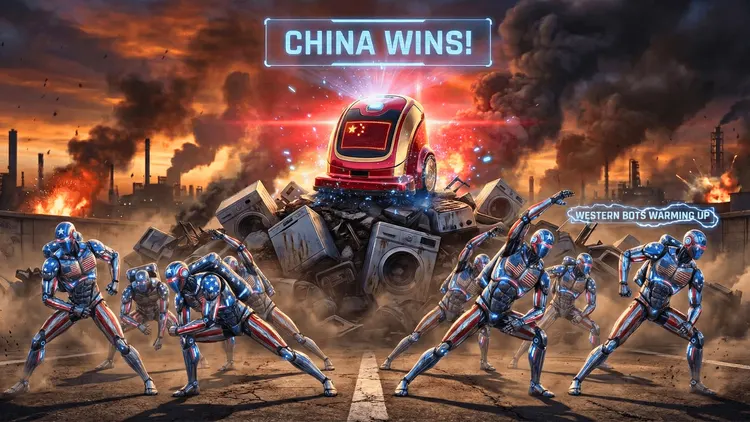
In a twist that's equal parts ironic and inevitable, the company that sent robots to defuse bombs in Iraq, probe Fukushima's meltdown, and even inspire Mars rovers has just handed the keys to its iconic Roomba empire to a Shenzhen supplier, after filing for Chapter 11 bankruptcy on December 14, 2025. Yes, iRobot (Nasdaq: IRBT), the American innovator that turned lazy cleaning into a cultural phenomenon, is going private under the control of Picea Robotics, its primary manufacturer and biggest creditor.
Founded in 1990 by MIT alums, iRobot's résumé reads like a sci-fi novel come true. Its PackBot robots cleared IEDs in war zones and ventured into radioactive hotspots humans dared not tread.
The company's tech even influenced NASA's Spirit and Opportunity rovers, with wheel designs drawing from iRobot prototypes to conquer Martian terrain.
Then came the Roomba in 2002, which revolutionized homes worldwide. But brilliance in the lab doesn't always translate to boardroom wins. Fierce Chinese competition from brands like Ecovacs eroded margins, while a promising robotic lawn mower, the Terra, teased in 2019 with boundary-free tech, languished in development hell and never fully launched.
The knockout punch? The scuttled $1.7 billion Amazon acquisition in 2024 over antitrust fears, followed by crushing U.S. tariffs on Vietnam-sourced imports that tacked on $23 million in costs this year alone. iRobot assures owners their Roombas will keep spinning without interruption during restructuring, no app bricking on the horizon.
This handover spotlights a harsh reality: in consumer hardware, blistering product cycles from Shenzhen often outpace Western ingenuity. Chinese firms now dominate global vacuum shares, while iRobot's story echoes broader trends in commoditized tech.
Yet Western robotics isn't rolling over. The spotlight shifts to embodied AI and humanoids, where software smarts and premium applications offer stronger moats. Boston Dynamics' all-electric Atlas is dazzling with superhuman feats, eyeing factory deployments with Hyundai. Figure AI's sleek bots are already piloting in BMW facilities, backed by OpenAI and Nvidia. Agility Robotics' Digit is ramping up for warehouse work with Amazon and others.
Analysts forecast the humanoid sector exploding to $38 billion by 2035, targeting manufacturing, logistics, and high-regulation fields like defense. Meanwhile, China commands industrial robot installations, claiming 57% of its domestic market in recent years.
iRobot lost the battle for your living room floor, but the West is betting big on robots that think, adapt, and conquer the factory, and maybe your home, next. The vacuum wars may be over, but the humanoid showdown is just beginning.
Sources:
Reuters (December 15, 2025); The Guardian (December 15, 2025); The New York Times (December 15, 2025); NPR (December 15, 2025); CNBC (December 15, 2025); TechCrunch (December 15, 2025); USA Today (December 16, 2025); Bloomberg (December 15, 2025); Goldman Sachs Research (humanoid market projections); International Federation of Robotics (World Robotics reports on China market share); NASA (Mars Exploration Rovers documentation).