
UAMY Guidance Cut: Why Wall Street’s Leading Antimony Bull Is Taking a Step Back
When a 50% guidance cut tests investor faith, the fundamental case for North America’s sole antimony smelter meets an execution reality check.
When a company’s most steadfast champion decides to pause and step back from the podium, smart investors sit up and take notice.
For months, prominent critical-minerals analyst Montana Magnet stood as one of the most vocal bullish voices behind United States Antimony Corporation (NYSE American: UAMY), regularly passing along executive projections to the market.
However, following the company's recent second-quarter financial performance and a sudden guidance slash, even the biggest bulls are demanding accountability. This pivot isn't a story of a broken fundamental thesis, but rather a classic case of execution stumbles temporarily obscuring a formidable strategic moat.
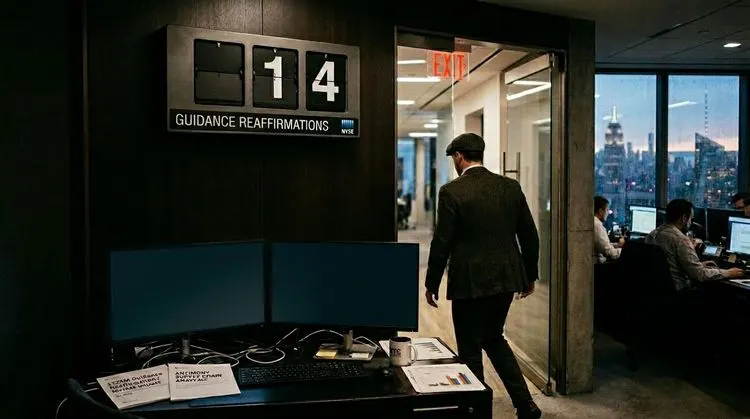
In a sharp analysis of the company's disclosures, Montana Magnet laid bare the stark disconnect between executive narrative and operational reality. Management publicly reaffirmed its $125 million revenue target no fewer than fourteen times across ten months, stretching across earnings calls, conference presentations, and media appearances. Yet, just sixty-nine days after the final public pledge, United States Antimony Corporation (NYSE American: UAMY) chopped that target to between $60 million and $75 million, representing a 40% to 52% reduction. As Montana Magnet's breakdown detailed, second-quarter revenue arrived at $7.9 million against consensus expectations of $21.7 million, while company-wide gross margins collapsed from 27.0% to 7.4% and antimony gross margins cratered to 2.6%. The company sold 26% more pounds of antimony year-over-year yet generated less overall revenue, proving that volume alone cannot offset pricing pressures.
Montana Magnet's research highlights that commercial market pricing and delivery logistics sit at the center of the squeeze. Commercial realized antimony fell 52% year-over-year to $13.70 per pound against a $13.34 per pound cost basis on the commercial book. While spot prices hovered around $10.50, third-party purchased feedstock accounts for the bulk of commercial inputs, keeping unit costs linked to broader market pricing. Meanwhile, the high-margin core of the bull case, Defense Logistics Agency orders priced at premium fixed rates around $32 per pound, generated zero booked revenue in the second quarter due to government paperwork, feedstock logistics, and acceptance timing. According to Montana Magnet's shipping calculations, meeting even the reduced guidance requires delivering 14 to 25 additional truckloads by late November, pushing required output to between 160,000 and 300,000 pounds per month compared to the recent cadence of 125,000 pounds.
The underlying financial quality also faced scrutiny in Montana Magnet’s write-up. An unrealized mark-to-market gain of $6.79 million on the company's equity holding in Larvotto Resources (ASX: LRV) effectively masked a $6.98 million operating loss for the quarter. Simultaneously, internal administrative overhead drew attention, with salaries and benefits eating up $10.10 million, or 69%, of total first-half revenues ($14.71 million). Stock-based compensation reached $7.74 million in six months, while another $8.85 million in cash went toward treasury stock settlements as total shares outstanding diluted from 139.9 million to 149.5 million.
Yet, despite the operational frustrations detailed in Montana Magnet's review, the long-term fundamental story behind United States Antimony Corporation (NYSE American: UAMY) remains intact. Solvency is secure, backed by $62.2 million in cash and Treasuries, a $46.7 million equity stake in Larvotto Resources (ASX: LRV), and an undrawn $19 million credit line. More importantly, the company retains an irreplaceable position as the sole operational antimony smelter in the Western Hemisphere. Physical capacity at Thompson Falls is expanding to nine operational furnaces, while high-grade assets like Alaska's Nolan Creek deposit, boasting a 28% antimony grade compared to Montana's 10%, offer clear long-term margin expansion potential once production ramps up.
Montana Magnet's decision to dial back his vocal posting marks a healthy shift from enthusiastic advocate to disciplined analyst, reflecting a broader market demand for management to execute rather than promise. As he succinctly framed the situation in his analysis: "Everything United States Antimony Corporation (NYSE American: UAMY) owns is still real. Only smelter in the hemisphere. Tungsten, cobalt, gold, zeolite. Hydromet should work. Nolan Creek may work. Government equity reprices the stock overnight. The company just can't seem to do what they say they are going to do when they say they are going to do it." With geopolitical trade dynamics and defense mandates continuously favoring domestic processing, the underlying macro assets remain compelling, provided executive execution catches up to the opportunity.
Source Credit & Attribution:
The operational figures, shipment schedule modeling, pricing calculations, and analytical commentary in this piece are credited to market researcher Montana Magnet from his detailed public write-up on United States Antimony Corporation (NYSE American: UAMY).
Disclaimer:
Neither the author of this article nor JuniorStocks holds equity, stock options, or any other financial positions in United States Antimony Corporation (NYSE American: UAMY), Larvotto Resources (ASX: LRV), or any other companies mentioned in this publication. This content is published by JuniorStocks strictly for informational purposes, was prepared independently without company compensation, and utilized AI assistance for text editing, formatting, and content synthesis. While domestic critical minerals processing and Western antimony smelting capacity represent compelling long-term industry catalysts, this article does not constitute investment or financial advice. Investors are strongly advised to conduct their own thorough, independent due diligence and consult with a qualified financial professional before making any investment decisions.