
Three to Five Years: The True Cost of Global Energy Supply Chain Ruptures
While traders cash in on record volatility, long-term investors are bracing for a multi-year supply chain hangover that threatens to crush corporate earnings.
Wall Street has a nasty habit of treating global supply chain ruptures like minor potholes, but if you think the recent turbulence in the energy markets is just a passing storm, you might be setting your portfolio up for a rude awakening. During a remarkably candid Monday morning interview on Yahoo Finance’s Opening Bid, host Brian Sozzi sat down with two market veterans to dissect the chaos. What emerged was a tale of two entirely different market realities, pitting short-term trading opportunism against a grim, multi-year macroeconomic hangover.
The backdrop is impossible to ignore. Crude Oil (CL=F) and Brent Crude (BZ=F) have been riding a volatility rollercoaster that has left many retail investors violently seasick. Yet, for seasoned traders like Tom Sosnoff, founder and CEO of Lossdog, this topsy-turvy environment is practically an invitation to print money. Sosnoff noted during the interview that he has been trading more oil in the past two weeks than he has in years. Dismissing a recent report from The Goldman Sachs Group, Inc. (NYSE: GS), Sosnoff confidently predicted that oil will remain stubbornly range-bound between eighty and one hundred fifteen dollars a barrel. His playbook is delightfully simple: the volatility has spiked so aggressively that the most logical move for traders is to sell premium, leaning heavily on out-of-the-money calls and puts to capitalize on the market's sheer panic.
However, crossing the aisle from the trading desk to the long-term investment committee reveals a significantly darker picture. Lee Munson, president and chief investment officer at Portfolio Wealth Advisors, used the interview to throw cold water on the broader market's unyielding optimism. According to Munson, the resilience of major indices like the S&P 500 (^GSPC) is less about underlying economic strength and more about pure, unfiltered FOMO. He pointed a finger directly at investors who are prematurely banking on geopolitical miracles, specifically the hope that the Trump administration will suddenly de-escalate tensions and peace will spontaneously break out overnight.
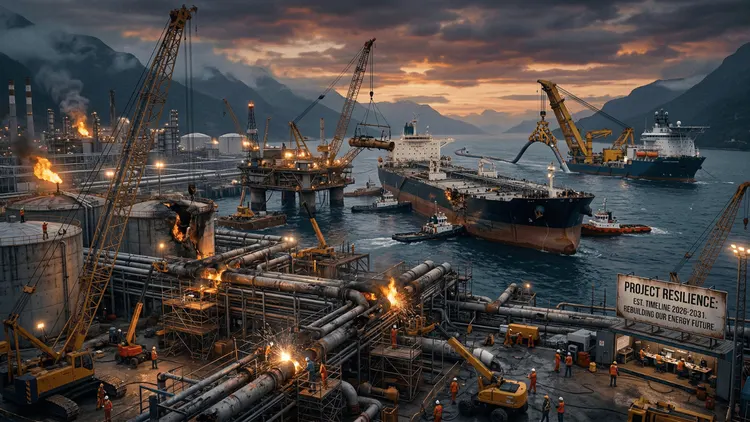
Munson’s reality check centers on the undeniable physical damage to global energy supply chains. He emphasized that the disruptions to Qatari and Iranian fields, which have effectively wiped out a staggering twenty to twenty-five percent of the liquefied natural gas supply, are not temporary hiccups. Rebuilding and correcting this scale of complex oil infrastructure is a massive, capital-intensive undertaking that will easily require three to five years to resolve.
Until oil firmly entrenches itself in the one hundred ten to one hundred twenty dollars per barrel range, Munson believes the broader market will remain in a state of blissful denial. But economic gravity always wins. Once those elevated energy prices begin to inevitably bake their way into corporate earnings, the delayed reaction will hit hard. Input costs will surge, and the bottom lines of both small and large-cap value stocks will start to crater. As the interview made abundantly clear, the market might be casually brushing off the recent five percent dip from all-time highs, but investors are going to have to face the music eventually. A delayed reaction in the financial markets absolutely does not mean the reaction has been canceled.
Source:
- Article based on the Yahoo Finance Video Opening Bid interview featuring Brian Sozzi, Tom Sosnoff, and Lee Munson, broadcast on Monday, March 23, 2026.