
The $100 Oil Catalyst: Rick Rule and Eric Nuttall on the Middle East Crisis Exposing Decades of Underinvestment
As geopolitical tensions expose the fragility of global supply chains, Wall Street’s billion-dollar blind spot in deferred maintenance is igniting a massive, generational opportunity for energy investors.
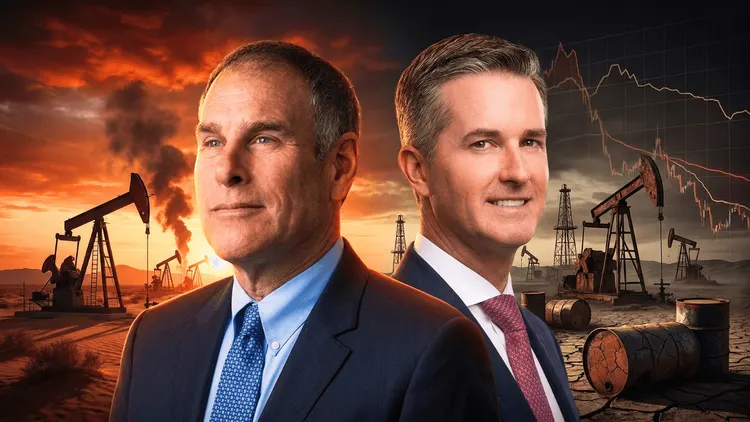
Wall Street’s favourite parlor game usually involves guessing which tech CEO will promise the most revolutionary AI disruption by next Tuesday. Yet, while the broader market debates the precise timeline of a utopian green energy transition, the unglamorous, grease-stained reality of global energy infrastructure is quietly setting the stage for an unprecedented supercycle. A long-brewing structural deficit in the oil sector has finally collided with a geopolitical powder keg in the Middle East, and the resulting shockwaves are violently tearing up the traditional investment playbook.
The underlying rot in the energy market is not a secret to those who actually look at the plumbing. Legendary natural resource investor Rick Rule has been relentlessly highlighting a terrifying metric: the global oil industry is underinvesting in its sustaining capital by roughly a billion dollars every single day. This is the unsexy capital required to recomplete aging wells and drill makeup wells in aging shale plays. State-controlled giants and private operators alike have systematically deferred this maintenance, creating an irreversible structural crater for production capacity just a few years down the line. Rule warns that while North American reserves might provide a temporary psychological cushion, the deferral of baseline maintenance means the world is effectively sleepwalking toward a scenario where oil will have to be aggressively rationed by price.
Now, that slow-moving structural crisis has been injected with rocket fuel. Recent military escalations involving the U.S., Israel, and Iran have threatened severe shipping bottlenecks in the Strait of Hormuz. Eric Nuttall, senior portfolio manager at Ninepoint Partners, points out that roughly one-fifth of the world’s oil consumption and up to twenty percent of liquefied natural gas (LNG) supply moves through this single, highly vulnerable geographic chokepoint. With the United Arab Emirates and Saudi Arabia threatening direct military retaliation against Iran, the market is facing what Nuttall bluntly describes as the worst-case scenario for energy investors. Historically, the market is preconditioned to sell off after a short-term geopolitical price spike. Today, with 74 out of 78 non-OPEC countries in a permanent state of production decline and OPEC’s spare capacity sitting at a razor-thin 1.4 million barrels per day, all prior playbooks are entirely obsolete.
This terrifying global backdrop is simultaneously creating a massive, generational opportunity for Canada to step up as a secure energy supplier to the free world. Both Rule and Nuttall agree that Canada is sitting on an extraordinary business case, provided the country can actually get its hydrocarbon wealth to the international market. Nuttall emphasizes that the Canadian oil sands and the Clearwater play possess decades worth of reliable inventory. However, getting that oil to the Pacific Rim or the Gulf Coast requires overcoming severe infrastructural bottlenecks. Building a brand new one-million-barrel-per-day pipeline is an eight-year endeavor. Even expanding existing takeaway capacity by 700,000 barrels per day will take a couple of years and requires direct approval from U.S. President Donald Trump.
Navigating this explosive market requires a distinct blend of contrarian patience and tactical aggression. For long-term investors, Rule advocates holding high-quality, dividend-paying majors like Exxon Mobil Corp (NYSE: XOM), noting that buying them at a discount to their net present value is far superior to blindly chasing the erratic, news-driven price spikes. Conversely, Nuttall is actively leaning into the immediate crisis, eagerly accumulating Canadian energy equities that he believes are radically mispriced relative to the impending supply reality.
The era of cheap, easily accessible energy subsidized by the hyper-efficiency of the past decade is officially over. The math of global production decline simply does not support the narrative of a seamless energy transition, especially when the world is staring down the barrel of immediate geopolitical conflict. For those willing to look past the mainstream noise, the deferred capital crisis and the Middle Eastern supply shock are not just warning signs. They are a definitive roadmap to the most lucrative energy market in modern history.
Sources:
- Interview transcript featuring Rick Rule, President and CEO of Rule Investment Media, on BNN Bloomberg discussing global oil supply, sustaining capital deficits, and the Canadian market opportunity.
- Article: "‘Massive, massive opportunity’ for Canadian oil as strikes in Iran disrupt global supply: Eric Nuttall" by Anam Khan, published March 02, 2026, featuring commentary from Eric Nuttall, senior portfolio manager at Ninepoint Partners.