
The Six-Week Warning: How the Strait of Hormuz Blockade is Grounding Global Markets
As Europe stares down a six-week runway for aviation fuel, soaring crude prices threaten to trigger a wave of global stagflation, paralyze supply chains, and starve junior markets of capital.
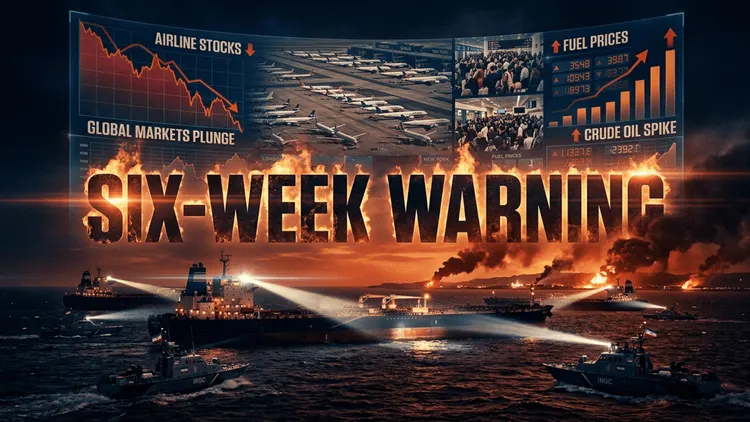
Buckle up, investors, because the geopolitical turbulence is officially spilling from the tarmac straight onto the trading floor. International Energy Agency Executive Director Fatih Birol dropped a bombshell on the global economy this week, warning that Europe is staring down the barrel of a mere six-week supply of jet fuel. The culprit is the unprecedented blockade of the Strait of Hormuz, an arterial waterway that normally handles a massive chunk of the world's energy trade. While grounded flights and ruined holidays grab the mainstream headlines, the underlying mechanics of this supply shock are quietly tearing through the global financial ecosystem.
When an energy watchdog characterizes a situation as the largest energy crisis we have ever faced, Wall Street takes immediate notice. The primary threat to equity markets is the terrifying resurgence of stagflation. As crude and refined product prices skyrocket, consumer purchasing power is effectively incinerated. Central banks find themselves boxed into a corner; they cannot easily slash interest rates to stimulate economic growth when energy-driven inflation is roaring back. This dynamic triggers a violent rotation out of risk assets and growth stocks, sending capital fleeing toward defensive safe havens. Airlines like Ryanair Holdings plc (Nasdaq: RYAAY) and Air France-KLM S.A. (Euronext Paris: AF) are already making painful schedule adjustments as the sheer cost of kerosene outpaces passenger revenue, but the market contagion runs much deeper than aviation. Broad market indices absorb the blow as profit margins across virtually every sector get squeezed by surging operational costs.
The disruption certainly does not stop at the boarding gate. The Strait of Hormuz is not just an oil pipeline; it is a fundamental chokepoint for global commodities, including liquefied natural gas and essential petrochemicals. When these vital shipments are trapped, the entire global supply chain begins to seize up. Freight and shipping insurance premiums explode, forcing logistics giants like A.P. Møller - Mærsk A/S (Nasdaq Copenhagen: MAERSK-B) and maritime analytics firms like Vortexa to navigate logistical nightmares and soaring operational expenses. This friction translates into staggering input costs for manufacturers and retailers worldwide. From the plastic packaging on fast-moving consumer goods to the fertilizers needed for global agriculture, every single link in the chain becomes drastically more expensive to maintain.
If the broader market is catching a cold from this energy shock, the highly speculative junior markets are coming down with a severe case of pneumonia. Junior mining and exploration companies are incredibly vulnerable to energy volatility. These operations are heavily reliant on diesel to power their remote drills, heavy machinery, and transport fleets. A sustained spike in oil prices violently inflates their All-In Sustaining Costs, bleeding their already limited capital pools dry. Unlike major diversified producers such as Chevron Corporation (NYSE: CVX), these juniors rarely possess active revenue streams to offset the pain; they survive entirely by raising equity. However, in a risk-off stock market environment, the investor appetite for funding high-risk exploration simply vanishes. This capital starvation forces development delays and sector-wide consolidation, leaving only the most well-capitalized juniors standing.
Ultimately, the six-week jet fuel countdown is merely the canary in the coal mine for a much broader macroeconomic reckoning. Until diplomatic or military breakthroughs reopen the Strait of Hormuz, investors and supply chain managers alike will have to navigate a profoundly volatile landscape.
Source:
- Associated Press (AP) interview with IEA Executive Director Fatih Birol, April 16, 2026.