
The New Panama Canal? Inside the UAE’s ‘Strait of Union’ Concept
How a radical 100-kilometer architectural vision aims to bypass the world's most volatile energy choke point, and why the hard-nosed economic reality might keep it in the sandbox.
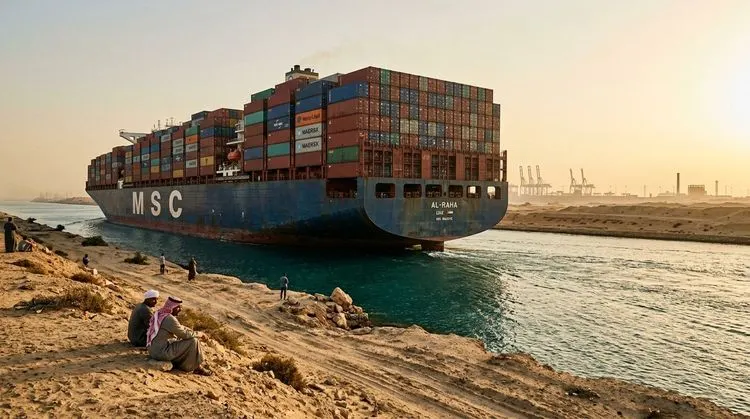
Global energy logistics has a stubborn geography problem, and it is shaped exactly like the Strait of Hormuz.
With ongoing geopolitical friction squeezing the narrow maritime corridor and disrupting roughly twenty percent of the world's oil and liquefied natural gas supply, the vulnerability of traditional shipping lanes has hit a breaking point. Enter Znera Space, a Dubai-based architecture firm that decided to throw out the traditional playbook and pitch a solution straight out of a speculative sci-fi epic: blasting a massive, man-made maritime canal directly through the United Arab Emirates.
Dubbed the "Strait of Union," this highly ambitious concept aims to completely rewrite the rules of global trade. The design house, alongside the architectural visualization team at Omegarender, has captured the attention of heavy infrastructure enthusiasts by proposing a 100-kilometer inland shipping channel. This artificial waterway would link the Persian Gulf directly to the open ocean via the Gulf of Oman, allowing global energy tankers to entirely bypass the volatile Hormuz choke point. Far from being just a secure trench for oil tankers, the designers envision the canal as a national spine for the country, flanked by brand-new smart cities, industrial logistics hubs, and waterfront developments.
Naturally, drawing a line across the desert invites immediate comparisons to engineering legends like the Panama Canal or the expansion of the Suez Canal.
However, engineering a sea-level channel through the UAE introduces challenges that make the historic Panama dig look like a sandbox exercise.
Unlike Panama, which relies on a massive freshwater lock system to lift ships over rugged terrain, the arid Gulf region lacks the natural water sources required for such locks. To build the Strait of Union at sea level, engineers would have to literally slice a deep canyon through the formidable Hajar Mountain range down to bedrock. The sheer volume of rock and sand excavation would dwarf previous historical projects, likely pushing the price tag into hundreds of billions of dollars and requiring decades of construction.
Because of these astronomical financial and physical hurdles, industry professionals are viewing the proposal with a healthy dose of skepticism.
Energy market analysts point out that the region is already building faster, more practical insurance policies against maritime blockades. Major energy entities are focusing their capital on terrestrial solutions. Publicly traded giants like ADNOC Gas (ADX: ADNOCGAS) and ADNOC Drilling (ADX: ADNOCDRILL) rely heavily on expanding overland pipelines to move hydrocarbons safely across the country. Upgrading the existing Abu Dhabi crude oil pipeline networks directly to the eastern port of Fujairah accomplishes the same strategic goal as a canal, but at a fraction of the cost and time.
Concurrently, global port operators like DP World are already executing a pivot to the open ocean. Rather than waiting on a multi-decade canal to bring ships into the inner Gulf, maritime logistics strategy is increasingly favoring the expansion of massive deep-water container terminals and ports on the UAE's eastern coastline. By building out facilities outside the geographic bottleneck, supply chains remain insulated from regional conflict.
While the Strait of Union remains a visionary concept rather than an approved, active government project, it serves as a powerful indicator of how far Gulf nations are willing to think outside the box to secure their economic futures. Whether this breathtaking canal ever sees ground broken or simply remains an iconic blueprint on a designer's shelf, it has successfully forced a conversation on the extreme lengths the world will consider to keep global energy moving.
Sources
This report is based on architectural proposals and industry analyses published by Construction Briefing regarding the Strait of Hormuz bypass concepts, alongside official design releases documented in The National Law Review.