
The Brutal Math of the Oil Crisis According to Mike Wirth and Jeff Currie
With the Strait of Hormuz choked off and global reserves scraping the bottom of the barrel, energy executives warn that the impending oil shortage will send shockwaves through every corner of the economy.
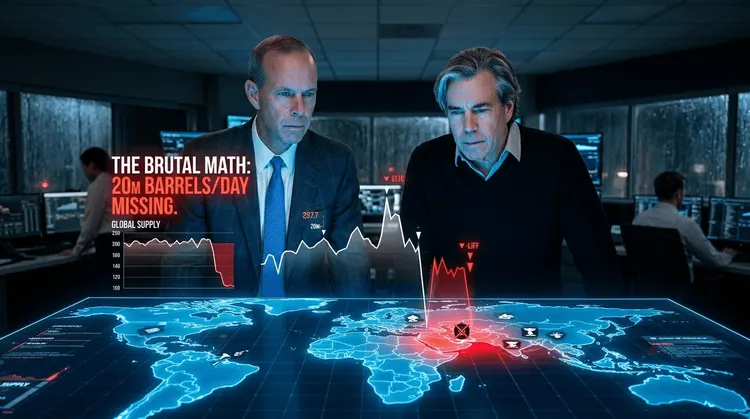
Buckle up and check your gas gauges, because the global oil market is officially running on fumes. The energy grid is facing a squeeze of historic proportions, and the executives who pump the world's lifeblood are skipping the corporate sugarcoating. With the Strait of Hormuz paralyzed by geopolitical conflict, roughly 20% of global crude oil transit, a staggering 20 million barrels per day, has simply vanished from the market. This is not just a headache at the pump; it is a systemic shock waving bright red flags across the global economy.
During a recent high-profile interview with CBS News, Chevron (NYSE: CVX) CEO Mike Wirth delivered a sobering reality check. The era of crossing our fingers for a swift diplomatic resolution is dead. Physical oil shortages are already making their unwelcome debut, forcing global demand to aggressively contract just to meet severely constrained supply. Asian economies, which lean heavily on Middle Eastern imports, are the first dominos to fall, with Europe squarely next in line. As Wirth pointed out, the final scheduled shipment of Gulf oil recently finished offloading at the Port of Long Beach. Once that buffer runs dry, American consumers will not be immune to the impending price shocks.
The timeline for a fix is equally bleak. Speaking on Bloomberg Television, Jeff Currie, Senior Advisor at ** Carlyle Group (Nasdaq: CG)** , warned that oil storage tanks in Europe will hit empty sometime in May, while the United States is staring down a completely drained reserve right around the July 4th holiday. Currie emphasized that the logistical knot is so thoroughly tangled that even an immediate end to the geopolitical standoff would still require more than three months to get crude flowing normally again.
The collateral damage is already rippling through the corporate world. Skyrocketing jet fuel costs recently forced Spirit Airlines (NYSE: SAVE) straight into bankruptcy, making the budget carrier an early and prominent casualty of the supply deficit. Meanwhile, Brent crude has aggressively surged past the $114 mark. Analysts at Goldman Sachs (NYSE: GS) are warning clients that global oil inventories are scraping all-time lows, and with no immediate end to the gridlock in sight, the depletion is only accelerating.
Beyond transportation, the maritime blockade directly threatens global food security. Svein Tore Holsether, chief executive of agricultural heavyweight Yara International (OTCMKTS: YARIY), recently cautioned that the collateral drop in fertilizer production could put billions of meals at risk, severely impacting vulnerable populations across Asia, Africa, and Latin America. As nations from Sri Lanka to Bangladesh resort to emergency energy rationing, the broader macroeconomic takeaway is grim. The U.S. and its allies are actively drawing down strategic reserves, but those safety cushions were never designed to absorb a systemic, prolonged shock of this magnitude. If you thought double-digit pump prices and widespread energy rationing were historical artifacts, it is officially time to check your rearview mirror.
Sources:
Bloomberg, Thomson Reuters (NYSE: TRI), Investing.com, CBS News, The Cradle, Jalopnik.