
Shipping Industry Proposes Levy To Accelerate Carbon Free Future
Shipping is responsible for almost 3% of global CO2 emissions.
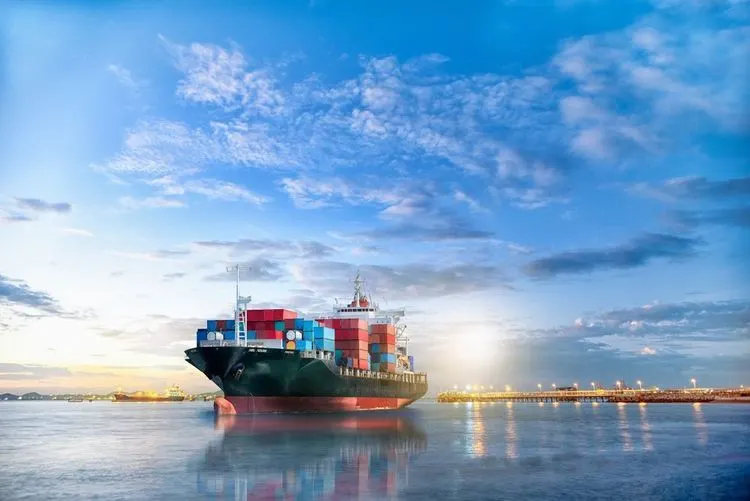
Leading shipping associations have proposed a global levy on carbon emissions from ships to accelerate industry efforts toward greener development. With around 90% of world trade carried by sea, shipping is responsible for nearly 3% of global CO2 emissions and the industry is under increasing pressure to get cleaner. For the first time, the International Chamber of Shipping (ICS) and Intercargo have jointly proposed a levy based on mandatory contributions for every ton of CO2 emitted by ships with more than 5,000 gross tons in global trade. The money raised would go to a climate fund that would be used to build bunker infrastructure in ports around the world to provide cleaner fuels like hydrogen and ammonia, the proposal said. "What the shipping industry needs is a truly global, market-based measure like this that will reduce the price gap between carbon-free fuels and conventional fuels," said ICS Secretary General Guy Platten. The proposal was submitted on Friday to the International Maritime Organization (IMO), the UN's shipping agency. An IMO spokesman said all proposals are welcome and will be open for discussion later this year, adding that "Market Based Action (MBM) proposals are in line with the original IMO greenhouse gas strategy". The IMO will hold an intersessional working group meeting in late October before the Marine Environment Protection Committee meets in late November to address issues such as reducing carbon emissions. The European Commission proposed in July that shipping be included in the EU carbon market to protect an industry that has evaded the EU's pollution charging system for more than a decade. An IMO-driven carbon levy will give industry more leverage on a global scale as concerns about regulation by separate legal systems like the EU grow. The ICS said "piecemeal" approaches like the EU proposal would make "maritime trade" much more difficult. "The ICS believes that a mandatory global, levy-based MBM is clearly preferable to a unilateral, regional application of MBM to international shipping as proposed by the European Commission," said the ICS.