
5 things to consider regarding hydrogene as ship fuel
Hydrogene might be the green solution to the tanker problem.
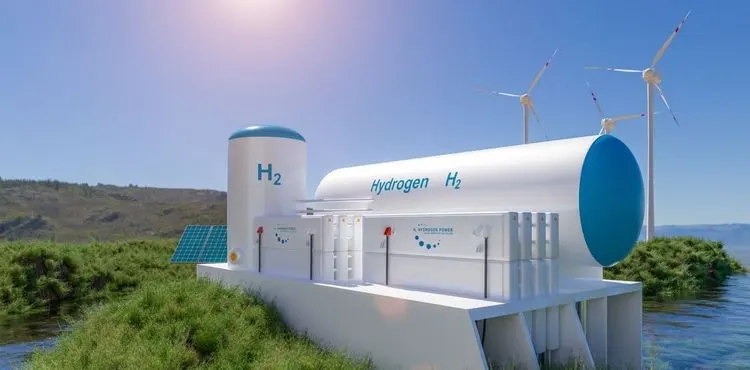
Green hydrogen could play a crucial role in the maritime industry's journey towards decarbonization. Produced by electrolysis, H2 is free of carbon emissions and could be available worldwide in the future - as marine fuel or as a key to synthetic fuels. Many in the shipping industry have recognized the potential of hydrogen, but the hurdles to implementing H2 technology are substantial. Led by DNV, a consortium of 26 partners and observers has joined forces in the MarHySafe Joint Development Project (JDP) to address the challenges surrounding hydrogen operation: safety and regulations. After completing phase 1, the consortium published the "Handbook for Hydrogen-fueled Vessels", which represents a roadmap for the safe operation of hydrogen ships with fuel cells. The manual will be continuously updated as the second phase of MarHySafe progresses. Here are five lessons learned so far. Knowledge gaps: More tests required on the safety aspects of handling, storing and bunkering hydrogen Testing and modeling need to be tailored to the unique properties and safety aspects of hydrogen. There are uncertainties about the behavior of cryogenic hydrogen (LH2) and about threshold values when detonations occur. "Cryogenic (liquid) hydrogen experiments, commissioned by the Norwegian Roads Administration and carried out at DNV Spadeadam Research and Testing Center in the UK, provided valuable input for the handbook," said Asmund Huser, Senior Principal Specialist, Quantitative Analysis at DNV . "These experiments provided important insights into how LH2 behaves in leakage scenarios in typical ship designs with enclosed spaces and during the bunkering of LH2, which creates confidence in the mitigating measures in the construction of maritime hydrogen systems," says Kolbjørn Berge, Head of Green Shipping Innovation and New Technologies at the Norwegian Maritime Administration. An important finding is that future modeling will have to take better account of the risk of detonation in the event of a leak. "For example, a rapid, jet-like release of hydrogen in a large room cannot be evenly distributed. Such an inhomogeneous release can lead to concentrated H2 pockets, which pose a higher risk of detonation. To avoid this, we need rigorous safety measures," explains Asmund Huser. What size and arrangement do these rooms have to be? Where do the fans, ventilation shafts or detectors have to be placed? These are some of the design considerations that can make a huge difference in the event of a leak. Dedicated, large-scale testing will be required as this industry grows.