
China is building the world´s smallest nuclear reactor
The power plant is supposed to give communist China a leading role in this technology.
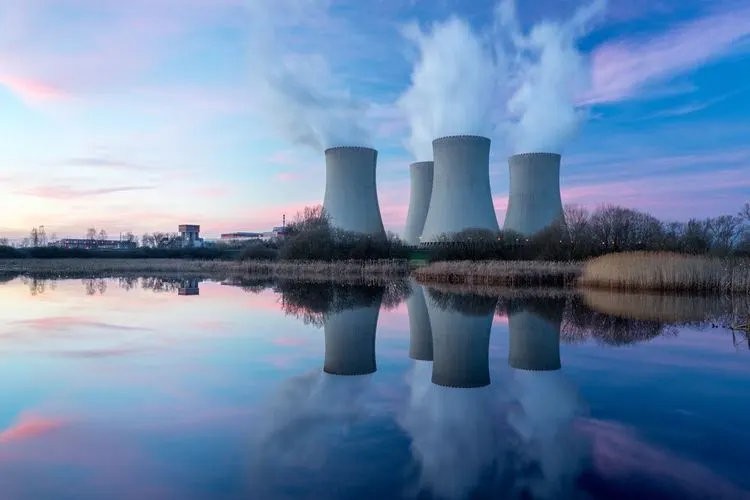
China National Nuclear Corporation (CNNC) began construction of the world's first small onshore nuclear reactor on Tuesday to gain a leading position in the modular reactor market. Construction of the demonstration project began at the Changjiang nuclear power plant in southern China's Hainan Province, the local newspaper Global Times reports. Construction of the small nuclear reactor "Linglong One" will start four years later than originally planned due to delays in official approvals, as reported by Reuters. The start of construction for the small reactor was originally planned for 2017. A year earlier, the small Linglong One reactor was the first to pass a safety clearance by the International Atomic Energy Agency (IAEA). After completion and commissioning, the small nuclear reactor will meet the annual electricity needs of around 526,000 households, reports Global Times, without giving a schedule for completion. CNNC has developed small reactor technology for the past decade, Socket says. According to the World Nuclear Association, interest in small and simpler technologies for generating nuclear power is growing due to lower costs and the desire to generate power away from large grid systems. "Overall, SMR research and development in China is very active, with strong competition between companies promoting innovation," says the association, noting that the USA, Great Britain and Canada are also developing and developing their respective domestic small reactor technologies support. In the United States, advanced small modular reactors (SMRs) are an important part of the Department of Energy's goal of developing safe, clean, and affordable nuclear power options, according to the DOE. The department has supported the development of slightly water-cooled SMRs, which are licensed by the Nuclear Regulatory Commission (NRC) and are likely to go into service in the late 2020s to early 2030s.