
Why the Next Uranium Market Squeeze Is Closer Than Wall Street Thinks
As SPUT’s NAV discount temporarily sidelines the market’s biggest buyer, a quiet structural disconnect in nuclear fuel is setting the stage for an explosive physical squeeze.
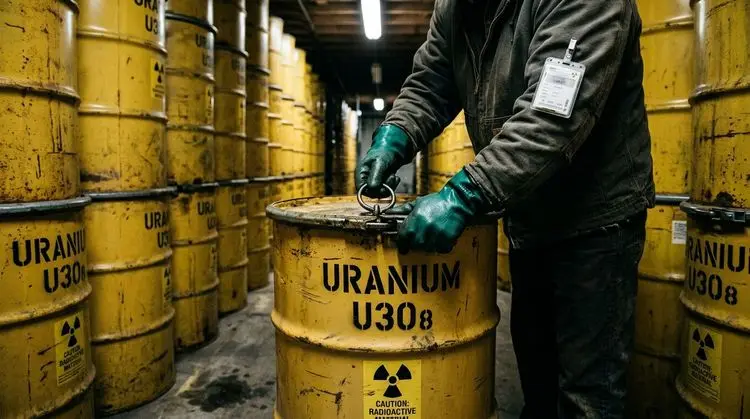
Financial markets have a knack for mistaking temporary quiet for structural calm.
While generalist investors obsess over daily tech swings or oil inventory statistics, the global nuclear fuel supply chain is quietly coiling like a high-tension spring.
With uranium spot prices pressing against key resistance near $90 per pound, an intriguing mechanical disconnect has settled over the market: the primary physical buyer on paper is sound asleep, creating a setup that could surprise unprepared traders.
That mechanism belongs to the Sprott Physical Uranium Trust (TSX: U.UN | OTCQX: SRUUF), an entity designed to accumulate physical yellowcake and hold it in perpetuity. Under its governing charter, the fund cannot issue new equity via its At-The-Market facility whenever its market price trades at a discount to Net Asset Value. When equity sentiment drags and the trust trades at a discount, its buying engine temporarily shuts off. The physical spot market is left entirely to bilateral transactions between utilities, intermediaries, and producers, removing what is historically the market's most aggressive marginal bidder.
As John Ciampaglia, Chief Executive Officer of fund manager Sprott Inc. (NYSE: SII / TSX: SII), has observed, short-term market noise routinely pushes retail investors to the sidelines while the underlying structural deficit continues to build. The trust does not engage in speculative timing or market calls, but its transition from a discount back to a net asset value premium historically serves as an explosive financial catalyst. Once the discount closes, the fund reactivates its capital-raising machinery to mop up secondary physical inventory in a market that is already illiquid.
While short-term traders focus on daily spot price movements, reactor operators operate on decade-long horizons. Grant Isaac, President and Chief Operating Officer of Cameco Corporation (NYSE: CCJ | TSX: CCO), emphasizes that power utilities rarely rely on the spot market for operational survival. Instead, the true price discovery occurs in long-term bilateral contract negotiations away from public order books. With utilities quietly locking in future deliverable supply at triple-digit pricing to ensure energy security, the spot market represents only a small window into broader industry realities.
This divergence between physical demand and equity valuation creates a high-conviction setup for sector insiders. Brandon Munro, Executive Chairman of Bannerman Energy Ltd. (ASX: BMN), notes that when physical prices grind upward independent of equity flows, the eventual return of institutional capital forces a rapid repricing. Once public funds catch up and restore physical trusts to a premium, renewed spot purchasing frays utility nerves and puts immediate pressure on producers needing spot material for contract fulfillment.
On the supply side, major global producers such as NAC Kazatomprom JSC (LSE: KAP | AIX: KAP) continue to navigate operational hurdles and chemical supply chain shortages, limiting their ability to rapidly scale production. Guy Keller, Portfolio Manager at Tribeca Investment Partners, points out that discretionary spot sellers routinely run out of physical material once prices break through psychological resistance thresholds. When secondary float dries up and institutional vehicles re-enter the market with active capital facilities, the resulting supply squeeze can unfold with remarkable speed.
Sources
- Sprott Asset Management Fund Analysis and Executive Statements from John Ciampaglia, Sprott Inc. (NYSE: SII / TSX: SII)
- Cameco Corporation Executive Commentary and Market Contracting Reports from Grant Isaac, Cameco Corporation (NYSE: CCJ / TSX: CCO)
- Bannerman Energy Corporate Market Insights from Brandon Munro, Bannerman Energy Ltd. (ASX: BMN)
- Tribeca Investment Partners Resource Fund Analysis from Guy Keller, Tribeca Investment Partners
Disclaimer
Neither the author of this article nor JuniorStocks holds equity, stock options, or any other financial positions in Sprott Physical Uranium Trust (TSX: U.UN; OTCQX: SRUUF), Sprott Inc. (NYSE: SII; TSX: SII), Cameco Corporation (NYSE: CCJ; TSX: CCO), Bannerman Energy Ltd. (ASX: BMN), NAC Kazatomprom JSC (LSE: KAP; AIX: KAP), or any other companies mentioned in this publication. This content is published by JuniorStocks strictly for informational purposes, was prepared independently without company compensation, and utilized AI assistance for text editing, formatting, and generating accompanying media. While global nuclear energy adoption and the uranium market represent a compelling frontier in the broader energy transition, this article does not constitute investment or financial advice. Investors are strongly advised to conduct their own thorough, independent due diligence and consult with a qualified financial professional before making any investment decisions.