Why the legal cannabis industry is popular in the American South
Some of the largest THC companies are south of the Mason-Dixon line
 Justin Wong (JW)October 5, 2026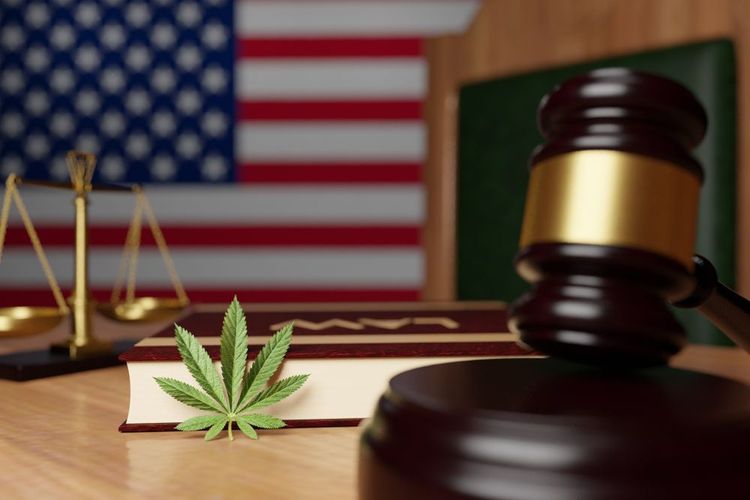
When it comes to cannabis, states like California, Colorado, and Oregon get the most attention. But some of the nation's largest marijuana companies have their roots south of the Mason-Dixon Line.
"The south is the biggest frontier for cannabis," said Jim Cacioppo, the CEO of Jushi, a marijuana company that operates 26 pharmacies in Virginia, Pennsylvania, California, Illinois and Massachusetts. "It's only a matter of time."
Jushi has two pharmacies in Virginia but plans to open a total of six by 2023. His company's stores are located outside of Washington, D.C., in Alexandria, Arlington, and Fairfax. Cacioppo says that while California holds the title of the nation's largest marijuana market in terms of annual sales, he sees states like Virginia and Georgia as having the greatest potential for growth.
"We consider Virginia one of the best licenses for cannabis," said Cacioppo, explaining that his company has the exclusive right to weed in the suburbs of D.C. with its 2.5 million inhabitants legally for sale. "That is the cornerstone of Jushi."
Virginia is still a small medical market. But with a population of over 8.5 million, it has the potential to grow larger than Colorado, which has 5.7 million residents and a cannabis market of $ 2.1 billion (annual sales).
Virginia started medicinal sales in late 2020. Cacioppo says the upward trend hasn't even started - Virginia is expected to start its adult use program in 2024.
"It has tremendous momentum," he says. "If you introduce adult use, sales could triple overnight.
It's no secret: most Americans believe that cannabis should be legal. And legalization continues to spread from state to state, with 36 states already regulating their own cannabis markets. According to the latest Gallup poll, 68% of Americans are in favor of legalization, with 83% of Democrats, 71% of Independents, and 50% of Republicans in favor of lifting prohibition.
For decades, the Democrats have spearheaded the issue of cannabis legalization. But that is no longer the case. On Election Day in November 2020, a wave of states usually considered Republican passed legal cannabis laws. Arizona, Mississippi, Montana and South Dakota have all voted to legalize either medical marijuana or adult cannabis, which has revealed what was previously hidden: cannabis is neither a red nor a blue issue.
This week, South Carolina Republican Nancy Mace tabled a bill that would end federal cannabis prohibition. The bill includes some classic Republican positions, a low federal excise tax, and the right of states to legislate the drug of their own, but it is further evidence that marijuana legalization has support on both sides of the aisle. Perhaps one of the biggest signals that legalization is no longer a neo-hippie thing is the fact that Charles Kochs Americans for Prosperity supports the Mace bill.
"For a long time there was a perception that cannabis was a partisan issue," said Kim Rivers, CEO of Florida-based cannabis company Trulieve. "This image has changed and evolved over time. It seems to be more of a topic in its own right for people, not necessarily related to their other political or ideological views."
The lion's share of Trulieve's business is based on the theory that cannabis is impartial. The company is the largest player in the $ 1 billion medical marijuana market in Florida, has acquired Arizona-based Harvest, has a strong presence in Pennsylvania, has expanded into West Virginia, and is licensed in Georgia.
On Friday, November 12th, about 100 people lined up outside West Virginia's first marijuana dispensary to wait for it to open at 10 a.m. Trulieve opened the state's first marijuana dispensary in Morgantown, home of West Virginia University. Days later and 59 miles further south, Trulieve opened another pharmacy in Weston.
"We think this is going to be a really strong market and we've invested in the entire supply chain," says Rivers.
Rivers says the company has nine retail location licenses in West Virginia and will open all nine within the next 12 months.
Trulieve is on the rise in Georgia too. Georgia legalized low-THC oil and products for medical use in 2015, but the state's sluggish process - marked by slow-moving bureaucracy and protests - has delayed the start of the state program. Six companies, including Trulieve, were awarded the licenses, but the start of the program has been postponed indefinitely as regulators are now on a process to hear complaints from 15 companies that have won the weed sale Had lost peach state. Legislators will meet before the end of the year to consider revising the program and starting over.
For Trulieve, the expansion to Georgia also makes logistical sense.
"Georgia is of course our neighbor to the north," says Rivers. "There are a lot of connections there. We currently have around 200 employees living in Georgia.
Rivers says it will be able to share resources, people and supplies across state lines. While cannabis cannot cross state lines because it is still illegal at the federal level, international trade will likely one day be legal.
"At some point we will also have the advantage that the actual [cannabis] product can be moved across national borders," says Rivers.
Zane Bader, founder of the Georgia Cannabis Trade Association, believes the state could be a multibillion dollar market in 10 to 20 years.
"We have a population of 10 million people and Atlanta could be a distribution center," says Bader. "Long-term, I'd say the revenue potential is comparable to Illinois.
In May, Green Thumb Industries announced a $ 83 million acquisition of medical cannabis operator Dharma in Virginia. Virginia has a limited program that licenses only five companies to grow and sell marijuana.
With a population of 8.5 million in the state, GTI is one of five companies serving the new legal cannabis market, according to Kovler, in the right place at the right time, especially if the state introduces adult marijuana sales in 2024.
Kovler is optimistic about Old Dominion. "We love the Virginia market," he told Forbes at the time of the Dharma acquisition. "It is the beginning of what is happening in the south, which is currently a [legal] cannabis desert."