Half of the legal cannabis revenue for social causes
New York State is working on appropriate regulations
 Marcus Stuart (MS)October 5, 2026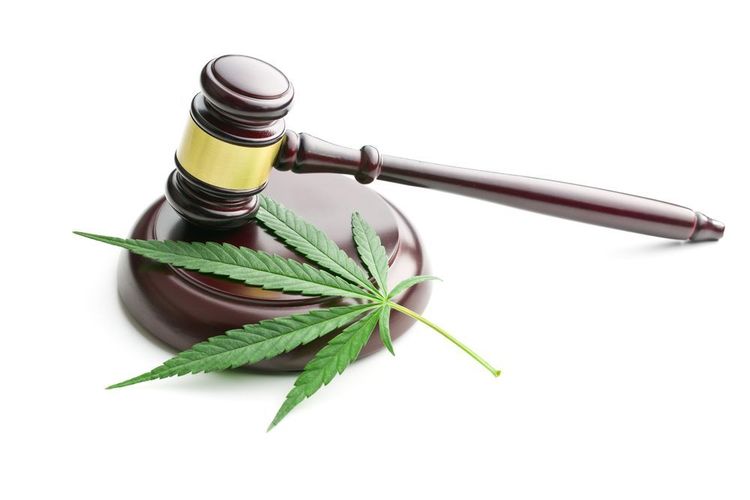
The New York State Cannabis Regulatory Authority this week welcomed homeland entrepreneurs looking to establish themselves in one of the largest markets in the United States at an industry meeting aimed at boosting the Empire State's legal adult marijuana business.
The idea of involving people from African American and Hispanic neighborhoods, where most of the drug arrests took place, is still very much alive in the state that could spawn a legal cannabis trade estimated at $ 3 billion or more.
The state continues to work to give half of its strictly monitored cannabis licenses to people most severely persecuted by the war on drugs, said Tremaine Wright, chairman of the New York State Cannabis Control Board, the agency that oversees the legal cannabis trade, after the state legislature voted to legalize adult marijuana earlier this year.
"We will level the playing field," Wright said Thursday in front of about 400 people on the main stage of the CWCBExpo in the Jacob Javits Center in New York City. "If we let big corporations dominate, it would be just another way to undermine and repress communities that have been overburdened. We are ready to make cannabis inclusive."
A recurring theme of the show, November 4-6, which was attended by thousands of entrepreneurs and emerging businesses - from vape pen manufacturers to analytical test equipment to curved rolling papers - was to encourage people in the old or pre-legal In the cannabis business to get into the legal business.
The players in the industry are trying to avoid the mistakes made in the largest legal cannabis market in the US, California, where competition from the old market is challenging legal cannabis because the latter is more expensive due to sales taxes, quality requirements and other legal costs .
Fresh after her appointment by Governor Kathy Hochul on September 1, Wright used her first official speech in her current role to reiterate her support for licenses for cultivation, retailing and other aspects of the cannabis business.
New York is in the process of creating a comprehensive set of licensing rules, with the goal of issuing licenses in about 18 months. The state has not yet determined how many licenses to issue.
The state is also considering a potential investment fund to raise capital for cannabis startups, but details are still unclear. Half of the tax revenue from legal cannabis sales is said to be invested in local communities.
To avoid having social justice licenses sold to larger corporations, as is the case in other states, New York will require that these license types be sold only to other social justice applicants to ensure the program continues helping affected neighborhoods, Wright said.
While the state welcomes cannabis companies that operate in multiple states, all cannabis companies must disclose their ESG frameworks to operate, she said.
"When I look in this room, I see our future," said Wright, a former MP from Brooklyn's Bedford-Stuyvesant. "We are in the process of creating the fairest cannabis program in the country."
The social activist and TV and film actor C.J. Wallace, who is also the son of the late platinum rapper Notorious B.I.G. and Grammy winner Faith Evans also gave a keynote address at CWCBExpo that focused on his role in the industry.
Wallace learned about cannabis as a young child at home in his mother's recording studio when musicians dropped by, but he was more interested in the CBD treatment of his younger brother's autism, he said.
Wallace founded a cannabis social justice arm called Think Big to campaign for social inclusion requirements in New York State law that year. He is also building a cannabis-inspired business under the name Frank White, a nod to the main character played by Christopher Walken in the 1990s film "King of New York" - a film his father admired.
Wallace said the business needs to be more inclusive as he knows few or no other African-American legal cannabis entrepreneurs in the US who are his age. Wallace turned 24 this year.
"I want to have the coolest cannabis-use lounge in New York," he said. "Before that, we have to empower our people. I want Frank White to be the first company people think of when they think of socially fair cannabis."
Wallace said he was careful not to over price legal cannabis, admitting that he is still shopping the old market in California because he doesn't want to pay the prices of legal pharmacies.
"There is so much we have to learn and teach the legal market ... it's a two-way street," he said. "If you're smart, you want to be part of it, and it makes the most sense for both sides."
Cannabis activist Steve DeAngelo, who is also the co-founder of Harborside Dispensaries in California, told MarketWatch that he will create a new nonprofit called the Justus Foundation to help old cannabis leaders transition to the legal market.
According to industry statistics cited by DeAngelo, 75% of California's $ 11.5 billion cannabis sales come from legacy growers and sellers.
The Justus Foundation will work for regulations that enable the old operators to enter the legal market, support them with training and mentoring and help them set up licensed cannabis companies, all with the aim of creating a "single market" for cannabis in the To create state, he said.
The cannabis ETF THCX, + 2.15%, is down 5% year-to-date, while the AdvisorShares Pure US Cannabis ETF MSOS, + 5.15% is down 27% and the S&P 500 SPX, + 0.06% increased by 25%.