
Legal weed industry cannot compete with illegal market
California: Resistance from local authorities also makes trade difficult
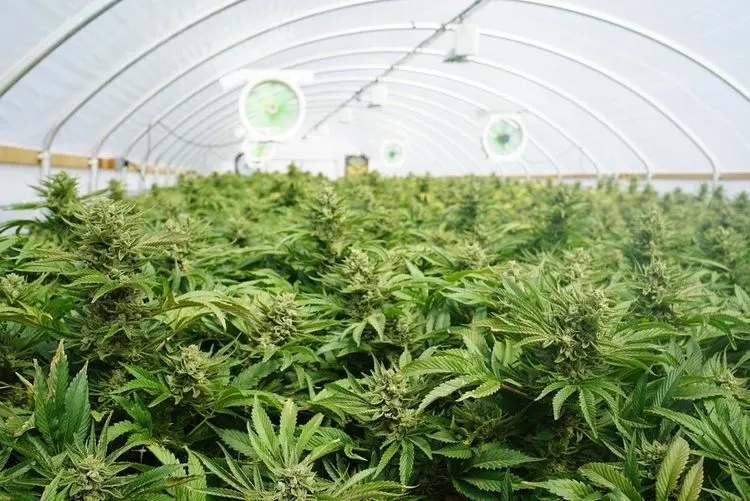
California's cannabis market is booming nearly five years after voters legalized recreational weed use. But there's a catch: the vast majority of weed sales still take place underground.
Rather than making cannabis a staple of the high street, California's stringent regulations have caused most operators in the industry to shut down, flee the state, or sell on the state's illegal market, which tops 8 billion annually Dollars, which is twice the size of the legal sale.
Resistance from local authorities, high taxes, and competition from unlicensed companies make California's efforts to build a thriving legal market difficult. Many of these factors are enshrined in California law, including regulations that allow city governments to exclude licensed cannabis companies. In the meantime, the state has eased the penalties against illegal operations in the name of racial justice.
The power struggles between industry groups and lobbying dysfunction in Sacramento have stalled potential legislative solutions with no end in sight. The scale of these problems has meant that California's iconic cannabis industry - at least on the legal side - lags behind other states that have regulated the market.
"You don't have a real cannabis industry if the dominant part has no interest in being legal," said Adam Spiker, executive director of the Southern California Coalition, a cannabis trade association. "As far as I know, there is no other regulated industry in the world that works like this."
Licensed cannabis stores selling legal goods are sparsely distributed across the state - there are about 2 per 100,000 residents, one of the lowest rates in the nation among states that support legal recreational sales.
For comparison, Oregon has 17.9 retail stores for every 100,000 people. Colorado shares a similar ratio, and Washington state's quota is more than three times that of California.
California has only 823 licensed cannabis stores, but nearly 3,000 retailers and delivery services operate in the state without a permit, according to a February 2020 market analysis by Marijuana Business Daily.
The uncontrolled cannabis ecosystem has caused great economic and environmental damage in California. Many of the estimated 50,000 illegal croplands in California have been found to use banned pesticides, which can poison wildlife and water supplies, and are believed to be responsible for hundreds of millions of liters of water drained from farms and surrounding communities each year.
In the past few months alone, law enforcement agencies have unearthed sprawling grow operations in arid Antelope Valley and urban Alameda County, discovering around 50 tons of processed cannabis products and more than 100,000 plants - well over $ 1 billion worth of loot.
California Attorney General Rob Bonta announced earlier this week that the state had confiscated 165 weapons and more than 33 tons of infrastructure such as water pipes and toxic chemicals in nearly 500 raids this year.
"The victims of illegal marijuana cultivation are numerous and the toll is high," he said at a press conference. "Families whose water supplies are contaminated by banned pesticides, exploited workers exposed to dangerous and illegal working conditions, farmers denied clean land and water."
California, like many other states, has lowered its penalties for illicit marijuana trafficking in response to the disproportionate number of arrests targeting colored communities as part of drug criminalization. Many in the industry say they generally support criminal justice reforms, but that the current offense and $ 500 fine is simply too low to discourage illegal activity.
Unlicensed pharmacies that have been closed for violating city regulations often reappear, sometimes even on the same street. And acreages like the one in Antelope Valley often come back online just days later, law enforcement agencies admit. Any state that created a legal market has had to deal with illegal activity, but the underground market in California is far more entrenched. Many of today's unlicensed businesses have legally served customers for decades under the state's medical marijuana laws passed in 1996, but went underground after voters adopted Proposition 64 recreational marijuana initiative passed in 2016. Some worked in cities that banned the sale of marijuana, while others shied away from the new fees and taxes.
The new law forced longtime business owners to make tough decisions, said Elizabeth Ashford, vice president of communications at cannabis delivery service Eaze.
"Just a few minutes ago they were completely legal under the law," she said, looking back on the time the new regulations were introduced. "Did anyone really believe that these people would just say, 'Well, we're just going to close our doors'?"
California's cannabis law leaves it up to local authorities to decide whether to open or slam the door to cannabis. So far, most have opted for the latter.
A whopping 68 percent of California's cities ban the sale of cannabis, including much of the Central Valley. Other territories have imposed strict caps on the number of licenses available, limiting market growth.
In San Diego, there are only 25 weed shops for a population of 1.4 million people; in San Jose there are 16 shops for 1 million people.
Some local officials claim the industry harms children or argue that pharmacies will attract crime. Others point to the difficulties involved in drafting regulations, complying with rigorous environmental assessments, and handling possible lawsuits from applicants who are not licensed.
Public gatherings in places like Mountain View in Silicon Valley and Anaheim have turned into hours-long marathons of protest and abuse when the subject of cannabis store approval came up.
Spiker, who helps develop local cannabis regulations, said some elected officials fear a pro-cannabis stance could cost them their seat.
"Just because Prop. 64 was accepted in a church with, say, 60 percent, doesn't mean that the 40 percent who voted no won't organize a dismissal or make a strenuous attempt at the next election to throw out of office, "he said.
The lack of retail stores - and legal shelf space - gives unlicensed businesses a large, unserved customer base. It also contributes to an oversupply of goods produced by the state's 6,000 licensed growers, which has resulted in a drop in prices for wholesale cannabis, harming legal growers.
"Local control, let's face it, has crippled the California market and prevented it from realizing its potential," said Hirsh Jain, founder of cannabis consultancy Ananda Strategy.
Industry leaders say there is little chance lawmakers will take that power away from the state, largely due to strong support for local scrutiny by law enforcement and city and county officials.
Citizens' groups and budget deficits related to Covid have led some jurisdictions to open their arms to smoking weed. According to Jains count, 28 cities will open their first pharmacies in 2022 and 37 more cities will enact retail regulations.
Companies that manage to obtain a license have another problem: competing with their unregulated competitors.
The prices of cannabis products sold in legal dispensaries can be two to three times higher than the prices of nearly identical products sold in unlicensed stores that do not charge cultivation or excise taxes that cover the cost of drive up retailers.
Some buyers see little incentive to pay more for a legal product.
"Price is the biggest motivator behind consumer choice," said Ashford. "We know from our own data that people will undoubtedly buy something when it's cheaper.
The difference between legal and illegal is not always obvious. Underground pharmacies are often indistinguishable from licensed stores and sell similar looking items that may be counterfeit or diverted from the legal market. Illegal delivery services are also listed next to the legal providers on platforms such as Google and Yelp.
Regulators warn that products purchased from unlicensed retailers pose a public health risk. They point to an outbreak of lung disease related to unchecked vape cartridges that killed 68 people and more than 2,800 people were hospitalized nationwide in 2019.
State lawmakers in favor of cannabis have tried unsuccessfully to lower the tax burden against opposition from the SEIU, the powerful union that helped fund the 2016 vote. The union disagrees with industry arguments that lowering tax rates will fuel growth and ultimately increase tax revenues, said Robert Harris, a lobbyist for the SEIU.
"I've never heard of an industry that didn't say, 'Cut our taxes, we'll sell more and you'll make more,'" he said.
Cannabis industry leaders say resolving the tax problem is their number one priority for the next year. Nicole Elliott, director of the State Department of Cannabis Control, said they may have support from Govin Newsom, who campaigned for Prop. 64 in his 2016 candidacy.
"I can imagine that the administration will be very happy to work with the legislature on these discussions," she said.
But it will be difficult to find consensus on a tax plan. For example, there is disagreement about whether a tax cut should be made for cultivation or retail.
Legislators and Capitol staff believe that this disagreement makes legislative passage nearly impossible and maintains the status quo. That's a scenario the industry can't afford, given the overhead costs the illegal guy doesn't create, "warned Spiker.
"The gap between legal and illegal is too great to bridge".