
USGS Report Reveals US Federal Lands Hold 600 Years of Coal Supply
A new USGS assessment reveals 356 billion tons of available coal on public lands—sparking fresh debate over energy dominance, AI grid demands, and economic realities.
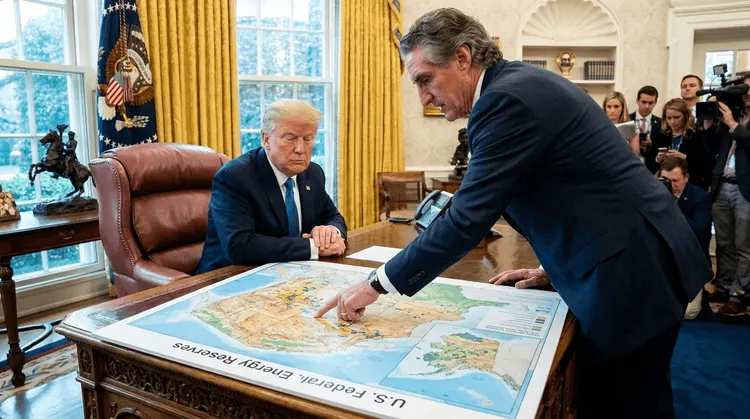
Forget searching for spare change under the couch cushions; the federal government just confirmed it is sitting on six centuries worth of electricity generation buried directly underneath public land. A comprehensive assessment released by the United States Geological Survey (USGS) calculates that federally managed lands hold roughly 356 billion short tons of available coal resources. Coupled with 4.2 billion short tons of reported active reserves tied to working mines, public territory contains enough subterranean energy to power the nation for at least 600 years at current consumption rates.
The findings provide strong geological backing for Executive Order 14261, a policy directive issued by President Donald Trump designed to revitalize the domestic coal industry. Aligning with this federal strategy, Interior Secretary Doug Burgum designated metallurgical coal on the 2025 List of Critical Minerals while framing coal production as a cornerstone of national grid stability. Burgum emphasized that maintaining robust domestic power generation remains essential to meeting rising electrical demand driven by expanding artificial intelligence data centers and maintaining energy independence.
The vast majority of active federal reserves remain concentrated in a few key geographic strongholds. Wyoming leads the country by a wide margin, housing 14 of the nation's 34 active federal coal mines and controlling 87 percent of all reported active federal reserves. Nestled in Wyoming's Powder River Basin sits the North Antelope Rochelle mine, operated by Peabody Energy Corporation (NYSE: BTU), which holds the title of the largest coal mine in the world by reported reserves. Across the rest of the federal landscape, 29 mines extract thermal coal for power generation, three Alabama operations, where producers such as Warrior Met Coal, Inc. (NYSE: HCC) operate, extract metallurgical coal for steel manufacturing, one Colorado facility supplies cement production, and a Utah mine remains idled.
Looking north, geologists identified Alaska as a massive untapped energy frontier. The USGS estimates at least 140 billion short tons of coal resources in Alaska alone, with broader geological estimates indicating the state could hold as much as 5.5 trillion short tons. To support infrastructure and production capacity across these territories, the federal government has committed over $1 billion to extend the operational life of existing coal-fired power plants and bolster extraction capability.
From an economic perspective, energy analysts note an important distinction between geological resources and active reserves. While 356 billion tons represents an immense underground resource, converting those deposits into economically viable reserves requires substantial rail infrastructure, long-term buyer demand, and capital investment. Furthermore, climate scientists continue to stress that expanding coal reliance runs counter to long-term carbon reduction goals. Nevertheless, across public lands managed by the Departments of Agriculture, Defense, Energy, Interior, and the Tennessee Valley Authority, the federal government now holds an undisputed inventory of its subterranean energy wealth.
Source
- U.S. Geological Survey (USGS) Energy Resources Program Assessment Report and U.S. Department of the Interior Official Announcement.