
The US-Dollar has weak years ahead
Large bail outs could mean years of weakness for the world´s largest currency.
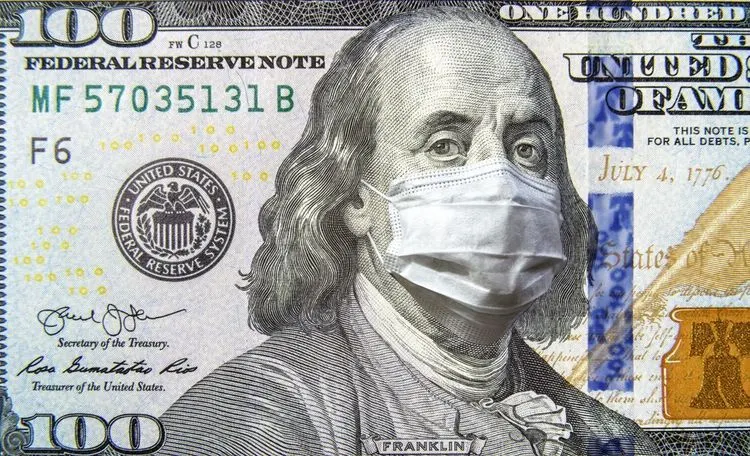
In the past, President Trump has scourged the Fed for its hawkish policies and repeatedly stressed the fact that the central bank's rate hike regime is contributing to an overly strong dollar and sluggish economy. Trump even went so far as to ask the White House to look for ways to weaken the currency in order to boost exports and promote economic growth. The dollar has been in an upward trend over the past decade and Trump's presidency, which has been blamed for the rising US deficit. It is therefore rather ironic that President-elect Joe Biden of all people will grant Trump's wish - a structurally weaker greenback. The dollar has spent much of 2020 on a downward spiral as investors bet that a post-pandemic global economic rally will continue to suck money into riskier assets, forcing the US to increase its borrowing as it tries to close its swelling twin deficit finance. The dollar index (DXY), a measure that weighs the USD against a basket of six major world currencies, fell to 89,600 on Wednesday, a level it last hit in April 2018, down 13.4% its high in March, while the euro rose to $ 1.2291, a gain of 10% for the year. The dollar has also fallen sharply against the Chinese yuan, breaking above 6.4900 for the first time since mid-2018 amid reports that Chinese banks have started to step up purchases of the American currency in an effort to contain the decline. The prospect of a brighter year 2021 has reduced the need for the safe haven dollar thanks to the ongoing rollout of Covid-19 vaccines. However, there are growing concerns that the program is falling behind schedule. Investors rarely complain, however: a weaker (to some extent) dollar is considered good for the US economy for a number of reasons. First of all, it promotes reflation by making most of the goods traded cheaper. About 90% of world trade is in dollars. A weak dollar means that the currency is in abundance. Global monetary conditions are comfortable and easy when the dollar is weaker, which is good for risk assets like stocks and especially emerging markets. Second, a weaker dollar could improve the trade balance in favor of the US economy. For decades the US has been a net importer, buying far more from other countries than it sells to them - the US is a consumption giant with a current import deficit of $ 240.2 billion (as of September 2020). A net importer like the US would normally prefer a strong currency because it makes imports cheaper. However, since the 2008 financial crisis, most developed nations have pursued policies that favor weaker currencies - and the US is no exception. A weaker dollar makes US exports cheaper and more competitive in overseas markets. This could boost domestic production, create more jobs and stimulate the economy.