
Suez canal blockage without impact on LNG markets
The blockage through a large freight ship did apparently not influence gas prices.
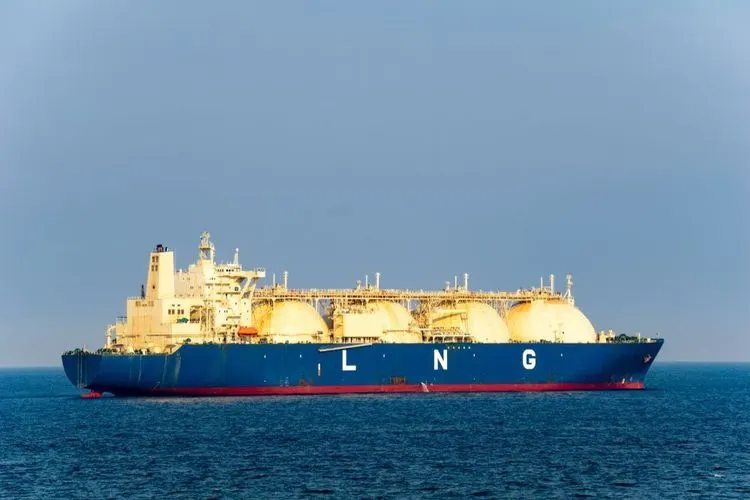
On the morning of March 23rd, the world was shaken by the unfortunate news that the Suez Canal was blocked. At 7:40 a.m. local time, the Ever Given ran aground when strong winds took her off course. The importance of the Suez Canal for worldwide shipping can hardly be underestimated. Experts quickly pointed out the impact of the blockade on global supply chains. It was expected that energy prices would also be affected. However, the blockade did not move oil and gas prices much. Before the Ever Given crisis, 10 percent of the world's oil and 8 percent of liquid natural gas passed through the canal every day. The modest rise in LNG prices in Europe shows that the market has not experienced any serious disruption. A closer look at the global LNG markets shows that the world's largest importers can be found in two regions: Europe and East Asia. In terms of energy exports, natural gas and oil come from roughly the same areas (with a few exceptions such as Australia). However, the blockade had a different effect on LNG prices than on oil prices, which rose moderately in both Europe and Asia. Europe is fortunate to be surrounded by countries with large gas reserves in practically every direction except the Atlantic. While domestic production declines due to exhaustion or for political reasons (the Dutch cut production due to tremors), imports increase. Europe's massive pipeline infrastructure connects it with producers in the north (Norway), south (Algeria) and east (Russia and the Caspian region). Although the demand for LNG is increasing, most of the gas it consumes is still imported via pipelines. Europe's high reliance on Russian gas and Moscow's alleged aggression have raised concerns. LNG has become the preferred choice for diversification. Compared to Asia, however, European customers enjoy a higher level of energy security. The availability of pipeline gas and the large storage capacities in several north-west European countries, which can act as a buffer in the event of supply disruptions, have reduced price volatility. The second reason why the LNG markets were not disrupted after the blockade is the growing importance of the Asian market. The economies in the east require ever larger amounts of raw materials and energy. The reorganization of the LNG market has been going on for years as ever larger quantities of LNG are being shipped to Asia. The natural gas shipped is particularly important for East Asia as there is no major pipeline infrastructure connecting it to the producers. With the exception of China, which has built several pipelines for the import of natural gas, other Asian countries lack comparable connections. Despite the infrastructure, China is also seeing an increase in LNG imports as consumption has risen sharply. Asia was already the most important destination for LNG during the recent Suez Canal crisis. The short blockage does not rule out that things would have turned out differently if, say, it had lasted several weeks instead of days. Stock levels in Europe are already historically low due to the harsh winter and could not have cope with a long interruption. However, the Suez crisis exposed developments in the global gas market. Asia's phenomenal economic potential means there is more room for growth. Southeast Asia and India are also importing ever larger quantities of LNG. Therefore, the conclusion is that short-term disruptions in the Suez Canal will only have a moderate effect on LNG prices.