
Soybean output in Latin America set to rise
Good forecasts for Brazilian processing
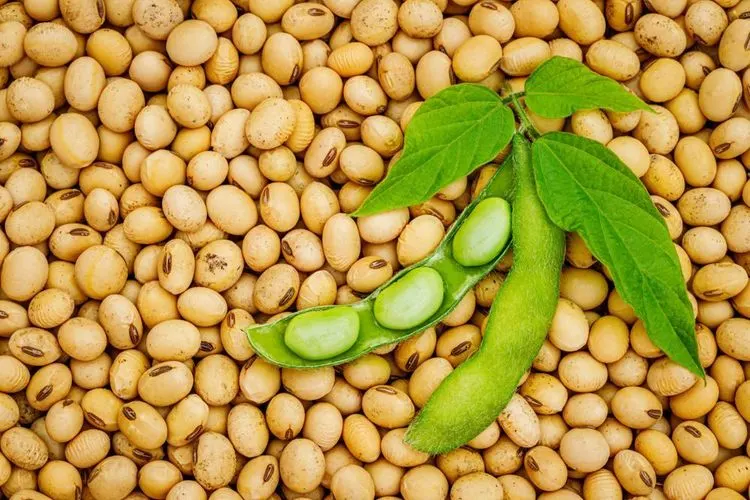
Argentine and Brazilian soybean volumes are expected to increase in 2022, according to analysts, despite some domestic challenges.
While the Argentine soybean harvest in the 2021-22 marketing year (October-September) is forecast to be 4.6% higher than in the previous year at 42 million t, the Brazilian soybean harvest is likely to be 2% higher than in the previous year at 47.7 million t according to the US Department of Agriculture in its latest agricultural supply and demand estimates dated December 9th. However, the crushers in these two major South American economies face different local problems such as: B. Adverse government policies, taxation, macroeconomic challenges and weather that limit their capacity utilization.
Persistent Argentine problems In recent years, the Argentine milling industry - the world's largest exporter of soybean meal and oil - has struggled with insufficient capacity utilization, inflation-related operating costs and high export tariffs.
Many agricultural analysts assume that these problems will persist in 2022.
Argentina is still struggling with a long-lasting recession and a very fragile dual currency system, which is having a significant impact on soybean cultivation in the barren country.
Argentina currently has an export tax of 33% on soybeans and 31% each on soybean meal and soybean oil, compared to 12% each on corn and wheat.
The high tax rate for soybean processing puts pressure on the profit margins of the local processing companies, which also have to contend with irregular deliveries of raw soybeans and high logistics costs due to the flattening of the Parana River caused by the drought.
The Parana is the lifeline of the Argentine raw material transport infrastructure and contributes over 80% to the export volume every year. However, the river's water level usually drops drastically due to a prolonged drought in the middle of the year, which severely affects the transport system.
In 2021, according to the Rosario Grain Exchange (BCR), logistics costs for Argentine exporters and traders increased by 300% year-on-year due to the historically low water level of the Parana River, hampering the country's grain supply and reducing the price competitiveness of its agricultural exports .
For the period between March and August 2021, the BCR estimates the loss of export revenue of $ 315 million to the country's agribusiness due to the parana dried up.
With another drought-related La Nina weather phenomenon happening in 2021-22, there is a high likelihood of another drought in 2022, which should again put pressure on operating costs and processing margins.
Regardless, Argentina's soybean meal and oil production and exports are expected to increase in 2021-22 as the sector remains resilient.
While soybean oil production is likely to increase by 5.7% year-on-year to 8.35 million t, soybean meal production is estimated at 32.75 million t according to the WASDE report, which corresponds to an increase of 4.6% compared to the previous year.
"I don't think soybean complex exports were lower than expected in 2020-21, and I expect the increase seen over the past few years will continue in 2021-22," said Pete Meyer, head of Grains and Crops Oilseed Analysis at S&P Global Platts.
Sustained momentum in Brazilian soy processing The amount of soybeans in Brazil is likely to increase in 2022, despite the fact that the National Energy Policy Council decided in late November to reduce the biofuel content in diesel fuel to 10% (B10) next year. Previously, an admixture of 13% was required for January-February and of 14% from March 2022, according to the analysts.
While most in the biofuel industry assume that reducing the vegetable oil-based biodiesel blend from B13-14 to B10 in 2022 will reduce the soybean harvest by more than 3 million tons year-on-year, S&P Global Platts Analytics sees no noticeable impact from the mandate reversal.
"The B10 mandate is expected to have very little or no impact on soybean processing in Brazil," said Pete. Brazil was largely at B10 levels in the 2020-21 marketing year (October-September), processing 46.75 million tons, he said.
For 2021-22, according to Platts Analytics, processing of 47.7 million mt higher is expected by 1 million mt. Even if the Brazilian soybean harvest falls back to the level of the previous year and is reduced by 1 million t in 2021-22, soybean oil exports could increase by the corresponding amount of 1 million t.
Daniele Siqueira, an analyst at the consulting firm AgRural, shares Platts Analytics' point of view: "Although some major biodiesel producing countries may feel the pressure, we do not expect any significant annual change in soybean cultivation due to B10."
Similarly, the Brazilian national supply company has kept its forecast for soybean oil and flour production in 2021-22 at 9.8 million t and 37 million t, respectively, practically unchanged from the previous year after forecasting a record production of 143 million t of soybeans would.
Soybean oil makes up about 75% of the country's total biodiesel production, while other vegetable oils and animal fats make up the remaining 25%.
Brazil is still the third largest biodiesel producer in the world after Indonesia and the USA.