Evergrande receives grace period
Still doubts about the company's solvency
 Gabriel ThomasOctober 5, 2026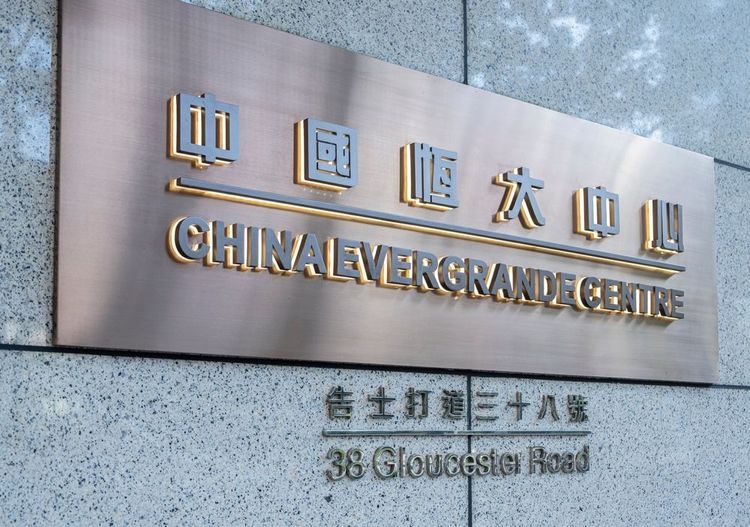
China Evergrande Group has set up a risk management committee as the insolvent real estate developer gets closer to a debt restructuring that has been underway for months across global markets and the world's second largest economy.
The real estate giant, struggling with over $ 300 billion in debt and facing the largest bankruptcy in China's history, said Monday that the committee includes state officials and that it has an important role in "easing it." and removing future risks "of the group will play.
On Friday, Evergrande said it would seek restructuring of its external debt after admitting it may be unable to meet its financial obligations, according to the provincial government of southern Guangdong Province, where the company is based has prompted them to intervene to deal with the consequences.
"Evergrande tried to sell assets to pay off its debt, but Friday's statement basically said the company is going to 'surrender' and needs help," said Conita Hung, director of investment strategy at Tiger Faith Asset Management. "That is a very bad signal."
Evergrande's shares fell to record lows on Monday as the company again stood on the verge of bankruptcy as the 30-day grace period threatened to end its $ 82.5 million debt.
At the end of business hours in Asia, two bondholders stated that they had not received any payments.
Evergrande, which has historically made coupon payments within 11 hours, declined to comment.
Should Evergrande be formally declared insolvent, it would trigger a wave of mutual defaults affecting the real estate sector and beyond, potentially shaking the confidence of global investors already shaken by the appearance of the Omicron variant of the coronavirus.
"As long as there is no further announcement, everyone is waiting to see whether this time the first real trigger will be. This is also true in light of the feverish stock market expected this week," said Karl Clowry, partner at Addleshaw Goddard in London.
The Chinese authorities have stepped up efforts to reassure markets that Evergrande's problems can be addressed.
As the latest move, the Chinese central bank announced on Monday that it would lower the amount of cash that banks must hold - the second of its kind this year - and free up $ 188 billion in long-term liquidity to help them to support slowing economic growth.
Evergrande's shares plunged 20% Monday to close at an all-time low of HK $ 1.81 after the company announced late Friday that creditors had requested $ 260 million and that it cannot guarantee funds to repay the coupon could, which prompted the authorities to summon the chairman of the board.
Analysts said the concerted efforts of the authorities suggest that Evergrande has likely already entered a managed debt restructuring process.
Morgan Stanley (NYSE: MS) said such a process would include coordination between authorities to keep the real estate projects running and negotiating with onshore creditors to secure funding to complete the projects.
Regulators would also likely facilitate debt rescheduling talks with offshore creditors after operations stabilize, the U.S. investment bank said in a report.
The recent plunge in Evergrande's dollar-denominated bonds accelerated, with the bond issued in March 2022 falling 4.35 cents per dollar to 27.7 cents while other issues such as the bonds issued in 2024 and 2025 fell to record lows below 20 cents as the data from MarketAxess showed.
LIQUIDITY bottleneck
The company is just one of many property developers suffering from a lack of liquidity due to regulatory restrictions on borrowing, which has resulted in foreign debt defaults, credit downgrades and sales of property developers' stocks and bonds.
To contain the turmoil, regulators have been urging banks since October to ease lending for developers' normal financing needs and allow more real estate companies to sell domestic bonds.
Still, the government may have to step up its easing measures significantly in the spring to prevent a sharp downturn in the property sector as repayment pressures mount, Japanese investment bank Nomura said in a report on Sunday.
Quarterly repayments on dollar bonds will nearly double to $ 19.8 billion in the first quarter and to $ 18.5 billion in the second quarter.
Easing measures like the ability to sell domestic bonds are unlikely to help Evergrande refinance as there would be no demand for its bonds, CGS-CIMB Securities said on Monday.
Evergrande's inability to sell projects - with nearly zero sales in November - also makes short-term debt payments "highly unlikely," the brokerage firm said.
On Monday, smaller construction company Sunshine 100 China Holdings Ltd announced that it was unable to repay a $ 170 million bond due December 5 "because of the adverse impact of a number of factors including the macroeconomic environment and the real estate industry, has run into liquidity problems ".
The insolvency will trigger mutual default clauses on certain other debt instruments, it said.
Last week, Kaisa Group Holdings Ltd, China's largest offshore developer after Evergrande, announced that bondholders had rejected an offer to exchange their 6.5% offshore bonds due December 7, causing a default threaten.
The developer has started talks with some of the bondholders to extend the deadline for repaying the $ 400 million debt, sources told Reuters.
Smaller competitor China Aoyuan Property Group Ltd announced last week that due to a series of credit rating downgrades, creditors have requested repayment of $ 651.2 million and that the company may not be able to pay due to a lack of liquidity .
Aoyuan CEO Guo Zi Wen urged executives at an internal meeting on Friday to display a "war attitude" to ensure the operation and implementation of the projects and fund repayments, according to a person with direct Knowledge of the matter to Reuters.
These tasks will be a priority for the developer, who will leave the negotiation of the loan repayment to professional Hong Kong institutions, said the person who did not want to be named as the matter is private.
Aoyuan did not respond to a request for comment.
The developer's share price fell nearly 8% on Monday. Kaisa lost 2.2% and Sunshine 100 crashed 14%.