
Seven major corporations want to buy back shares
Investment bank RBC Capital Markets estimates the total at $41 billion
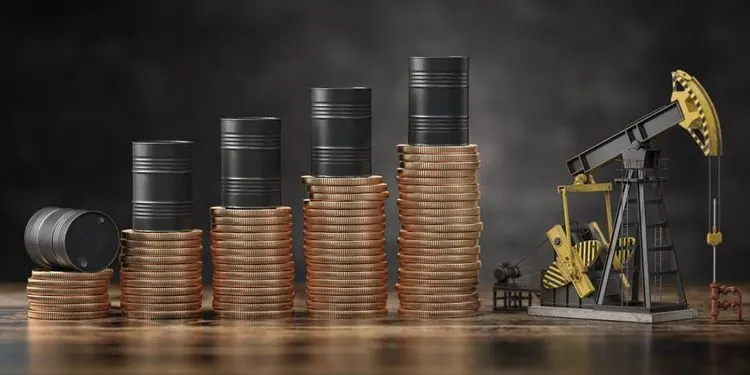
Western oil and gas majors are on track for record share buybacks this year to gain investor confidence and boost yields.
The big seven oil and gas majors - BP, Shell, ExxonMobil, Chevron, TotalEnergies, Eni and Equinor - will return $38 billion to shareholders through buyback programs this year, according to Bernstein Research. The investment bank RBC Capital Markets even estimates the total at $41 billion.
That would be nearly double the $21 billion in buybacks completed in 2014, when oil prices last exceeded $100 a barrel, and the highest level since 2008, when total buybacks hit $46 billion, fueled by a huge stock buyback program at Exxon.
Between 2006 and 2008, Exxon, then the largest company in the world by market cap, repurchased about $30 billion worth of its own stock each year, helped by a period of capital discipline and asset divestitures following its 1999 merger with Mobil.
This time, every major corporation has stepped up its share buyback program, according to RBC Capital Markets' Biraj Borkhataria. "The sector is in better shape than it has been in a long time. The question now is how long the cycle will last.
According to RBC and Bernstein, Shell will lead the field and buy back more than $12 billion of its own stock by 2022. At least $8.5 billion of those buybacks will be completed in the first half of the year, Shell said this month, including $5.5 billion from the sale of its US Permian Basin assets.
Chevron bought back $1.4 billion worth of stock in 2021 and has said it will spend $3 billion to $5 billion on buybacks this year.
The sector's poor performance during the pandemic meant most management teams thought their stocks were undervalued and buybacks were cheap, Borkhataria said.
He added that on top of the share buybacks, around $50 billion should return to shareholders in the form of dividends, noting that total returns for supermajor shareholders could be even better if oil prices continue to rise.
Several banks, including Goldman Sachs, expect Brent crude, currently at $93 a barrel, to trade above $100 later in the year. BP's goal of repurchasing $4 billion annually and growing its dividend 4% annually through 2025 is based on an oil price of just $60 a barrel.
Some critics have claimed that buybacks are diverting capital away from the energy transition. BP repurchased $3.2 billion worth of stock in 2021, while total investments in its low-carbon energy division were $1.6 billion. However, many investors argue that returning cash to shareholders allows them to invest those funds in other parts of the energy sector.
With uncertainty about future energy demand, companies need to "balance" between returning cash to shareholders, maintaining spending on core businesses and investing in the energy transition, said Nick Stansbury, head of climate solutions at Legal and General Investment Management, the UK's largest wealth manager.
"Given this uncertainty, it may be attractive for investors to place a significant emphasis on buying back shares at particularly low prices," Stansbury said.