
Russia warns of historic default
Moscow has accused the West of forcing an "artificial" default as dollar payments are due on Wednesday
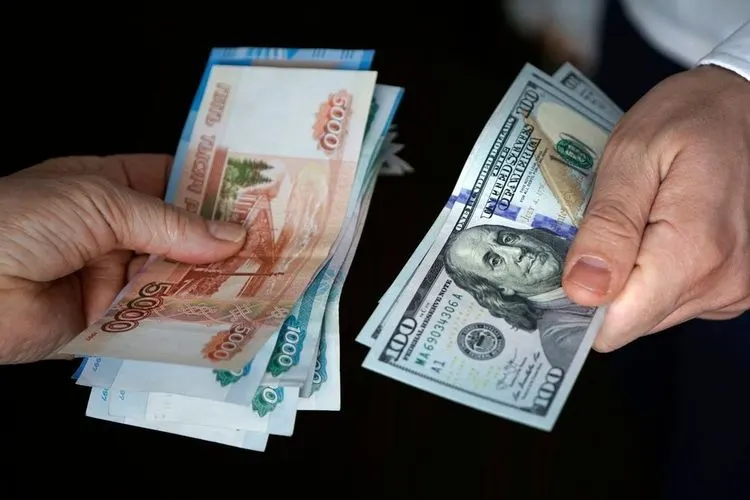
Russia is due to make two interest payments on its dollar-denominated bonds on Wednesday, but it's unclear whether Western investors will actually get their money, leaving a potential one-off sovereign default.
Russia's first default since 1998 and the first default on foreign currency debt since the Russian Revolution would complete a stunning about-face.
Before invading Ukraine, Russia was considered one of the most creditworthy countries in the world due to its low debt and huge oil and gas exports. But unprecedented Western sanctions aimed at cutting Russia off from the global financial system have sent the country's markets into free fall and made it more difficult to service the country's debt.
Russia has to pay investors a total of $117 million in interest payments on two of its bonds. The country has a standard period of 30 days to make the payments. Should it not do so, this would mean a technical payment failure.
The Treasury said Monday it had ordered the payments to be made as usual, but said its ability to do so could be limited by Western sanctions against Russia's central bank. Finance Minister Anton Siluanov said these sanctions - introduced earlier this month - are pushing the country into an "artificial default".
The markets have already largely priced in a default. Russia's foreign bonds are trading at about 20 percent of face value - a level that suggests very low confidence in repayment. The rating agencies, which awarded Russia investment grade status up until the end of February, have downgraded the country to the lowest notch, "junk," with Fitch Ratings describing a default as "imminent."
In reality, there are several official ways to be declared bankrupt, e.g. B. Court judgments, judgments by rating agencies or the industry association of the financial industry, which decides whether investors can make use of their default insurance.
Siluanov said it would be "perfectly fair" for Russia to pay its national debt in rubles until sanctions that have frozen almost half of the country's $643 billion in foreign exchange reserves are lifted.
However, paying in the Russian currency would still mean default in the eyes of most Western investors, and not just because of the currency's recent depreciation. While six of Russia's 15 dollar- or euro-denominated bonds contain an escape clause allowing them to be redeemed in rubles, the two bonds whose coupons mature on Wednesday are not among them.
In any case, investors in Europe and the US say the sanctions - both those of their own governments and Moscow's - would make it practically impossible to set up the Russian bank accounts needed to receive ruble payments. Lawyers say that even with the alternative payment clause loophole, a Russian default is likely and litigation almost inevitable.
Wednesday's payments directly affect Russia's $38.5 billion worth of foreign currency bonds, about $20 billion of which are held by foreign investors. But foreigners also hold about 20 percent of Moscow's local currency debt - which totaled about $200 billion before the war triggered a collapse in the ruble's value, rendering the bonds virtually non-negotiable.
The Russian government has already said that a recent coupon payment on these local bonds would not reach foreign holders, citing a central bank ban on sending foreign currency abroad. This was already painful for Western wealth management companies. More than two dozen funds with significant Russia exposure have been frozen, while others have drastically written down the value of their Russia holdings.
Typically, a default is followed by a period of negotiations between a government and its bondholders to reach an agreement on how to restructure the debt. This is usually done by swapping out the old defaulting bonds for new, less onerous bonds that are either simply worth less, have lower interest payments, or have longer repayment periods -- or a combination of all three.
Investors are typically reluctant to go to court and file for formal default, as doing so could default the entire bond and potentially default other bonds that have not yet defaulted.
However, a "normal" restructuring seems unlikely in the case of Russia. The sanctions are designed to lock the country out of global bond markets and ban Western investors from participating in new bond sales. Instead, investors will likely have to wait and write off their Russian bonds and wait for a de-escalation in the Ukraine conflict that could lead to an easing of sanctions. Some may even want to vote quickly to demand immediate repayment and court rulings from US and UK judges allowing them to seize Russian assets abroad to increase pressure on Moscow.
In the meantime, some investors are hoping that the missed interest payments will trigger a payout on credit default swaps - insurance-like derivatives used to protect against defaults. The decision will be made by a financial industry "selection committee" composed of representatives of major banks and asset managers active in the CDS market. The swaps might not help bondholders, however, as the financial penalties could mess up the complicated system for settling the contracts.
The consequences of Russia's last default in 1998 are still clearly noticeable. Moscow's shocking decision to devalue the ruble and forego its local debt followed the Asian financial crisis and sent shockwaves through financial markets, leading to the near-collapse of US hedge fund Long Term Capital Management and its bailout by a consortium of banks.
Even then, Russia continued to make payments on its dollar bonds. The last foreign default occurred in 1918, when the Bolshevik regime repaid tsarist debt after the Russian Revolution.
Analysts are relatively confident that a repeat of 1998 can be avoided. JPMorgan's Nikolaos Panigirtzoglou points out that foreign investors and banks have already reduced their exposure to Russia since the annexation of Crimea in 2014, unlike the mid-1990s when highly leveraged funds stocked up on Russian assets. So far, the invasion of Ukraine has only triggered moderate contagion effects in other emerging markets, with the far more significant impact of the crisis being felt in a rise in commodity prices.
Nonetheless, there are numerous examples in financial history of how unexpected side effects of events that were widely anticipated have led to major catastrophes.
The 30-day grace period means this "is probably not yet the moment where we see where the full tensions in the financial system might be. Still, this is clearly an important development to keep an eye on," said Jim Reid , a senior strategist at Deutsche Bank.