Russia keeps door open to talks
USA rejects most important security demands
 Justin Wong (JW)October 5, 2026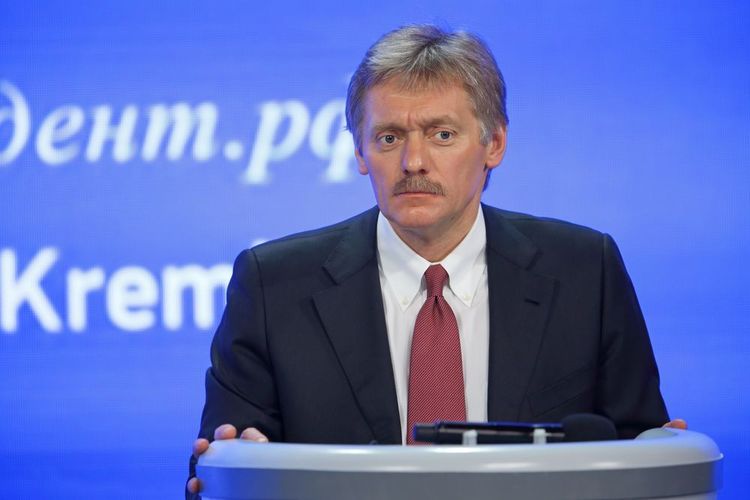
Russia said Thursday it was clear the United States was unwilling to address its key security concerns in its standoff over Ukraine, but kept the door open for further dialogue.
The United States and NATO on Wednesday issued a written response to Russia's calls for a reshuffle of post-Cold War security arrangements in Europe after the country massed troops near Ukraine, fueling fears of an invasion in the West had woken up.
Kremlin spokesman Dmitry Peskov said Moscow needed time to consider the response and did not want to jump to conclusions. However, US and NATO statements calling Russia's key demands unacceptable left little room for optimism.
"Based on what our (US and NATO) colleagues said yesterday, it is absolutely clear that we cannot say that our thoughts have been taken into account or that a willingness has been shown on the main categories outlined in these draft documents to take our concerns into account," he said. "But we will not rush ahead with our assessments."
The Kremlin's nuanced response made it clear that Russia is not dismissing US and NATO responses outright or closing the door on diplomacy.
Russia's Foreign Ministry has said the best way to ease tensions is to withdraw NATO troops from Eastern Europe, but it has also tried to allay fears of an invasion.
"We have repeatedly stated that our country has no intention of attacking anyone. We consider even the thought of war between our peoples unacceptable," said Alexei Zaitsev, a spokesman for the ministry.
Dollar-denominated government bonds issued by Ukraine posted their best day in nearly two years on Thursday, while Russian bonds also rose on the Kremlin's reaction.
In a sign of ongoing international concerns, oil prices rose to a seven-year high of over $90 a barrel, before later falling. Russia is the world's second largest oil producer and the crisis over Ukraine has fueled fears that energy supplies to Europe could be disrupted.
A Ukrainian presidential aide told Reuters news agency that Kiev wants to borrow about $5 billion from international organizations and in the form of bilateral aid, as borderline "hysteria" over the threat of a Russian attack is limiting access to capital markets.
DIPLOMATIC WINDOW
Ukrainian President Volodymyr Zelensky will hold a phone call with US President Joe Biden later Thursday on security, energy and macro-financial support issues, Zelensky's spokesman said.
Russia's security demands, presented in December, include an end to further NATO enlargement, barring Ukraine from joining, and withdrawing Alliance forces and weapons from the Eastern European countries that joined after the Cold War.
The US and NATO responses were not made public, but both had already rejected these demands while expressing a willingness to engage on issues such as arms control, confidence-building measures and limiting the size and scope of military exercises.
Turkey, a NATO member with good relations with both Kyiv and Moscow, said it was important to keep in touch. "All problems cannot be solved with one document, one or two meetings," said Turkish Foreign Minister Mevlut Cavusoglu in Ankara.
China urged the United States that all sides involved in Ukraine should remain calm.
"We call on all parties to keep calm and do nothing that fuels tensions and exacerbates the crisis," Chinese Foreign Ministry Foreign Minister Wang Yi quoted as saying in a phone call with US Secretary of State Antony Blinken.
Western countries have threatened economic sanctions should Russia invade Ukraine, building on measures imposed since 2014, when Moscow annexed Crimea and Russian-backed separatists began to close in on Kiev government forces in eastern Ukraine fight.
Ukrainian, Russian, German and French diplomats discussed the conflict in eastern Ukraine in Paris on Wednesday and agreed that further talks should take place in Berlin in two weeks.
Ukrainian Foreign Minister Dmytro Kuleba said the agreement on further talks means Russia is expected to remain on diplomatic channels for at least two weeks.
Russian Foreign Minister Sergei Lavrov said there was hope to start a serious dialogue with the United States, but only on secondary issues, not fundamental ones. In comments published on his ministry's website, he said President Vladimir Putin will decide Russia's next move.
Putin, who has not spoken publicly about the crisis in weeks, warned of an unspecified "military-technical response" that defense analysts say could relate to the deployment of missiles if Russia's demands are ignored.
The TASS news agency quoted a senior Russian Foreign Ministry official as saying that a nuclear missile crisis between Moscow and Washington is inevitable unless measures are taken to ensure restraint and predictability.
He said Moscow believes Washington is preparing to deploy short- and medium-range missiles in Europe and the Asia-Pacific region.
Biden has said he will not send US or allied troops to fight Russia in Ukraine, but NATO has said it has troops on standby and is reinforcing Eastern Europe with more ships and warplanes.
Four F-16 fighter jets flew from Denmark to Lithuania on Thursday, and six US F-15 jets landed in nearby Estonia on Wednesday to bolster NATO's eastern flank.