
Nvidia Regains Momentum with China Sales Approval
Nvidia roars back toward record highs as China reopens its doors and U.S. regulators ease up on AI chip export bans.
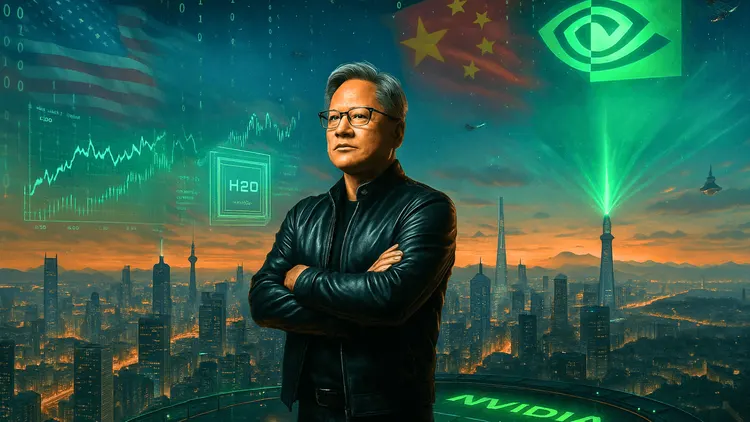
Nvidia’s stock has once again surged into record territory, soaring more than 4% in early trading Tuesday after news broke that the company plans to resume sales of its H20 GPUs in China. In a move that could reshape the global semiconductor landscape, Nvidia confirmed late Monday that it is filing an application to begin shipments of the H20 — a modified version of its high-performance AI chips built specifically to comply with U.S. export restrictions.
This comes on the heels of a crippling U.S. ban enacted in April that slashed billions off Nvidia’s bottom line and sent its stock into a tailspin. But now, as Washington signals that licenses will be granted, the AI chip titan is poised to make an emphatic return to one of its most critical international markets.
A Billion-Dollar Ban, A Fast-Moving Recovery
Back in April, the Trump administration blindsided Nvidia with an export ban on its H20 chips, citing national security concerns over AI development in China. The sudden move wiped out $2.5 billion in expected revenue in the first quarter of Nvidia’s 2026 fiscal year and sent shockwaves across the tech sector. With projections of an additional $8 billion in lost revenue for Q2, it was the type of policy hit that would have sunk lesser companies.
But Nvidia doesn’t flinch. Instead, the Santa Clara-based juggernaut retooled its strategy and leaned into Washington’s licensing framework, quickly working toward compliance while keeping the long game in mind. Now, the company says it's been assured that licenses to resume sales will be granted — potentially as early as this quarter. It hopes to begin deliveries “soon,” according to a late-night blog post that has since ignited investor optimism.
Jensen Huang Navigates the Storm
CEO Jensen Huang has been on the diplomatic frontlines, balancing the demands of geopolitical regulators with Nvidia’s commercial ambitions. After meeting with President Trump at the White House, Huang flew to Beijing where he's scheduled to hold a media briefing this Wednesday — his second trip to China this year. The stakes could hardly be higher. China remains a cornerstone of Nvidia’s revenue base, contributing roughly 13% of its 2025 topline.
While speaking about the ban earlier this year, Huang did not mince words. He called the restrictions “deeply painful” and emphasized that Nvidia cannot simply whip up another version of its Hopper chips tailored for China. The H20 was already a reduced-power chip crafted specifically to dodge U.S. export controls, and it too fell into the crosshairs. Now, with permission to resume limited sales, Nvidia is ready to reclaim lost ground and possibly more.
Wall Street Bets Big on a Turnaround
Investors didn’t hesitate. Nvidia shares, which had already closed at a record $164.92 last week, surged past $171 early Tuesday, pushing the company's market cap even higher above the $4 trillion threshold. The rally comes as Nvidia solidifies its position as the world’s most valuable company — surpassing even Apple and <a class="tvreplink" target="_blank" href="https://www.tradingview.com/chart/?symbol=Nasdaq%3AMSFT">Microsoft — and continues to dominate the AI chip space with seemingly unstoppable momentum.
Bernstein analyst Stacy Rasgon sees more upside ahead. While he concedes it's “unlikely” Nvidia will be able to deliver many H20 units in Q2, the back half of the year looks far more promising. If China sales ramp up, Rasgon estimates Nvidia could pull in an additional $15 billion to $20 billion in revenue. That would tack on another $0.40 to $0.50 per share in earnings, offering a material boost for shareholders.
AMD Follows Nvidia’s Lead
Not to be left out, Advanced Micro Devices (AMD) also made waves Tuesday, with its stock popping over 8% after revealing similar plans to reenter the Chinese market. AMD, like Nvidia, had been blocked from selling its MI300 series AI chips in April but now says it too is working with the U.S. Commerce Department to get approval for exports.
The broader takeaway is clear: AI chipmakers are finding a path forward through bureaucratic minefields. Despite the Biden and Trump administrations’ tough-on-China stances, economic logic appears to be carving out space for controlled commerce, especially in sectors as strategically important as artificial intelligence.
AI Supremacy and the U.S.-China Chess Match
This Nvidia-China saga is more than a business story. It’s the front line of a high-stakes geopolitical chess match where silicon is the most valuable piece on the board. Washington wants to slow China’s AI development without crippling its own tech champions. Beijing, meanwhile, remains hungry for next-gen semiconductors to fuel its ambitions in robotics, surveillance, and data modeling.
Nvidia’s H20 chip was always a compromise — powerful enough to be useful, but watered down enough to pass Washington’s national security sniff test. When even that was banned, many wondered if there was any room left to maneuver. Now, as both Nvidia and AMD re-engage with Chinese clients, it appears that commerce has reentered the conversation.
The Future Is Still in AI — and Nvidia Knows It
The current push to resume China sales comes amid Nvidia’s relentless pace of innovation. The company is already racing ahead with its next-generation Blackwell architecture and H200 chips, which have become the gold standard in generative AI training. <a class="tvreplink" target="_blank" href="https://www.tradingview.com/chart/?symbol=Nasdaq%3AMSFT">Microsoft, Amazon, Meta, and Tesla all rely on Nvidia hardware to train their language models and automation systems. It’s not hyperbole to say that today’s AI revolution is being powered, quite literally, by Nvidia silicon.
And while China matters, the company’s growth doesn’t hinge on any single market. Its data center revenue, up more than 400% year-over-year, is fueled by global demand for AI infrastructure. Still, the ability to sell in China again adds fuel to the fire — and removes a major overhang that had kept some investors on edge.
Nvidia Is Back With a Vengeance
With the U.S. giving Nvidia the green light to resume sales, the company now holds one of the strongest hands in tech. It’s more than just a comeback — it’s a message to investors, competitors, and policymakers alike: Nvidia is the beating heart of the AI economy, and it’s not going anywhere.
This latest rally isn’t just another spike. It’s a validation of Nvidia’s global strategy, its political savvy, and its relentless focus on building the world’s most powerful chips. As Huang prepares to speak in Beijing, Wall Street is already cheering. Nvidia stock is moving, and the world is watching.
Conclusion
Nvidia’s reentry into the Chinese market signals a pivotal turning point for the global AI industry. After absorbing a $10 billion blow, the company is staging a comeback with the full weight of its brand, tech, and political capital. The approval to resume H20 sales marks more than a policy shift — it reflects the growing realization that Nvidia is simply too important to sideline. With its stock soaring, competitors scrambling, and China back in play, Nvidia once again proves why it's the undisputed king of AI chips.