
Netflix Stock Sinks as Musk Fuels Cancel Campaign
Elon Musk’s clash with Netflix sparks a cultural and market storm as the streaming giant’s shares tumble for a fourth straight day.
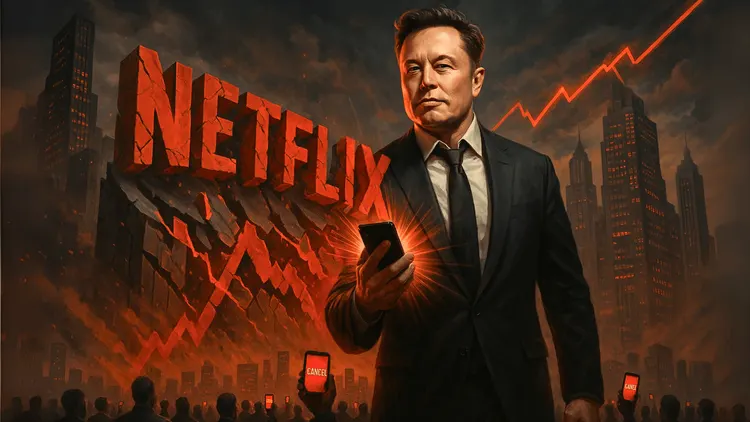
<a class="tvreplink" target="_blank" href="https://www.tradingview.com/chart/?symbol=Nasdaq%3ANFLX">Netflix is back in the spotlight for all the wrong reasons. Shares of the streaming giant have stumbled for a fourth consecutive session, slipping further into the red after Elon Musk urged his vast following to pull the plug on their subscriptions. The billionaire’s campaign against Netflix comes amid intensifying debates over the company’s programming choices, cultural stance, and role in shaping global entertainment.
Musk’s Cancel Call Hits Wall Street
The trigger for the latest sell-off was Musk’s post on X, formerly Twitter, where he told his 226 million followers to “cancel Netflix for the health of your kids.” The Tesla and SpaceX CEO zeroed in on Dead End: Paranormal Park, an animated series featuring transgender themes, and argued that the show was “pushing trans ideology” to children as young as seven. His remarks immediately amplified conservative criticism of Netflix, fueling a renewed culture war that spilled into trading floors.
Shares of <a class="tvreplink" target="_blank" href="https://www.tradingview.com/chart/?symbol=Nasdaq%3ANFLX">Netflix slid 2.9% on Thursday after dropping 2.3% on Wednesday, extending a string of losses. Investors are now weighing whether Musk’s outsized influence could have a lasting impact on subscription numbers or whether this is a flash-in-the-pan controversy. Wall Street has seen how Musk’s comments can move markets, from crypto to carmakers, and the question is whether Netflix has now entered his crosshairs for good.
A Familiar Backlash Against <a class="tvreplink" target="_blank" href="https://www.tradingview.com/chart/?symbol=Nasdaq%3ANFLX">Netflix
For years, Netflix has been a lightning rod for cultural disputes. Conservative groups have targeted the company for everything from stand-up specials to documentaries, accusing it of promoting progressive ideology. The company has defended its programming slate by pointing to the sheer diversity of its catalog, insisting it serves global audiences across political and cultural lines.
But this time feels different. Musk is not just another critic—he is one of the most powerful voices online. When he attacks a brand, it rarely goes unnoticed. And his commentary didn’t stop with children’s programming. He also endorsed posts claiming Netflix discriminates against White people, pointing to the company’s own diversity and inclusion report, which showed that over 70% of its 2023 series had underrepresented leads or co-leads, far above the industry average.
The Market’s Uneasy Reaction
Investors hate uncertainty, and Musk’s megaphone has created plenty of it. The surge in Google searches for “cancel Netflix” and “how to cancel Netflix” signals that the controversy is resonating beyond online chatter. While it is too early to know whether cancellation rates will spike, the perception of vulnerability is enough to rattle shareholders.
Netflix has weathered storms before, from subscriber stagnation to the pandemic boom and bust cycle. But Musk’s involvement raises the stakes. Unlike traditional critics, he commands a loyal following ready to act on his cues. Markets are now forced to consider whether his push could snowball into a broader boycott movement.
Cultural Clash Meets Corporate Reality
This episode underscores how culture wars and corporate strategy have become inseparable. Entertainment companies no longer compete solely on content—they are pulled into political battles that shape their brand and bottom line. For Netflix, the challenge is balancing its commitment to diverse storytelling with the risk of alienating segments of its audience.
Musk has framed the debate as one of parental concern, casting Netflix as irresponsible for exposing children to themes he views as inappropriate. Netflix, on the other hand, has doubled down on its message of inclusivity and range, betting that the broad appeal of its catalog will outweigh the controversy. The result is a high-stakes standoff with reputational consequences on both sides.
Where Netflix Goes From Here
Netflix’s leadership has not yet directly responded to Musk’s comments, but silence may not be sustainable if the stock slide continues. The company has long argued that its success lies in offering something for everyone, but it now faces a moment where its business model is colliding head-on with the influence of one of the world’s most polarizing figures.
Whether this backlash represents a temporary flare-up or the beginning of a sustained campaign is uncertain. What is clear is that Netflix is under pressure from both markets and cultural critics. The next few earnings reports will reveal whether subscriber churn is material or merely headline noise.
In the meantime, Musk has once again shown his ability to dominate the narrative, pulling a major company into his orbit and forcing Wall Street to reckon with his online firepower.
Conclusion
Netflix is no stranger to controversy, but Elon Musk’s involvement has turned a simmering culture war into a market-moving event. With shares falling for four straight sessions, the company faces questions about how resilient its subscriber base really is in the face of coordinated calls for cancellation. Musk’s influence adds a new layer of uncertainty, making this not just a story about streaming, but about the intersection of cultural battles, corporate resilience, and the power of one billionaire’s voice.