
Brewing Trouble: DavidsTea Heir Demands CEO Change
Family feud collides with corporate governance as DavidsTea faces calls for leadership change.
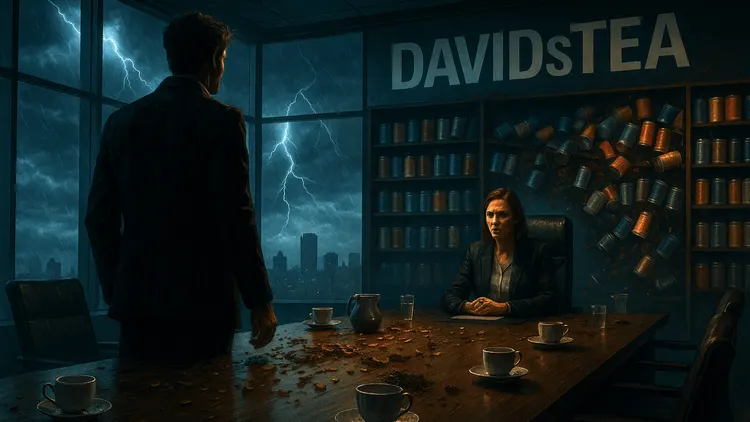
DavidsTea, once a darling of Canadian retail with its bright turquoise branding and mall-front energy, is again in the headlines. This time it is not about product launches or expansion plans, but a deeply personal and corporate conflict playing out within the Segal family, heirs of the late founder Herschel Segal. His son, Philip Segal, a lawyer based in New York, is calling for a complete leadership overhaul, accusing the company of poor governance and chronic mismanagement. At the heart of this storm is a family feud layered with corporate decline, shareholder frustration, and the question of whether DavidsTea can find a profitable path forward.
The Family Rift After Herschel Segal’s Passing
The flashpoint came in May with the death of Herschel Segal, a titan of Canadian retail who had earlier founded Le Château and later co-launched DavidsTea with his cousin, David Segal. In the wake of his passing, Philip and his sister—children from Herschel’s first marriage—were left out of his will. Their only inheritance lies in a trust tied to Rainy Day Investments Ltd., the family holding company that controls nearly 45 percent of DavidsTea. Yet Rainy Day is steered by Herschel’s widow, Jane Silverstone Segal, who chairs the DavidsTea board. Her daughter, Sarah Segal, has led the company as chief executive since December 2020. That leaves Philip with neither voting power nor influence, an arrangement he has now turned into a public crusade.
A History of Decline and Restructuring
Once celebrated as a retail innovator, DavidsTea went public on Nasdaq in 2015 at US$19 a share, but the excitement faded quickly. By 2018 the company had cycled through three CEOs, leading Herschel himself to return as interim chief after a bitter proxy battle. Just two years later the company sought creditor protection in Canada during the pandemic, shuttering more than 200 stores across North America. What remained was a leaner chain of just 18 Canadian stores and an online and wholesale business that became its lifeline.
The stock, now trading on the TSX Venture Exchange, closed this week at $1.17—a stark contrast to its IPO glory. Net losses have been a recurring theme, narrowing to $3.2 million in the most recent fiscal year but still raising alarms about sustainability.
Philip Segal’s Case Against Current Leadership
Philip Segal has taken his criticism public, most notably through a blog post in August. He points to years of financial underperformance and ballooning expenses, citing selling and administrative costs of $32.5 million last year, which amounted to more than half of the company’s sales. He also questions the independence of governance, accusing his stepmother and half-sister of treating the company as a closed shop rather than a public entity accountable to shareholders.
In interviews, Philip has highlighted a statement from Jane Silverstone Segal suggesting “nobody else” could run DavidsTea—a view he calls inappropriate for a board chair. His critique is clear: a company with this track record would, under normal governance, already have ushered in new leadership.
Sarah Segal’s Position and the Company’s Defense
Sarah Segal has not engaged directly with her half-brother’s accusations. Instead, DavidsTea issued a corporate statement focusing on its strategy. The company insists it is positioned for profitability, with a leaner structure and an omnichannel approach spanning e-commerce, retail, and wholesale. About half of sales now come from online orders, with the rest split between physical stores and partnerships with grocers. The company notes that seasonal swings affect results but remains committed to restoring profitability and consistency.
Sarah herself, in past interviews, has acknowledged the heartbreak of store closures while emphasizing a rebuild strategy that involves reopening select stores and strengthening brand partnerships. The official line from DavidsTea is simple: it does not comment on personal family matters.
The Governance Question
Philip Segal’s campaign is not just personal grievance—it taps into a broader concern about governance. Even before his public push, outside investors had questioned DavidsTea’s responsiveness. Justin Dopierala of Domo Capital, once an 11 percent shareholder, has said the company ignored interested buyers and failed to act on shocking revenue declines. Domo has since exited its position, underscoring investor fatigue with the brand’s direction.
The governance issue goes to the core of how Rainy Day Investments, with its voting power, controls DavidsTea. Minority shareholders, like Philip, find themselves locked out, unable to sell or vote, yet tied financially to the fate of the company. It is a structure ripe for conflict.
A Company at a Crossroads
The situation raises existential questions for DavidsTea. Can the company turn its fortunes around under Sarah Segal’s leadership, or is Philip right that a fresh perspective is overdue? The market has little patience for extended losses, and the company’s share price reflects years of disappointment. At the same time, its brand still holds recognition in Canada, and its direct-to-consumer model gives it a fighting chance in the evolving specialty beverage market.
The family feud may be personal, but its consequences are undeniably corporate. When a public company is controlled like a private fiefdom, governance and accountability become pressing concerns. For shareholders, employees, and customers, the future of DavidsTea now seems entangled in a family struggle that refuses to steep quietly in the background.
Conclusion
DavidsTea’s saga is more than just a family dispute—it is a corporate drama about governance, leadership, and survival in a competitive market. Philip Segal’s accusations may be sharpened by inheritance disappointment, but they also echo the concerns of investors who have long questioned the company’s direction. Sarah Segal’s leadership has kept the brand alive through unprecedented challenges, yet profitability remains elusive. The outcome of this battle could determine whether DavidsTea regains its former glow or continues to fade into retail history.