
Is the world facing a commodity supercycle?
Focus on prices for agricultural and mining commodities
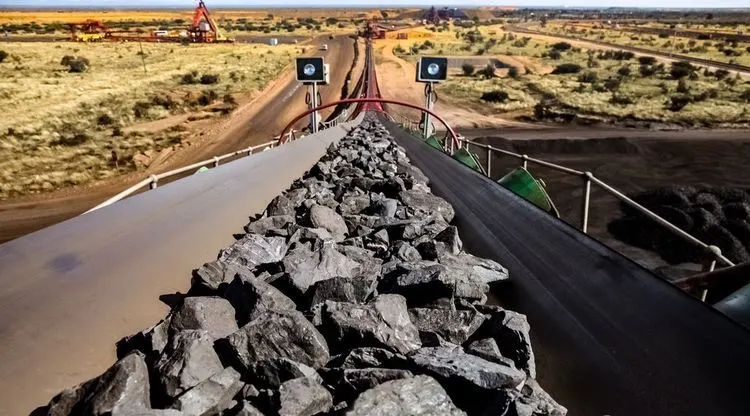
Agricultural and mining commodity prices are at the forefront of economic trends that are shaping the global economy and affecting the world's ability to meet its climate and sustainable development goals. Policy makers need to recognize and address such trends, which are beyond the jurisdiction and influence of individual countries. Toby Gardner of SEI Headquarters explores this topic as part of Currents 2022, a series of SEI perspectives highlighting the trends of 2022 and beyond.
Since the outbreak of the Covid-19 pandemic in early 2020, the prices of many commodities have risen sharply, despite the economic impact of the pandemic. The situation has sparked an uneasy debate about how pronounced and long-term this price increase will be and how it will affect the behavior of producers and consumers.
There are three possible, interrelated explanations for what is happening and for what may loom in the coming years:
This could be the start of a new traditional commodity cycle. Lack of investment during a decade of low prices is now leading to higher prices. This development is taking place against a backdrop of continued rapid increases in demand for certain commodities, including those most closely linked to deforestation, such as soy, palm oil and beef. It could also be a temporary supply shock triggered by the disruptions related to the Covid-19 pandemic combined with increased demand from the economic recovery, compounded by rising inflation. This could be the start of a truly new commodity super cycle. It could be the start of a commodity cycle amplified by the impact of pandemic-related supply chain disruptions and the transition to a greener economy. If this is the case, the price increases may be driven by increased demand for commodities, such as the many metals essential to electrification and the renewable energy sources critical to the transition, and by the growing importance of sustainability considerations leading to lead to higher standards, be driven. Both can lead to "green inflation", i. H. at higher costs that are passed on to consumers. The question of whether we are entering a commodity super cycle is still an open one. Investing in the transition to a low-carbon economy is still in its infancy. Some forecasts indicate that prices will stabilize or decrease in the second half of 2022. It is difficult to imagine that the prices of energy and many metals will not increase significantly in the medium term - especially given the critical dependence of electrification on currently scarce raw materials. For example, consumption of copper, which is fundamental to the transition to a more electrified economy, is expected to more than double by 2050.
Regardless of the causes of these trends, social and ecological effects are already evident. Last year's record-high gas prices have had a major impact on the prices of all other commodities, especially fertilizers, which are the basis of modern agriculture. There are already serious warnings about the likely impact of rising fertilizer costs on 2022 crops, with some countries banning fertilizer exports and even ammonia exports.
The situation has serious implications for the deforestation agenda, one of the cornerstones of the Glasgow climate agreement. The rise in the prices of key agricultural commodities remains the main issue in meeting net-zero targets for 1.5°C global warming. Despite renewed pledges by governments of both producer and consumer countries to curb deforestation, the surge in prices and demand means two things. Either agriculture will continue to spread into native vegetation, despite best efforts by producer country governments, or there will need to be a significant change in behavior in demand markets, whether through higher prices and easier access to capital to incentivize higher standards (including a to achieve deforestation-free production) or reduced consumption, or both.
The experiences of the past few decades do not bode well for either. Regardless of how much commodity prices continue to rise, persistently high prices also pose a serious threat to acute food security in many low-income countries that are heavily dependent on historically cheap food imports. Faced with the choice of paying more for imported food or clearing more land for subsistence crops to feed a growing population, low-income countries will make the obvious choice.
The debate about the causes of the recent commodity price increases and the question of how long this development will continue will continue. Regardless, the policy implications are the same. Policy makers must recognize and address the underlying economic trends shaping the global economy that are beyond the jurisdiction and influence of individual countries. Agricultural and mining commodity prices are at the forefront of these trends. Unless we recognize and act on these trends, we cannot set a course for achieving the sector targets, the Glasgow Climate Pact or the 2030 Agenda for Sustainable Development.