
Federal Reserve scares the markets
Central bank threatens triple
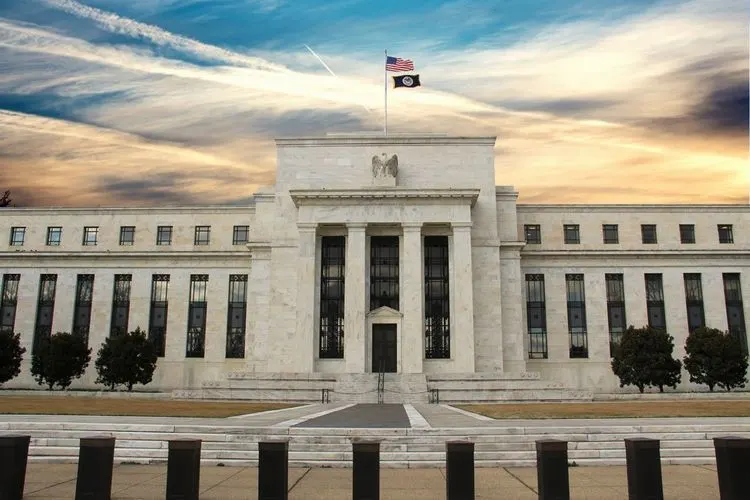
Investors have prepared for the Federal Reserve to hike rates. They also know that the central bank is reducing the amount of bonds it buys each month. In addition, they reckoned that the reduction in bond purchases would ultimately lead to a reduction in the Fed's assets of nearly $ 9 trillion.
What they didn't expect was that all three things would happen at the same time.
However, the minutes of the December Fed meeting released on Wednesday suggest that this may well be the case.
The minutes of the meeting indicated that members were ready not only to raise interest rates and reduce bond purchases, but also to have high-level discussions on reducing holdings of government bonds and mortgage-backed securities.
Although these measures are intended to fight inflation and help the labor market recover, the triple threat from the Fed to hike interest rates rocked the market on Wednesday. As a result, stocks surrendered their gains from the St. Nicholas rally as the prospect of a restrictive central bank shrouded the investor landscape in a veil of uncertainty.
Markets were mixed on Thursday as investors tried to understand the central bank's intentions.
"The reason the market reacted violently yesterday was because it sounds like the Fed is pulling liquidity out of the market quickly and violently," said Lindsey Bell, chief market strategist at Ally Financial. "If you do it in a steady and gradual way, the market can do well in this environment. If you do it fast and hard, things will be different."
Fed officials said during the meeting that they will remain dependent on data and will clearly communicate their intentions to the public.
Still, the prospect of a much more aggressive Fed after nearly two years of the most accommodative monetary policy in US history was cause for concern.
Bell said investors are probably worrying too much about the policies of officials who have made it clear they don't want to do anything that could slow the recovery or bring financial markets to their knees.
"The Fed sounds like it is acting a lot faster," she said. "But the reality is that we don't know exactly how they're going to act or when they're going to act. That will only become apparent over the next several months.
Hints are coming soon Indeed, the market won't have to wait long to see where the Fed is headed.
Several Fed spokesmen have spoken out in the last few days, with Governor Christopher Waller and Minneapolis Fed President Neel Kashkari adopting a more aggressive tone. San Francisco Fed President Mary Daly said Thursday she believes the start of the balance sheet reduction is not necessarily imminent.
Chairman Jerome Powell will speak at his confirmation hearing next week, and a second time this month after the January 25-26 Fed meeting, when he may adopt a softer tone, founder Michael Yoshikami said and Chairman of Destination Wealth Management.
An important factor that Yoshikami sees is that while the Fed is determined to fight inflation, it must also deal with the negative effects of the Omicron variant.
"I expect the Fed will say everything is based on the pandemic subsiding. But if Omicron is really a problem in the next 30 or 45 days, it will have an impact on the economy and could cause us to postpone the rate hike ", he said. "I expect this comment to be posted in the next 30 days.
Beyond that, there are some certainties about politics: the market knows, for example, that the Fed will buy $ 60 billion in bonds every month starting in January - half the amount it bought just a few months ago.
In December, Fed officials also announced three quarter-percentage-point rate hikes this year after announcing just one, and markets see a 50-50 chance of a fourth hike. In addition, Powell had indicated that a reduction in the balance sheet was being discussed at the meeting, although apparently he was downplaying how deeply his colleagues went into the matter.
So what the market doesn't know yet is how aggressively the Fed will cut its balance sheet. This is a major issue for investors as central bank liquidity supported markets during the Covid turmoil.
During the last balance sheet reduction from 2017 to 2019, the Fed allowed the proceeds from its bond portfolio to flow out to a limited extent. The cap was initially set at $ 10 billion per month and then increased by $ 10 billion every quarter until it reached $ 50 billion. By the time the Fed had to pull out, it had taken just $ 600 billion off its $ 4.5 trillion balance sheet.
With total assets now standing at $ 9 trillion - of which $ 8.3 trillion in government bonds and mortgage-backed securities bought by the Fed - the Fed may be more aggressive this time around, according to initial estimates by Wall Street.
Unknown terrain Estimates circulating after Wednesday's news ranged from a cap of $ 100 billion at JPMorgan Chase to $ 60 billion at Nomura. Fed officials have yet to come up with numbers, with Kashkari saying earlier this week only that he believes the Fed will still have a large balance sheet at the end of the runoff, likely larger than it was before Covid.
Another option is for the Fed to sell assets directly, said Michael Pearce, senior US economist at Capital Economics.
There would be several reasons for the central bank to do this, mainly because long-term interest rates are so low, the Fed's bond profile has a relatively long maturity, and the size of its balance sheet is almost twice that of last time.
"Longer-term yields have risen again in the last few days, but if they remain persistently low and the Fed is faced with a rapidly flattening yield curve, we believe there is a lot to suggest that the Fed will reduce its balance sheet outflows through direct sales of longer-term Treasuries and MBS should complement it, "Pearce said in a communication to customers.
This gives investors a multitude of options that could make navigating the landscape of 2022 difficult.
In the last tightening cycle, the Fed waited from the first rate hike before starting to shrink the balance sheet. This time around, policymakers seem determined to move things forward faster.
"Markets are concerned that the US Federal Reserve has never raised interest rates from zero to zero and reduced the size of its balance sheet at the same time. In the last cycle, there were two years between these two events, so concerns are warranted. We guess to investing and trading very carefully over the next few days, "said Nick Colas, co-founder of DataTrek, in his daily comment on Wednesday night. "We're not predicting a meltdown, but we understand why the market passed out [on Wednesday]: These are truly uncharted waters.