
European Union to increase production autonomy in strategic sectors
The move is meant to hit China amidst worsening trade relations.
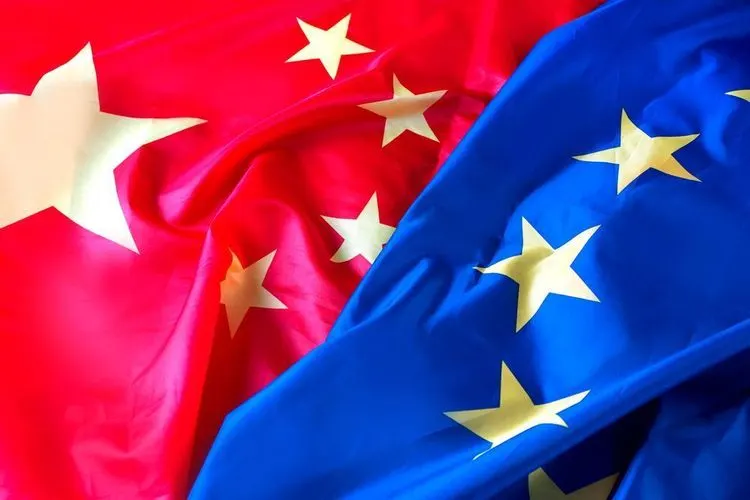
The European Union is planning new rules for foreign investment to increase production autonomy for sensitive strategic goods within the bloc. The measures will hit China as relations between the two countries, which had improved rapidly over the past year, have been on a downward spiral since Biden took over the US presidency. The European Union has unveiled a plan to reduce its reliance on foreign suppliers, essentially targeting the Chinese, in six strategic sectors, including raw materials, pharmaceutical ingredients and semiconductors. EU officials have drawn up a list of 137 highly dependent products, and around half of those imports come from China. The plan advises the bloc to diversify its supply chain to reduce reliance on a single foreign supplier and to better support European small and medium-sized businesses. "Europe must also take the lead in setting standards for batteries, hydrogen, offshore wind, safe chemicals, cybersecurity and space data to ensure the competitiveness and resilience of EU industry," the paper reads. Planned EU measures to remove some trade distortions caused by foreign subsidies would also affect China. Under the current system, subsidies granted by non-EU governments such as China are not subjected to the same scrutiny as those granted by EU countries. "Companies have been able to use foreign subsidies to buy up companies here in Europe. Some have been able to undercut their competitors in public tenders, not because they are more efficient, but because they get financial support from abroad. And that's not fair" said EU Vice-President Margrethe Vestager. "It has to stop." If the rules are adopted, they would give EU agencies new powers to prevent foreign companies from taking over Europe when they benefit from government subsidies. "Europe is open to business, but come and do it in a fair and transparent way," said EU competition director Margrethe Vestager. According to research by the European consulting firm Datenna, of 650 Chinese investments in Europe since 2010, around 40% have a high or moderate participation by state or state-controlled companies It was not until February that China officially became the European Union's most important trading partner, trumping the United States, which had held this status for a long time. But these relationships quickly deteriorated because of China's dealings with the Uighur population. According to the EU statistical office Eurostat, the export of EU goods to China grew by 2.2% in 2020 and Chinese exports to the EU by 5.6%. At the same time, EU exports to the US fell by 8.2% and EU imports from the US by 13.2%. Those numbers may change now as Europe swings into Biden's line against China, even if they opposed Trump's same. The new EU measures come at a time when the ratification of an investment agreement with China is pending. At the end of December, after seven years of negotiations, the European Union and China passed a controversial investment agreement. The agreement was only awaiting ratification by the European Parliament. However, in March the European Union imposed sanctions on four Chinese officials implicated in human rights abuses. As a result, China imposed counter-sanctions affecting several high-ranking members of the European Parliament, three members of national parliaments and two EU committees. The deal met with strong opposition from EU lawmakers and human rights defenders. The Biden government also publicly expressed its displeasure.