
EU energy companies want to meet Putin's terms
Germany's Uniper and Austria's OMV are planning ruble accounts, while Italy's Eni is considering options
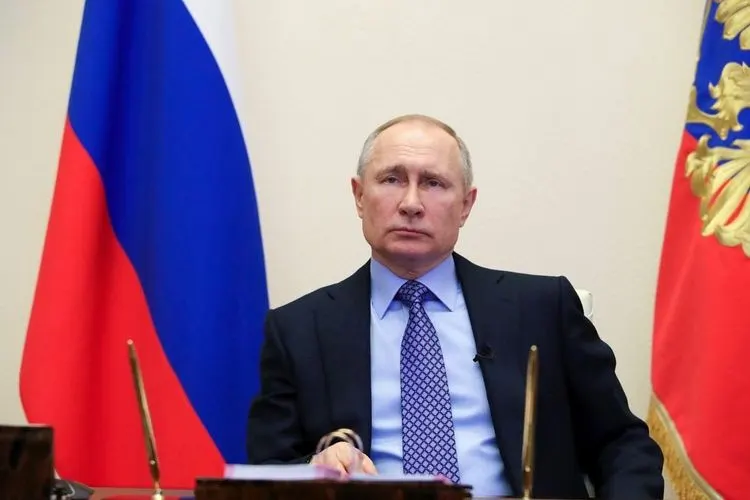
Some of Europe's biggest energy companies are taking precautions to comply with the Kremlin's demand for a new payment system for Russian gas, which critics say will undermine EU sanctions, threaten the unity of the bloc and inject billions of dollars in vital cash into the Russian economy.
Gas suppliers in Germany, Austria, Hungary and Slovakia - including two of the largest single importers of Russian gas, Dusseldorf-based Uniper and Vienna-based OMV - are preparing to open ruble accounts with Gazprombank in Switzerland, people say who are familiar with the preparations.
Negotiations between the utilities and Gazprom, Russia's state-controlled gas supplier, have intensified as payment deadlines approach, sources said.
Italy's Eni, another major Gazprom customer, is evaluating its options, two people familiar with the talks said. The Rome-backed company has until the end of May, when its next payment for Russian supplies is due, to make a final decision, Italian officials said.
The preparations show the impact of Russia's efforts to weaponize the gas supplies and call into question the EU's ability to maintain a united front against Moscow.
Russian President Vladimir Putin issued a decree in late March requiring gas buyers from so-called unfriendly states - which includes the entire EU - to set up both foreign currency and ruble accounts with Gazprombank, Gazprom's Swiss-based financial trading arm, in order to sell their gas to pay for deliveries. The move was seen as a way to neutralize EU sanctions on Russia's central bank over Moscow's invasion of Ukraine.
Gas importers in Poland and Bulgaria, which have flatly refused to sign the Kremlin program, were forced to halt gas supplies from Russia on Wednesday, a decision European Commission President Ursula von der Leyen called blackmail.
Brussels has tried to counter Moscow's demands: the Commission has issued official technical guidelines in which it concedes that the financial structures engineered by the Kremlin could be "sanctions-compliant" under certain conditions. But it would mean Russia could access billions in gas revenues to prop up its currency and economy, member states and EU officials said.
Under the new Russian mechanism, European utilities would continue to pay their imports to Gazprombank in euros, ensuring they do not violate sanctions. The Russian bank, which is not subject to EU sanctions, would then, at the companies' request, convert the euro-denominated deposits into rubles in a second account opened in their name, to be sent to Russia.
Commission advisers have concluded that any move by the EU to impose sanctions on Gazprombank - which would be the quickest way to close the loophole - could jeopardize the entire existing payment mechanism for Russian gas, leading to a catastrophic cessation of the Deliveries into the block would result.
Valdis Dombrovskis, Executive Vice-President of the Commission, said in an interview that it is primarily up to the individual companies that signed the contracts with Gazprom to implement and interpret them. However, he urged them to stick to the wording of the treaties.
"Prices are agreed in euros or dollars. So you pay that amount of euros for a certain amount of gas, end of story," he said.
The Russian actions against Bulgaria and Poland are still a challenge, he admitted: "It is important to preserve the unity of the EU in this regard, and as President von der Leyen said, we should not give in to this kind of blackmail."
OMV stated that it had analyzed Gazprom's request for payment modalities with regard to the EU sanctions and is working on a sanctions-compliant solution.
Tiina Tuomela, Uniper's Chief Financial Officer, said: "We believe that the payment process change is in line with the Sanctions Act and the payments are therefore possible."
Italian officials said the Commission's guidance on whether Gazprom's payment system violated the sanctions was ambiguous and lacked clarity for member states.
German Vice-Chancellor and Economy Minister Robert Habeck said on Wednesday that the Russian payment mechanism is "the path that the EU has mapped out for us".
"It's the path that's compatible with the sanctions, and as far as I know, the German companies that are going that way are sticking to their contracts," he said. "Most EU countries follow this approach".
He added that following a visit to Poland on Tuesday, he understood Warsaw would want to take a more uncompromising stance on Moscow. "They are not afraid of an embargo," he said.