
Chinese Uber clone Didi just went public
The listing is one of the largest IPOs of the year.
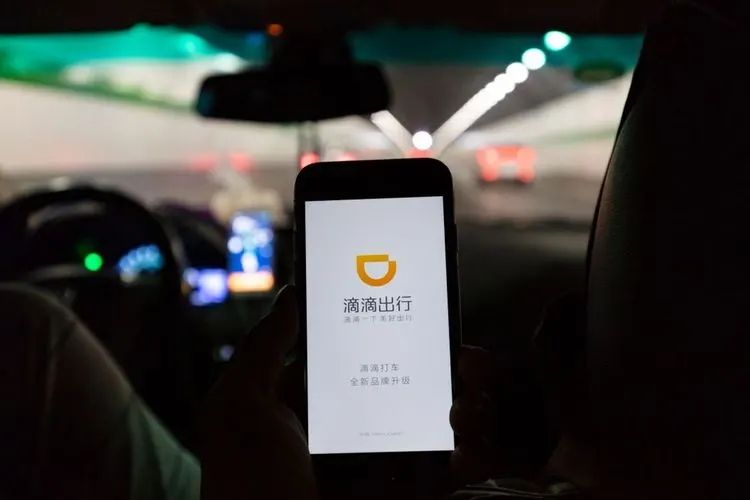
The ride-sharing race is heating up as major Chinese ride-sharing company Didi, also known as the "Uber of China" and an actual Uber partner, is listed on the NYSE in one of the largest Chinese company listings in the United States United States debuted. Didi started trading in New York at about $ 16.65, a jump of nearly 20% from the IPO price of $ 14 per share. With $ 4.4 billion in proceeds from the stock sale, Didi's IPO is the second-largest US public offering by a Chinese company, after Alibaba in 2014. Didi dominates the ride hailing business in his home country. After Uber failed to challenge it in the Chinese market, the two companies became partners, with Uber selling its China business to Didi. Uber is Didi's second largest shareholder with a stake of 12.8%. After the IPO, Uber's stake is valued at around $ 8 billion. The Japanese investment giant SoftBank is Didi's largest shareholder with a 21.5% stake. The Chinese tech giant Tencent owns a 6.8% stake, followed by Alibaba and Apple. Similar to ridesharing companies in the USA, Didi has also made losses in recent years. When it went public, the company announced that it would make a loss of $ 1.6 billion in 2020, after losing $ 1.5 billion in 2019 and $ 2.3 billion in 2018. In addition, Didi is part of the tough crackdown on tech companies by the Chinese authorities. Earlier this month, Reuters reported that Didi was being investigated over antitrust concerns. Still, Didi has shown signs of profitability after reporting net income of $ 837 million on sales of $ 6.44 billion in the first quarter of 2021. By comparison, Uber lost $ 108 million on revenue of $ 2.90 billion in the first quarter of 2021. Like many other industries, ride sharing has suffered during the pandemic. At the height of the pandemic, ride sharing slumped 60-70% in the US and nearly 80% in Europe. That said, Uber has dodged a bullet, so to speak, thanks to its Uber Eats division, which completed the purchase of the San Francisco-based delivery company Postmates for $ 2.6 billion. In April 2021, third-party delivery orders were up 204% compared to April 2019. In May, almost 30% of American consumers had ordered from one of the food delivery services, and most likely the trend will not decrease as much now that dining-in is open . But even if more than two-thirds of ride-hailing demand has recovered, ride-sharing companies are facing a supply bottleneck. Many drivers are reluctant to return to work despite companies spending millions of dollars to motivate drivers to get back to work. Uber alone announced a $ 250 million program to promote drivers. As the pandemic restrictions ease, the size of the global ride hailing market will grow at a rate of 55.6% this year compared to 2020. It is expected to increase from $ 75.39 billion in 2020 to $ 117.34 billion in 2021.