Why Did Cocoa Futures Witness a 17% Plunge in Prices?
Navigating the Cocoa Market Turmoil: Understanding the Factors Behind the 17% Slump
 Editorial Team (ET)October 3, 2026
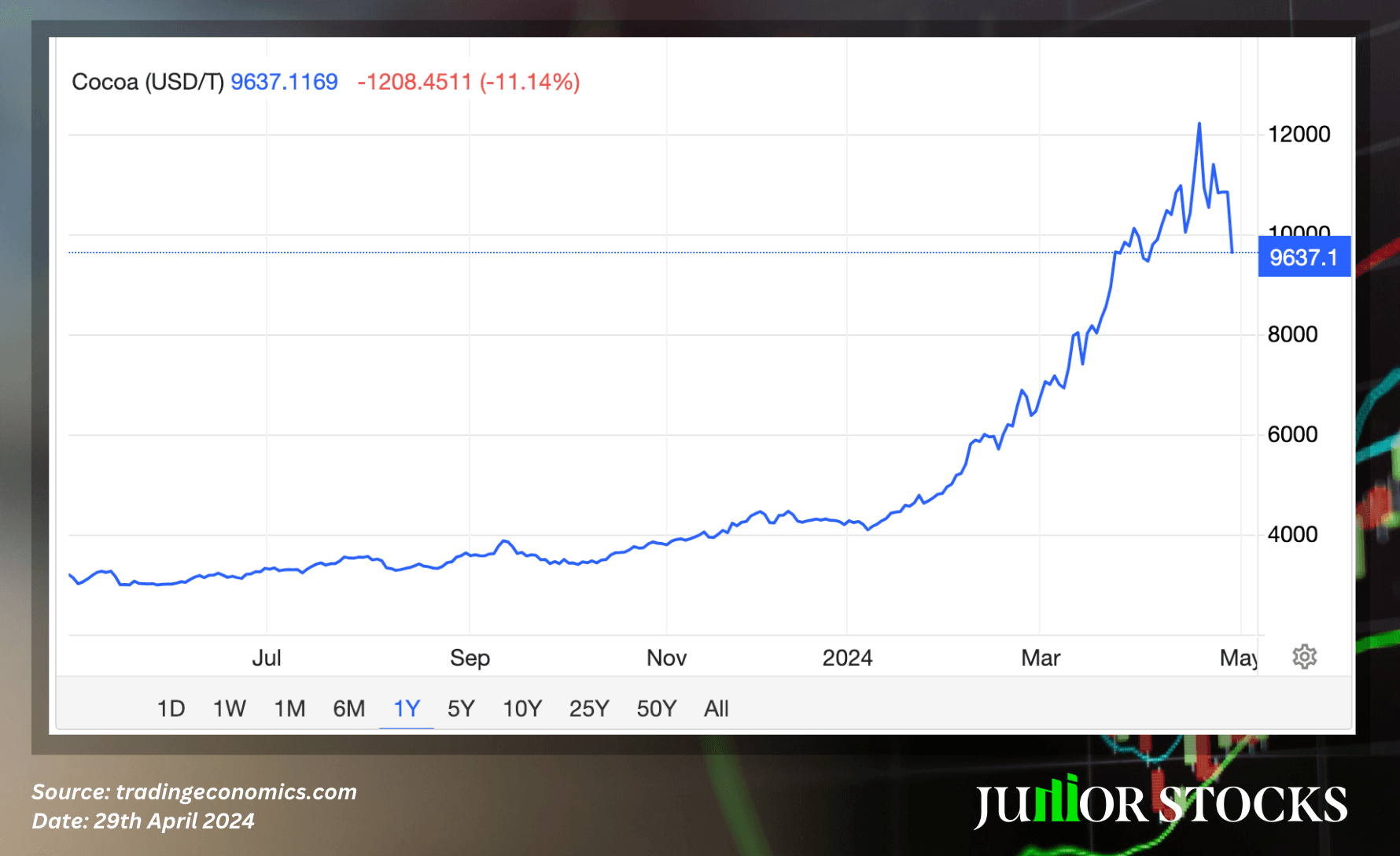
The cocoa market has been jolted by a significant slump, witnessing a staggering 17% drop in futures prices in both New York and London. This sudden downturn has been attributed to a multitude of factors, including higher margin calls and prevailing uncertainty, prompting traders to exit the market en masse and thus amplifying price volatility.
The repercussions of this slump have been profound, with the most active contract in New York plummeting to $8,800 a ton, marking the largest intraday decline in data spanning back to 1960. Furthermore, this downturn has pushed the market into a correction phase, with futures experiencing a roughly 25% decrease from the record high observed on April 19.
In London, cocoa futures have also taken a hit following the announcement by Intercontinental Exchange Inc. regarding an increase in collateral requirements for trading benchmark London cocoa futures. This move represents a significant six-fold surge in the margin rate compared to previous levels, further exacerbating the market's instability.
The decline in cocoa futures is further compounded by a reduction in outstanding contracts, with aggregate open interest in New York approaching its lowest level in over a decade. According to StoneX analyst Leonardo Rossetti, these developments create an environment ripe for trend reversals, as fewer market participants wield greater influence over price movements.
Amidst the market turmoil, recent rainfall in West African cocoa-growing regions offers a glimmer of hope for bean supplies. While this may provide some relief for the upcoming mid-crop harvest, it falls short of resolving the severe shortage that has plagued the cocoa market for the past three years. Consultants like Paulo Torres emphasize that the underlying issue persists, as major producers such as Ivory Coast and Ghana continue to grapple with cocoa deficits.
The surge in cocoa futures over the past year can be attributed to a confluence of factors, including adverse weather conditions, aging trees, and crop diseases in West Africa, the epicenter of global cocoa production. As a result, buyers have been left scrambling for supplies, leading to contractual rollovers by Ivory Coast and Ghana totaling approximately 400,000 tons, exacerbating supply constraints.
In conclusion, the recent slump in cocoa futures underscores the fragility of commodity markets and the intricate interplay of various factors influencing price dynamics. While short-term fluctuations may stem from margin calls and market sentiment, the long-term sustainability of cocoa production hinges on addressing systemic issues such as supply shortages and production challenges.