
U.S. natural gas producers face billions in losses through hedging in 2022
Most of them secured their production before the energy crisis
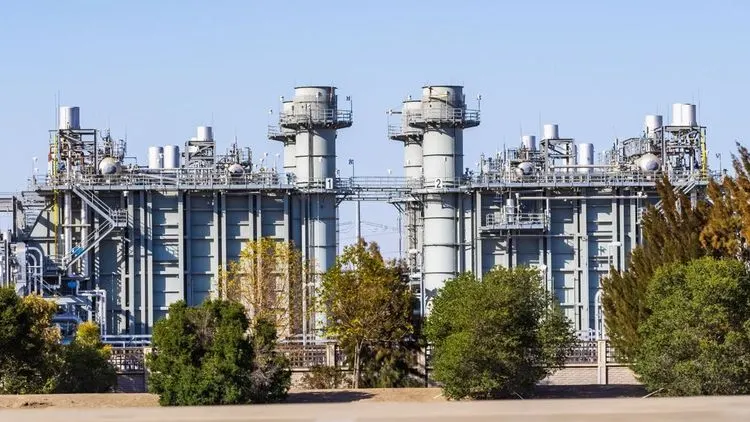
US gas producers will have to post billions in hedging losses in the next year because they secured most of their production for 2022 before the recent energy crisis shot gas prices soaring, an analysis by Rystad Energy shows.
The analysis focuses on a group of shale gas producers that account for 35% of unconventional gas production and approximately 53% of shale gas production in the U.S. inland region this year. These 11 operators will lose more than $ 5 billion in 2022 if the average Henry Hub price strip stays at $ 4 per MMBtu - an amount that could double if Henry Hub prices averaged $ 5 per MMBtu be.
The reason for the expected losses is that by the time they announced their results for the second quarter, the operators had already secured more than half of their production for 2022, when prices were still well below the currently excessive level. At the end of September, 64% of the expected production had already been secured.
To complete the picture and to take a look beyond our research group, it should be noted that the producers who focus on tight oil tend to secure a lower proportion of their gas production than our comparison group of public gas producers. The protection profiles of private shale gas producers are very different, but on average they behave similarly to the comparison group examined. Gas producers who focus on cash flow from proven, developed and producing resources in conventional fields tend to secure only a limited part of their production. Still, some have a high proportion of fixed price sales with deliveries to local markets.
In relation to the total volume, the gas contracts of the public producers focused on tight oil would be around 50% lower than those of the peer group focused on shale gas. Still, her typical hedging floor is slightly higher based on her earnings in the third quarter. Visibility is lower with private operators, but significant Haynesville private sponsors tend to hedge well in advance, suggesting low hedging floors.
"Given that the entire strip is currently above $ 4 per MMBtu for 2022 - although the shape of the curve has severe backwardation - the current state of the programs is likely to put significant downward pressure on gas producers' cash flows for the next year," says Artem Abramov, Head of Shale Research at Rystad Energy.
In the peer group
The proportion of secured production for 2022 ranges from 10-11% for Coterra to nearly 95% for CNX Resources. However, Coterra and CNX are clear outliers as the proportion of secured production of the rest of the group is in a narrow range of 45-75%. The weighted average floor price is in the range of $ 2.5 to $ 3.1 per MMBtu as measured by the Henry Hub. At these prices, we expect the recent improvement on the Henry Hub Strip to have a large impact on floor prices when operators release their annual results. At least two operators are among those who have hedged for 2022 that recently saw a significant increase in the average floor price: Range Resources increased the average floor price by $ 0.30 per MMBtu, while Chesapeake increased its weighted average floor price between the two quarterly reports by $ 0.20 per MMBtu.
The significant increase in hedged volume since the second quarter of 2021 is primarily due to a handful of operators - Southwestern, Chesapeake, Range, and Comstock. The inclusion of Cimarex Energy as part of Coterra Energy also increased the total. The new company took over Cimarex's natural gas hedges as Cabot had no derivatives position for 2022 in the second quarter alone. In addition, the main operator EQT Corp. in the last few months apparently liquidated some of its low-floor hedging positions for 2022.
Rystad Energy estimates that an average Henry Hub price of $ 4 per MMBtu in 2022 will result in a total hedging loss of $ 5.2 billion on gas derivative contracts alone for the eleven companies surveyed. For comparison, the peer group, excluding hedging losses, is estimated to generate an estimated $ 48 billion in gross hydrocarbon sales before royalties and approximately $ 21 billion in upstream cash flow from operations in 2022. The hedging losses at a price of $ 4 per MMBtu thus represent more than 10% of the group's pre-hedging income and more than 25% of the upstream business cash. If the Henry Hub price averages $ 5 per MMBtu next year, the hedging losses for the gas companies will be almost twice as high at $ 9.8 billion. These producers would need a Henry Hub Price of $ 2.4 or less to make substantial hedging profits in excess of $ 1 billion.