
The US is finally about to sign the SAFE Banking Act
The bill would mean a major breakthrough for the cannabis industry.
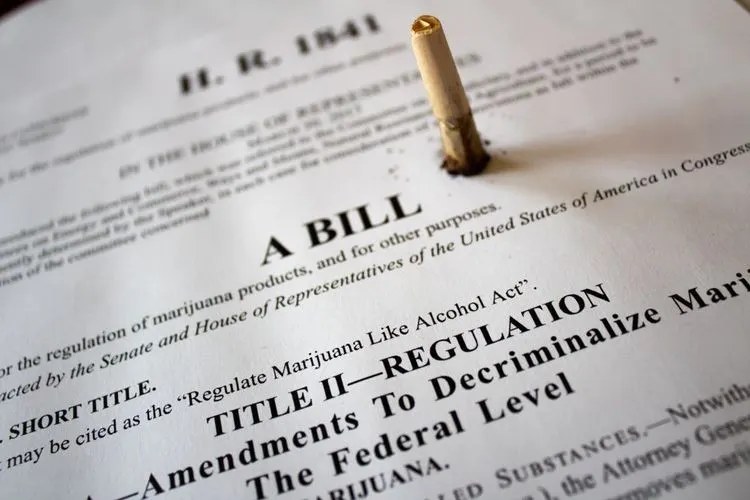
After the SAFE Banking Act was brought to the United States' House of Representatives for the eighth time on Thursday, experts expect the all-important cannabis law to be passed this year, but not without complications. Banking reforms are a logical short-term solution before sweeping federal legalization moves forward on Capitol Hill, says Chris Lindsey, director of government relations for the Marijuana Policy Project. However, the banking and legalization laws are viewed by some Democrats as contradicting measures, making the timetable even more uncertain. While the Democratic-led House of Representatives passed the 2019 Banking Act, it never gained a foothold in the Republican-controlled Senate. The bill would create safe harbor protection for financial institutions serving legal cannabis businesses in the states without federal intervention until cannabis is removed from the list. It would open up credit card transactions to cannabis companies that currently only use cash, making them more prone to theft. In 2021, the bill has a better chance of getting passed because cannabis banking has become a bigger public safety issue on both sides of the political corridor, explains Lindsey. In the US, the Senate filibuster rules require 60 votes to end the debate on most major bills and allow the minority party to stop majority efforts. The Democrats currently hold 50 seats in the 100-seat Senate and retain control only because of Vice President Kamala Harris's tiebreaker vote. Lindsey expects the bill to get enough votes this time around to pass both chambers. But he says it's hard to predict when, because of the uncertainty over the development of two federal legalization measures seen by some Democratic lawmakers in Congress as competing efforts. The MORE Act, which would remove cannabis from the Controlled Substances Act and clear criminal records related to weed, could be brought to the House of Representatives next week. And Lindsey expects Democratic Senators Cory Booker, Ron Wyden and Majority Leader Chuck Schumer to come up with sweeping legislation in the coming weeks that would end nationwide weed prohibition. Some progressive Democratic lawmakers in Washington D.C. argue that legalization laws should take precedence over banking measures, as the latter does not address the social justice issues surrounding the decades-long war on drugs. However, Lindsey counters that banking is an important bridging measure and not a substitute for legalization. The banking law would also open up opportunities for frustrated license applicants who cannot get credit to start a cannabis business. "The appearance of an either-or debate can undermine a process in which we need to transition," says Linsdey. The banking industry is behind SAFE The longtime marijuana advocate says the SAFE Act is gaining momentum with huge support from the banking industry. On Wednesday, the American Banking Association sent a letter to members of the House Financial Services Committee asking them to pass the law this time. "Our member banks are in a difficult position due to the conflict between state and federal law as local communities encourage them to fund cannabis deals while federal law forbids it," the association wrote. "Congress must act to resolve this conflict between state and federal law." Democratic MP Ed Perlumtter, who has written and tabled a version of the law in every Congress since 2013, says cannabis legalization has already swept across the US, so banking reform is inevitable. He has partnered with the Independent Community Bankers Association, which was the first financial trading group to endorse the SAFE Banking Act. With larger financial institutions tending to shy away from serving cannabis deals, many local government credit unions and small banks have stepped in to take the risk. Currently, 36 states have legalized cannabis for medical or adult use, while 47 states have passed hemp laws allowing the sale of CBD. "The ghost is out of the bottle and has been for many years. Thousands of employees and businesses in this country have been forced to trade in piles of cash for far too long and it is the responsibility of Congress to step in and take action." Align federal and state laws for the safety of our voters and communities, "Perlmutter said in a statement. "The public safety need is urgent, and with the pandemic, there has been a public health and economic need that further exacerbates the problem of cash for industry."