Why is it Costing $1,500 a Day Just to Keep Two Tractors Running?
From $90 to $700 a ton for fertilizer, record-breaking input inflation is turning the Heartland harvest into a high-stakes financial gamble.
 Editorial Team (ET)October 5, 2026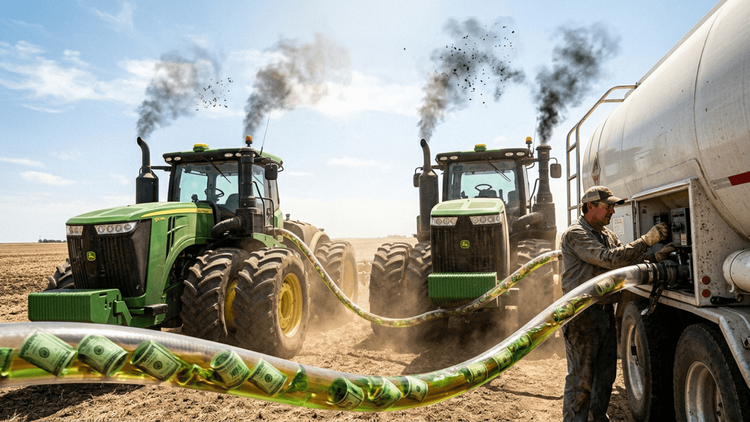
The American supermarket aisle looks stable enough, but out in the Heartland, the financial machinery that keeps the nation fed is grinding through a brutally expensive gear. For the modern farmer, stepping into a tractor cab has transformed from a labor of generational pride into a high-stakes daily roll of the economic dice. It is a world where running just a pair of heavy-duty tractors can quickly burn through fifteen hundred dollars of cash a day in diesel and upkeep alone, forcing producers to watch their liquid capital evaporate long before a single crop hits the market.
This isn't a temporary dip in the ledger; it is what agricultural economists are now calling a full-scale structural downturn. While global supply chain headlines have largely faded from prime-time news, the sticky inflation on essential inputs has refused to leave the field. Take potash, for instance, a critical potassium fertilizer required for crop root strength and yield. For decades, a farmer could reliably anchor their budget around ninety dollars a ton for the nutrient. Today, that exact same ton commands a staggering six hundred seventy to seven hundred dollars, turning a foundational farming necessity into an absolute luxury.

Could a European Squeeze on Potash Cripple US Agriculture?

The Potash Project That Caught Capitol Hill’s Eye