
Top NATO Commander Warns Businesses of Wartime Realities
How NATO’s Warning to Businesses Highlights the Strategic Risks of Economic Dependencies
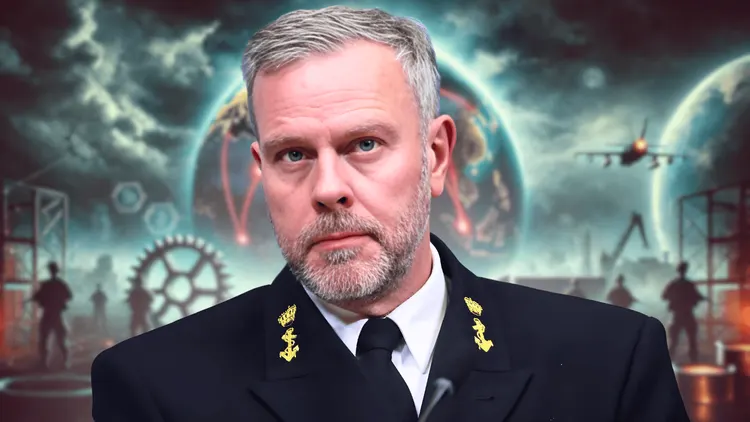
In a striking statement delivered in Brussels, Dutch Admiral Rob Bauer, NATO’s top military official, urged businesses to brace themselves for a potential wartime scenario. The admiral emphasized the growing role of the corporate world in national security, highlighting the vulnerabilities inherent in supply chains and dependencies on nations like Russia and China. His speech, given at a European Policy Centre event, was a clarion call for industries to reevaluate their operational models in light of escalating geopolitical tensions.
Admiral Bauer’s remarks were rooted in the reality of modern deterrence, which he stressed goes far beyond military might. Today, wars are fought not only with weapons but also with economies, supply chains, and critical resources. According to Bauer, the ability to deliver essential goods and services during a crisis is just as important as deploying troops or maintaining advanced weaponry. His stark warning highlighted a world where economic interdependence, once seen as a strength, is increasingly viewed as a liability in times of conflict.
The speech underscored Europe’s hard-earned lessons from the energy crisis precipitated by Russia’s invasion of Ukraine. For years, European nations believed they had a reliable agreement with Russian energy giant Gazprom, only to realize their dependence was a strategic vulnerability. “We thought we had a deal with Gazprom,” Bauer said, “but we actually had a deal with Mr. Putin.” The same logic, he argued, applies to dependencies on Chinese infrastructure and goods. These dependencies, while commercially advantageous, pose significant risks when viewed through a geopolitical lens.
One of the most alarming aspects of Bauer’s warning was his focus on rare earth materials, a vital component in countless technologies. China, which produces 60% of the world’s rare earth materials and processes 90% of them, holds a near-monopoly over this critical industry. These materials are indispensable for everything from smartphones to defense systems, and their supply is tightly controlled. Beyond rare earths, Bauer pointed to vulnerabilities in pharmaceutical supply chains, noting that key ingredients for sedatives, antibiotics, and other essential medicines are sourced primarily from China. This over-reliance, he warned, could be weaponized in the future.
Bauer’s message was clear: the commercial decisions businesses make have profound strategic consequences. While profits and efficiency often drive corporate strategies, these decisions can inadvertently weaken national security. The admiral urged businesses to adapt their production and distribution systems to withstand potential disruptions. This shift, he argued, is not just about avoiding economic blackmail but also about ensuring that Western nations can maintain their sovereignty in the face of external threats.
The growing number of sabotage incidents targeting critical infrastructure further underscores the need for heightened preparedness. Bauer noted that Europe has already experienced disruptions to its energy supply and warned that such acts of sabotage could escalate. These threats demonstrate that the battlefield is no longer confined to physical territory—it now extends to supply chains, cyberspace, and global trade networks.
One of the central themes of Bauer’s address was the interdependence of military and economic strength. While military forces may win battles, he argued, it is robust economies that win wars. The ability to sustain production and distribution under duress is a cornerstone of national resilience. This requires collaboration between governments and the private sector, as well as significant investments in infrastructure and supply chain diversification.
For businesses, this means rethinking traditional models that prioritize cost efficiency over resilience. Localizing production, diversifying suppliers, and establishing contingency plans are no longer optional—they are essential strategies for survival in an increasingly volatile world. However, these changes come with challenges, including higher costs and potential resistance from stakeholders accustomed to the status quo.
Admiral Bauer’s warning also has significant policy implications. Governments will need to incentivize businesses to prioritize resilience through regulatory frameworks and financial support. This could include tax breaks for companies that localize production or penalties for over-reliance on adversarial nations. Additionally, governments must foster public-private partnerships to align commercial strategies with national security goals.
The path forward is not without obstacles, but the stakes could not be higher. Businesses and governments alike must recognize that in the 21st century, economic strength is inseparable from national security. As geopolitical tensions rise, the ability to adapt to a wartime scenario may well determine the future stability and prosperity of nations.