
The Market Yelled “Copper Supercycle!”, Goldman Whispered “Relax”
Goldman Sachs Throws Cold Water on Copper’s Red-Hot Rally
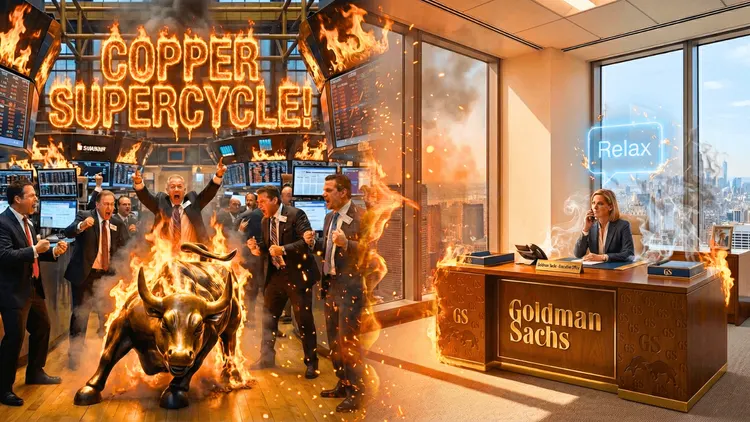
In a week when copper punched through the psychological ceiling of $11,000 a tonne and kept climbing to a fresh all-time high of $11,540 on the London Metal Exchange, most traders were popping champagne. Goldman Sachs, however, just walked into the party and turned the music down. According to the Wall Street giant’s commodities team, this breakout is built on excitement about tomorrow’s shortages rather than any real scarcity today, and excitement, as every seasoned copper watcher knows, has a habit of evaporating fast.
Led by analyst Aurelia Waltham, Goldman’s latest client note strikes a decidedly cautious tone. The bank acknowledges the frenzy, record prices, frantic shipments into the United States ahead of possible tariffs, and trading houses warning that the rest of the world could soon be “left without copper cathodes”, but insists the underlying picture remains comfortable. Global refined copper supply is still running ahead of demand, Chinese consumption is actually shrinking, and the market is nowhere near the deficit many fear.
The numbers tell the story Goldman wants investors to hear. After years of predicting multi-hundred-thousand-tonne surpluses, the bank now sees only a modest 160,000-tonne surplus in 2026, smaller than previously thought, yet still a surplus. That slim buffer, combined with softening end-use demand, leads Goldman to its core conclusion: there will be no global copper shortage until at least 2029. In the meantime, they expect prices to stay “constricted” in a $10,000–$11,000 range through next year, with the current spike above that band looking increasingly like a head fake.
The rally’s real engine, in Goldman’s view, is a giant game of geographical musical chairs. With tariffs looming, metal is being sucked into American warehouses at a ferocious pace, draining inventories in London, Shanghai, and everywhere else. Regional premiums are exploding and LME time-spreads are going haywire, but Goldman argues these distortions can be managed without triggering an outright global crisis. Higher premiums and tighter spreads, they say, will ration whatever metal is left outside the U.S. and keep the market from tipping into panic.
It’s a classic case of the copper market pricing in a future that hasn’t arrived yet, and may not arrive for years. History is littered with similar moments of over-enthusiasm: the 2011 supercycle that ended in tears when Chinese construction slowed, the 2021 squeeze that fizzled once stimulus faded. Even the green-energy boom, often cited as the unstoppable demand driver, isn’t growing fast enough to overwhelm the surplus right now. Goldman points out that Chinese copper consumption is on track to fall nearly 8% year-on-year in the current quarter, more than offsetting gains from electric vehicles and wind farms.
For anyone riding the copper rocket higher, Goldman’s message is blunt: enjoy the view, but don’t get too comfortable at these altitudes. The bank has nudged up its first-half 2026 price forecast to reflect the tariff-driven scramble, yet it still sees gravity reasserting itself soon. When the music stops, $11,000 could look like a very expensive souvenir.