
The Clock Is Ticking on Uranium: Supplies Could Run Dry by the 2080s
Uranium demand is surging, driven by AI and clean energy goals—but without urgent investment, the world could face a nuclear fuel crisis by the end of the century.
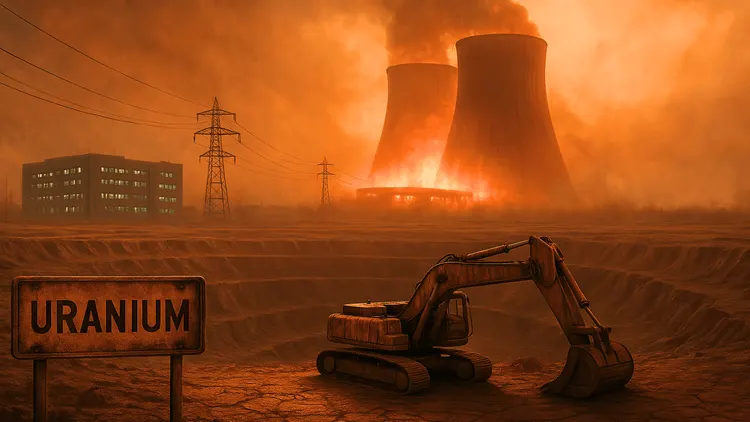
A stark warning has surfaced from two of the world’s leading atomic energy watchdogs: uranium supplies could run dangerously low by the 2080s. The biennial Red Book, jointly published by the Nuclear Energy Agency (NEA) and the International Atomic Energy Agency (IAEA), reveals that surging demand for nuclear energy could deplete known uranium resources within the next six decades unless major new investments are made.
The urgency behind this revelation is fueled by a sharp pivot toward nuclear power as the global energy landscape shifts. Nations are scrambling to meet net-zero targets, industries are racing to power energy-hungry artificial intelligence systems, and tech giants are betting big on nuclear energy to future-proof their digital empires. The resulting demand could push uranium supplies to their breaking point.
A High-Growth Path With High-Stakes Risks
At the heart of the agencies’ concern is the "high-growth" scenario laid out in the Red Book. Under this forecast, global nuclear capacity could surge by an astonishing 130% by 2050 compared to 2022 levels. However, while current uranium resources are technically sufficient to meet this demand on paper, the reality is far more complex. These resources remain locked beneath the surface, inaccessible without substantial investment in exploration, mining infrastructure, and advanced processing technologies.
Even more troubling, the scenario is based on data from early 2023. Since then, interest in nuclear power has only intensified. Governments, policy-makers, and private corporations alike have rallied around nuclear as a reliable, carbon-free energy source amid geopolitical tensions and fossil fuel volatility. The Red Book’s estimates may already be too conservative.
AI, Data Centers, and a Nuclear Future
What’s driving this accelerated need for nuclear energy? One of the biggest catalysts is artificial intelligence. Massive AI models require tremendous computational power, and tech giants like Google, Amazon, and Meta are eyeing nuclear as the most sustainable way to meet that energy demand. They’re not just talking, either—these companies are already investing heavily in next-generation nuclear technologies, including small modular reactors (SMRs), to power their ever-growing data center empires.
It’s a fascinating convergence: AI, often associated with the digital realm, now has its fate intertwined with the physical world of uranium mining and nuclear physics. In effect, the digital future is becoming increasingly radioactive—not in a dangerous way, but in a literal one. Without uranium, the AI revolution could hit a hard ceiling.
East Asia Leads the Charge
While the West has shown renewed enthusiasm for nuclear energy, the biggest expansion is unfolding in East Asia. The region is projected to grow its nuclear capacity by up to 220%, building upon the 111 gigawatts it had installed by the end of 2022. Countries like China, South Korea, and Japan are pouring resources into nuclear infrastructure, not just for environmental reasons but also for energy security amid rising geopolitical instability.
Meanwhile, a coalition of over 20 countries, including the US and UK, has pledged to triple global nuclear capacity by 2050. If those commitments hold firm, uranium supplies will be stretched thin much sooner than anticipated.
The Exploration Deficit
Despite the growing consensus around nuclear power’s role in the energy transition, one area remains glaringly underfunded: uranium exploration. Decades of low prices and market stagnation left the uranium sector underdeveloped. Miners shuttered operations, exploration budgets dried up, and junior companies folded or pivoted to other minerals.
Now, as demand skyrockets, the industry faces a massive supply crunch. Known uranium resources may be plentiful, but they won’t extract themselves. Without billions in new investment, the uranium needed to power tomorrow’s reactors may remain buried, inaccessible, and ultimately useless.
The Red Book stresses this point: unlocking the uranium of the future requires not just money but also time. Exploration can take a decade or more to translate into actual production. With 2080 only 55 years away, the clock is ticking louder than ever.
Private Sector Wakes Up
There’s growing evidence that the private sector is starting to listen. Nuclear investment rose nearly 50% between 2020 and 2023, according to the International Energy Agency. Venture capital is flowing into uranium projects, and public markets have seen a wave of renewed interest in uranium mining stocks.
Startups are also entering the space, exploring innovative mining methods and looking at unconventional resources, including uranium in seawater and phosphate deposits. While these approaches remain largely experimental, they could provide a long-term hedge against depletion.
Still, the sheer scale of demand makes it clear: there is no substitute for large, high-grade deposits like those found in Canada’s Athabasca Basin, Kazakhstan’s vast uranium fields, or Australia's sprawling reserves. These assets will be critical in meeting mid-century demand—if they can be developed in time.
Geopolitical Ramifications
Uranium’s growing importance isn’t just economic—it’s deeply geopolitical. As countries race to secure their energy futures, control over uranium resources could become as strategic as control over oil fields once was. Nations rich in uranium may find themselves wielding newfound influence, while import-dependent countries could face energy insecurity and pricing shocks.
Moreover, supply chains are increasingly under the microscope. Kazakhstan remains the world’s largest producer, but political tensions in the region could disrupt exports. Meanwhile, Western countries are seeking to reduce dependence on Russian-enriched uranium, sparking efforts to rebuild enrichment and conversion capacities domestically.
The uranium supply chain of the future will need to be more resilient, diversified, and politically secure—a tall order given the current state of global mining.
A Call to Action
What’s clear from the latest Red Book is that complacency is no longer an option. The world has entered a new nuclear era, one marked by surging demand, ambitious climate goals, and a digital revolution powered by atoms. But that future cannot be built on dwindling supplies and outdated infrastructure.
Policymakers must act now. That means incentivizing exploration, fast-tracking permits for new mines, funding research into alternative processing methods, and ensuring that nuclear remains a part of the clean energy conversation. The private sector, for its part, must match its enthusiasm for nuclear power with tangible investment in the raw material that makes it all possible.
The 2080s may seem distant, but in the world of mining and energy development, they’re right around the corner.
Conclusion
The Red Book’s warning is clear: the future of nuclear power—and by extension, the future of global energy security—hinges on how we manage uranium today. With demand poised to explode and supply chains already stretched thin, the need for investment, innovation, and international cooperation has never been more urgent. The world must act decisively, or risk running dry on the fuel that could define the next century.