Tesla's Mining Mission: The Cybertruck's Need for Nickel, Cobalt, and Lithium
Unveiling the Future: Tesla's Cybertruck and Its Quest for Critical Battery Metals
 Editorial Team (ET)October 3, 2026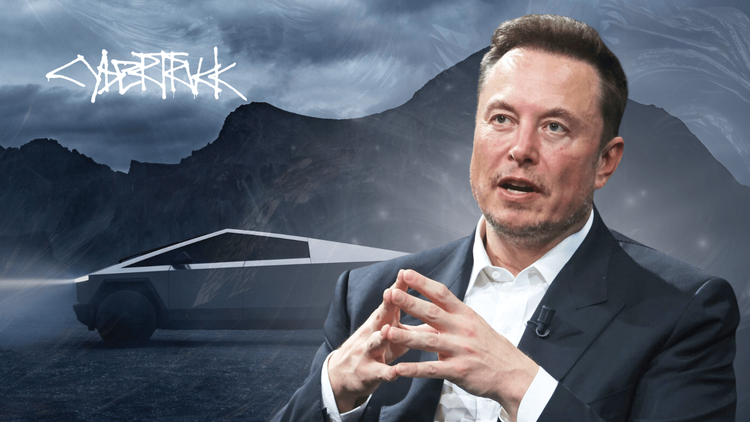
Tesla began rolling out its eagerly awaited Cybertruck late last year, capturing the attention of both enthusiasts and critics alike. This unique, triangle-shaped vehicle has sparked a wide range of reactions, but it remains undeniably magnetic. Unveiled in November 2019, despite a rather memorable smashed-window incident, the Cybertruck marks only the sixth production vehicle in Tesla's lineup. It is notably powered by the company’s revolutionary 4680 battery cells, which were first introduced during Tesla’s Battery Day event in 2020.
The Battery Metals Digest: A Deeper Dive
At the heart of the Cybertruck’s innovation is the 4680 battery cell, a soda can-sized powerhouse with a nickel-cobalt-manganese (NCM) cathode. This battery not only fuels the performance version of Tesla’s Model Y but also elevates the Cybertruck with its staggering 122.4 kWh capacity for the top-tier models. Such advancements not only promise enhanced performance but also align with the Biden administration’s subsidy incentives, provided through additional range extenders.
The Pre-Order Phenomenon
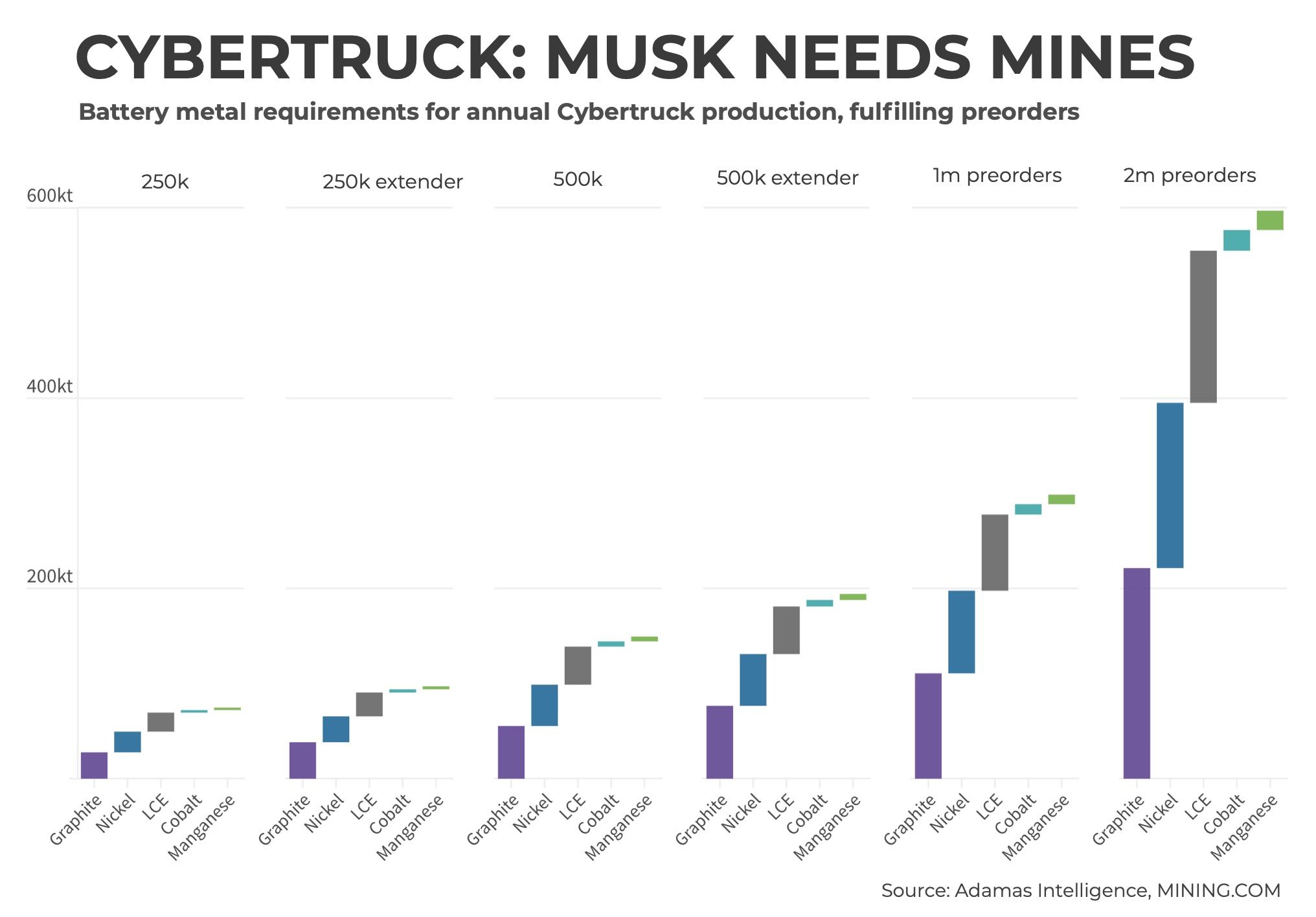
Tesla’s pre-order figures for the Cybertruck have become a topic of widespread speculation and excitement. While the exact number remains unconfirmed, estimates suggest it could be as high as two million, based on a crowd-sourced tally. Elon Musk himself has indicated the figure surpasses one million. This overwhelming interest underscores the Cybertruck's market impact and the logistical challenges Tesla faces in meeting this demand, given its current production capacity constraints.
The Demand for Battery Metals
The production of the Cybertruck underscores a significant demand for battery metals, including graphite, nickel, lithium carbonate, cobalt, and manganese. The quantities required for Tesla’s production goals highlight the need for substantial mining investments and strategic resource management. The anticipated production levels pose both opportunities and challenges in the mining sector, emphasizing the critical role of Tesla's supply chain strategies.
Tesla’s Strategic Mining Investments
To fulfill its ambitious production targets and cater to the burgeoning demand for the Cybertruck, Tesla might need to significantly expand its mining investments. This scenario suggests potential partnerships and investments in mining operations globally, particularly focusing on nickel and cobalt, which are essential for the Cybertruck's batteries. Such strategic moves could reshape the global mining landscape and underscore Tesla’s commitment to sustainable and efficient electric vehicle production.
Battery Day and Night: Market Fluctuations
The journey of battery metals like natural graphite, lithium, and nickel has been tumultuous, with prices experiencing dramatic fluctuations over the past few years. These market dynamics reflect the challenges and opportunities within the battery supply chain, affecting both producers and investors. Tesla's reliance on these materials for the Cybertruck further complicates the scenario, requiring careful navigation of the global supply and demand trends.
Conclusion: The Road Ahead for Tesla and Cybertruck
Tesla’s Cybertruck represents a bold step forward in the evolution of electric vehicles, challenging conventional design and engineering paradigms. As Tesla navigates the complexities of production, supply chain management, and market expectations, the Cybertruck stands as a testament to innovation and ambition. The journey ahead will undoubtedly be watched closely by enthusiasts, critics, and industry stakeholders alike.